Solar & UPS
How Many Solar Panels Do You Need to Run a 1.5 Ton AC?
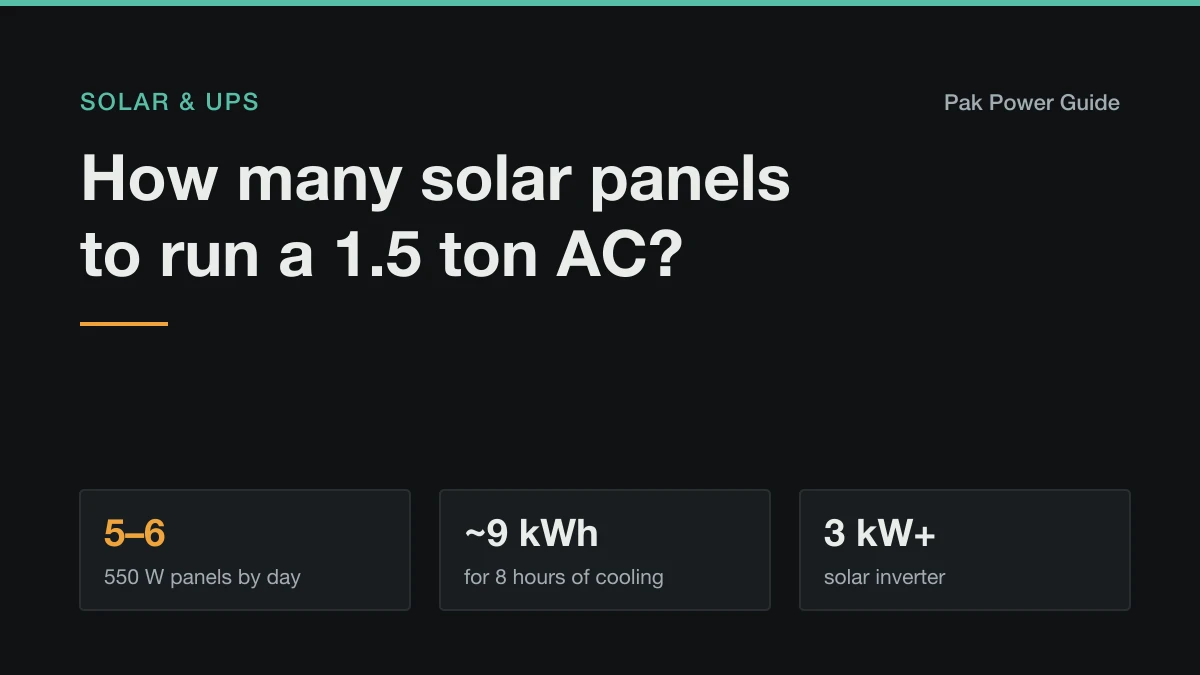
About five or six 550 W panels run a 1.5 ton inverter AC through a sunny day. The method for any AC size, plus the inverter and what it takes at night.
4 min read
37 guides on inverters, batteries, UPS systems and solar — what the symptom usually means, and what to check before you call anyone.
About five or six 550 W panels run a 1.5 ton inverter AC through a sunny day. The method for any AC size, plus the inverter and what it takes at night.
Tubular lead-acid is the value pick for occasional outages, lithium wins for daily ones, and sealed dry batteries suit rooms you cannot ventilate.
Yes, for outages: a grid-charged battery runs the essentials with no fuel or noise. How to size one, what it costs to run, and your options.
On-grid solar cuts the bill but goes dark in a power cut, off-grid runs on batteries alone, and hybrid does both. How to choose, and the hybrid trap.
Swapping two old fans for BLDC fans nearly doubles backup on one battery. The eight changes that add real hours, from cutting load to adding capacity.
About 3–5 years for a sealed computer UPS battery, 2–6 for tubular lead-acid and 10+ for LiFePO4. Heat and daily deep discharge shorten them all.
A computer UPS switches in milliseconds for minutes of backup; a home inverter runs fans and lights for hours. How to tell them apart, and what IPS means.
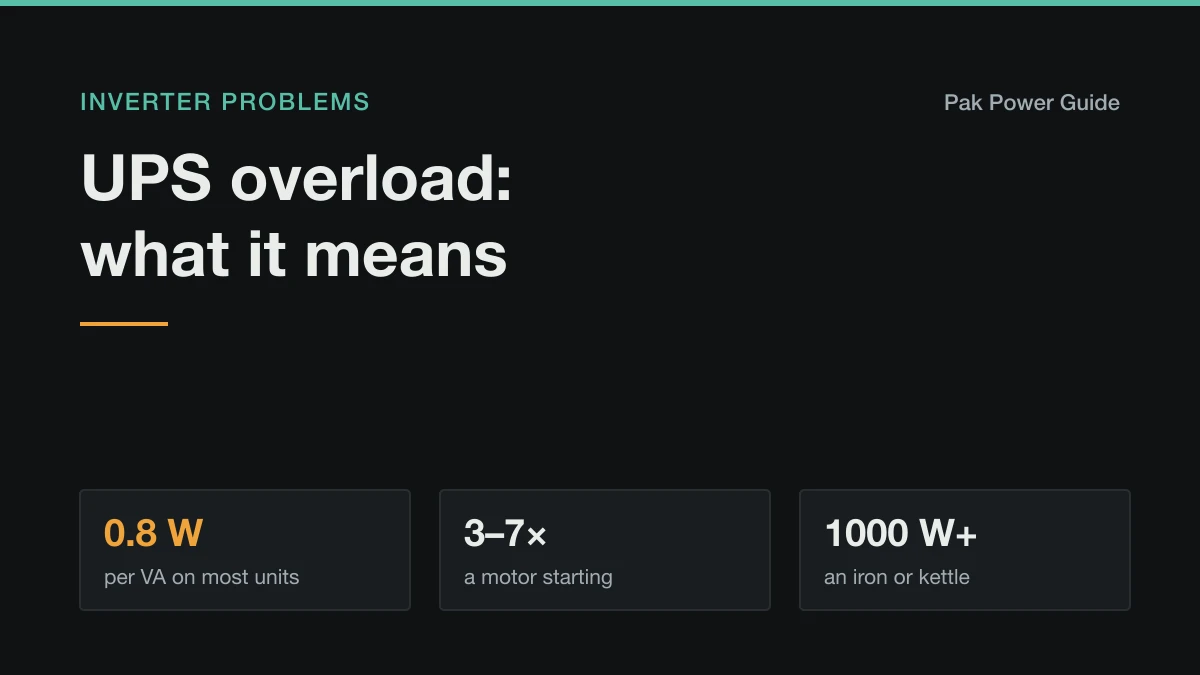
Overload means the load is more than the UPS can supply, or a motor's start-up surge is. How to find which appliance, and when it means a short circuit.
Low mains voltage, a wrong battery setting, a loose terminal or a worn battery cause most of it. How to tell which with one multimeter reading.
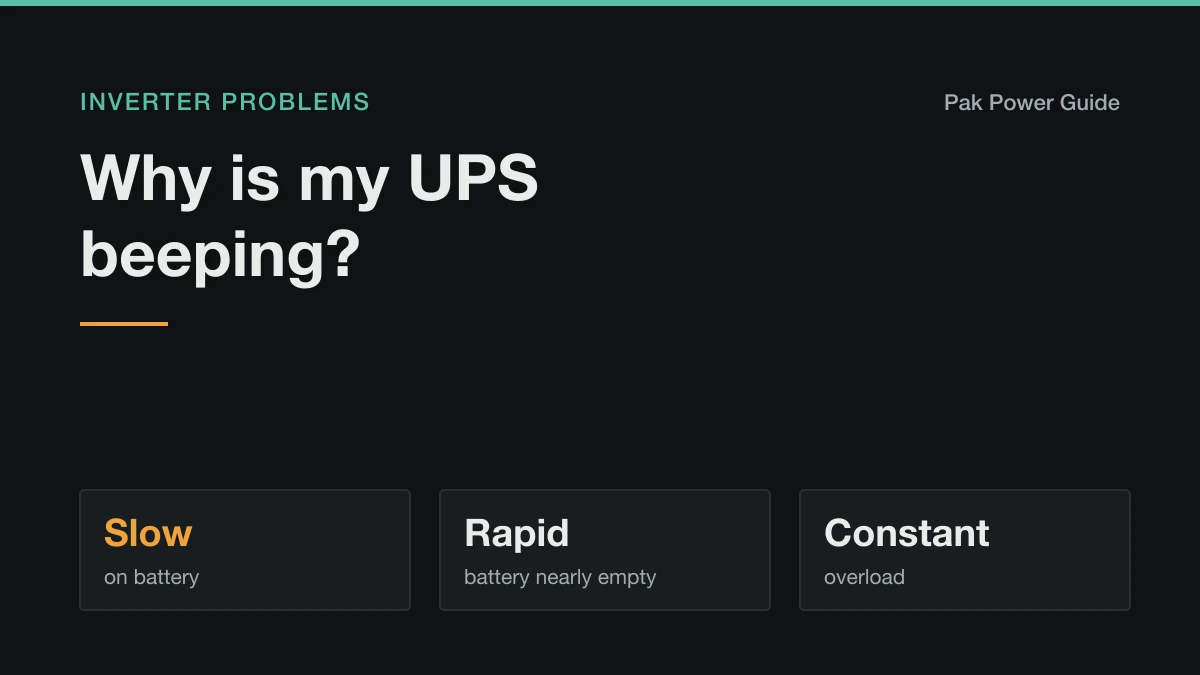
The pattern tells you why: a beep every few seconds means it is on battery, rapid beeping means the battery is low, and a constant tone means overload.
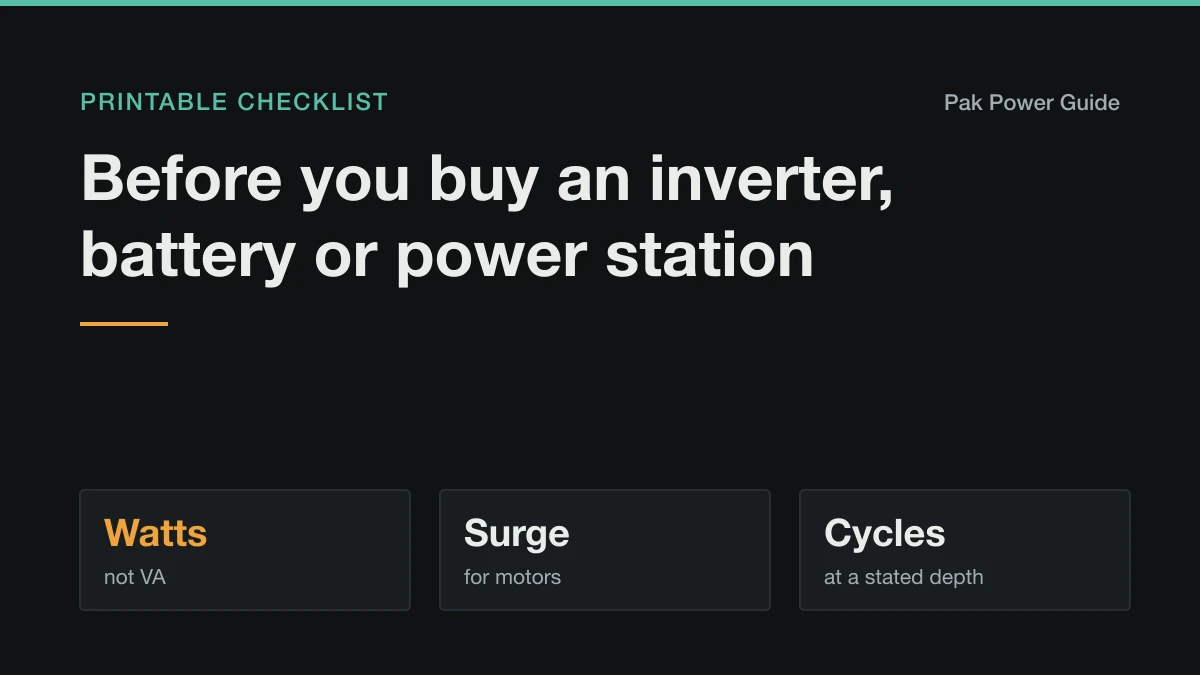
A printable checklist of the specs and questions that matter before buying a home inverter, a battery or a power station, and the sales claims to ignore.
A printable checklist for power cuts of any length: what to prepare now, before a forecast outage, during it, and when the power comes back.
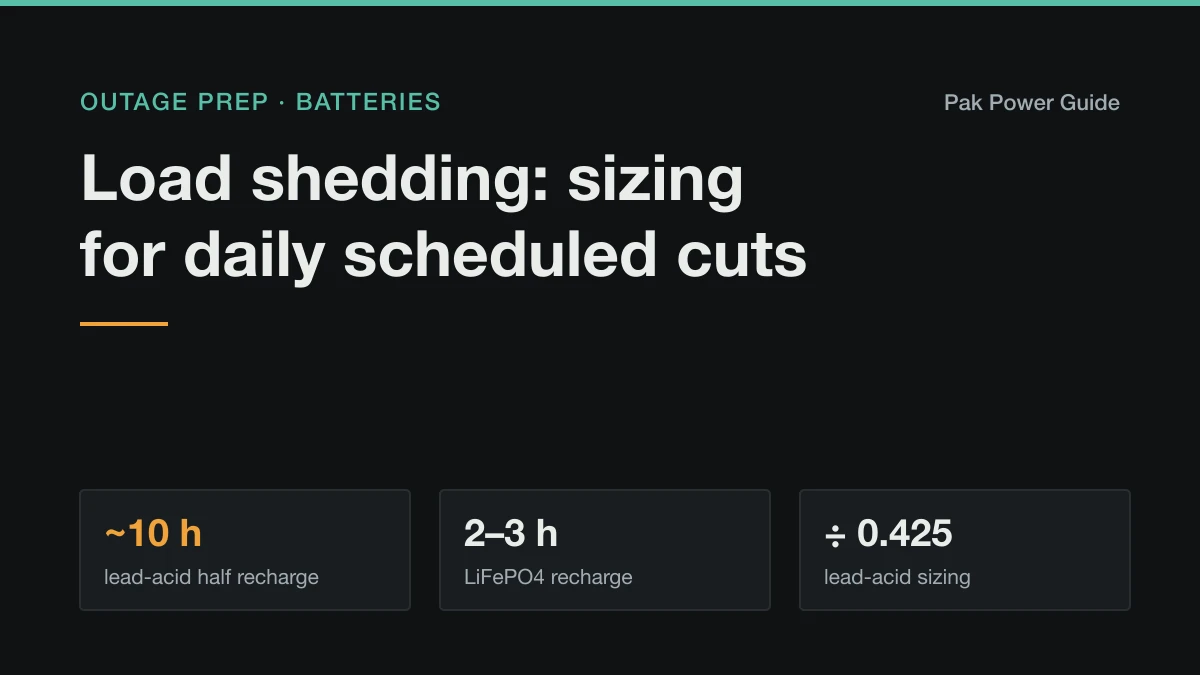
With cuts every day, the battery must refill between them. How to size for recharge time as well as backup, and why lithium often pays off.
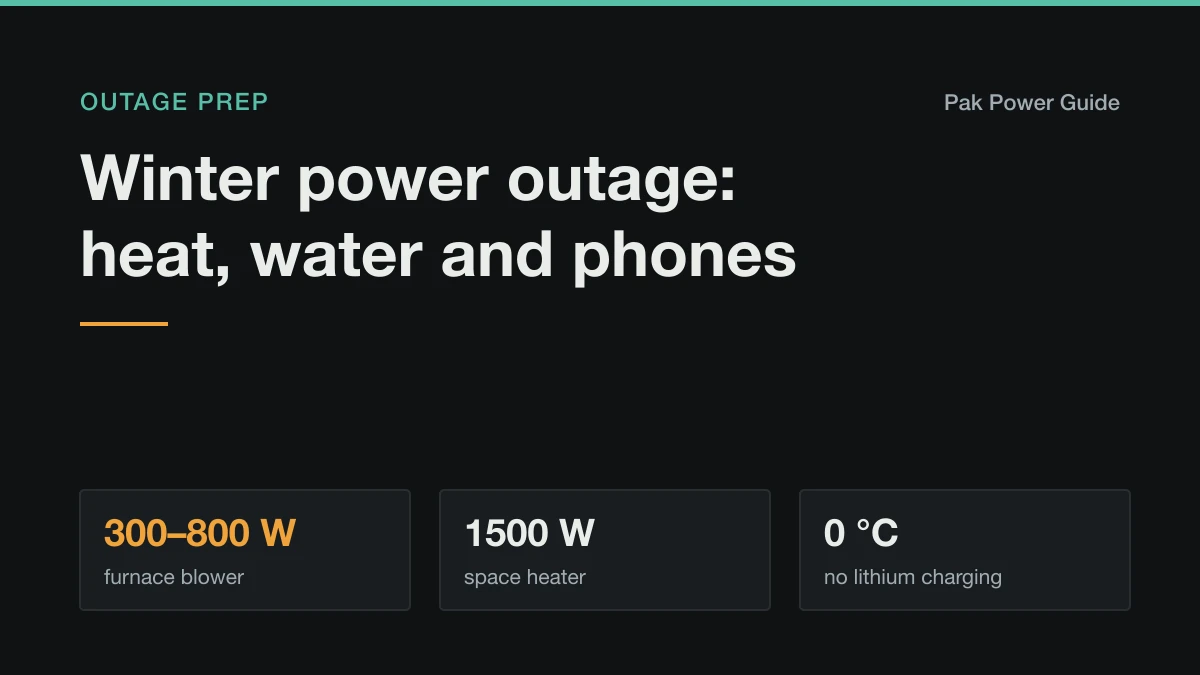
A gas furnace still needs electricity. How much backup keeps it running, why electric heaters flatten batteries, and safe ways to stay warm in an outage.
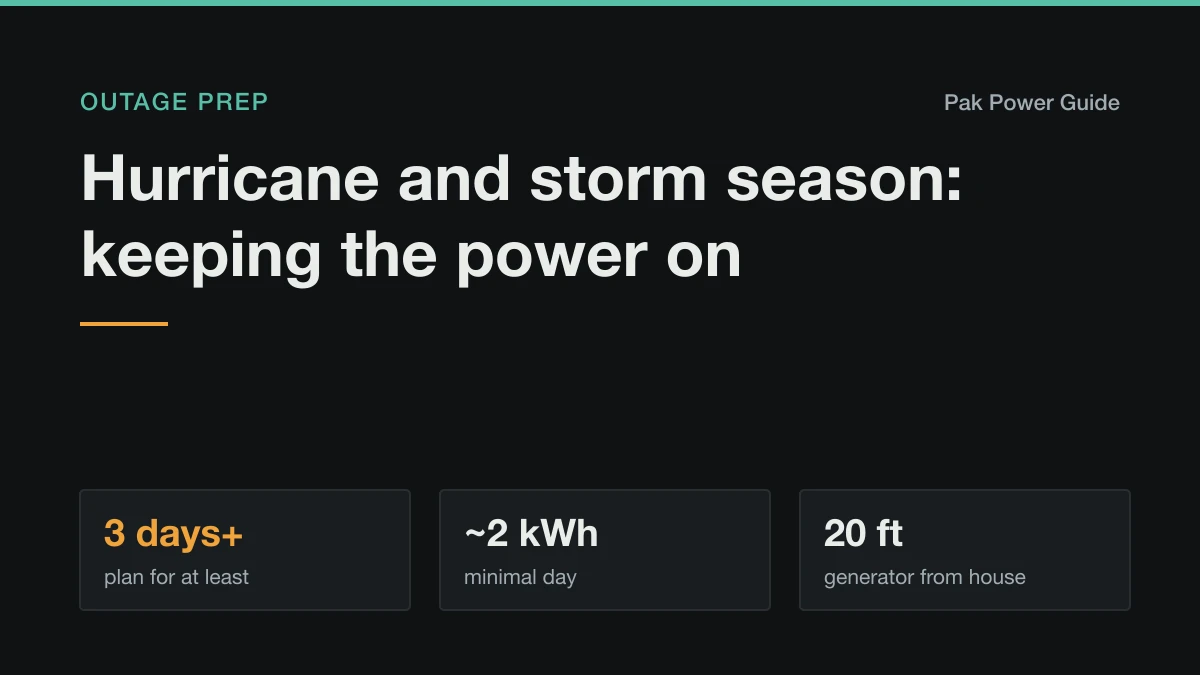
Storm outages last days, not hours. What to power, how to size batteries or a generator, safe generator use, and what to do before, during and after.
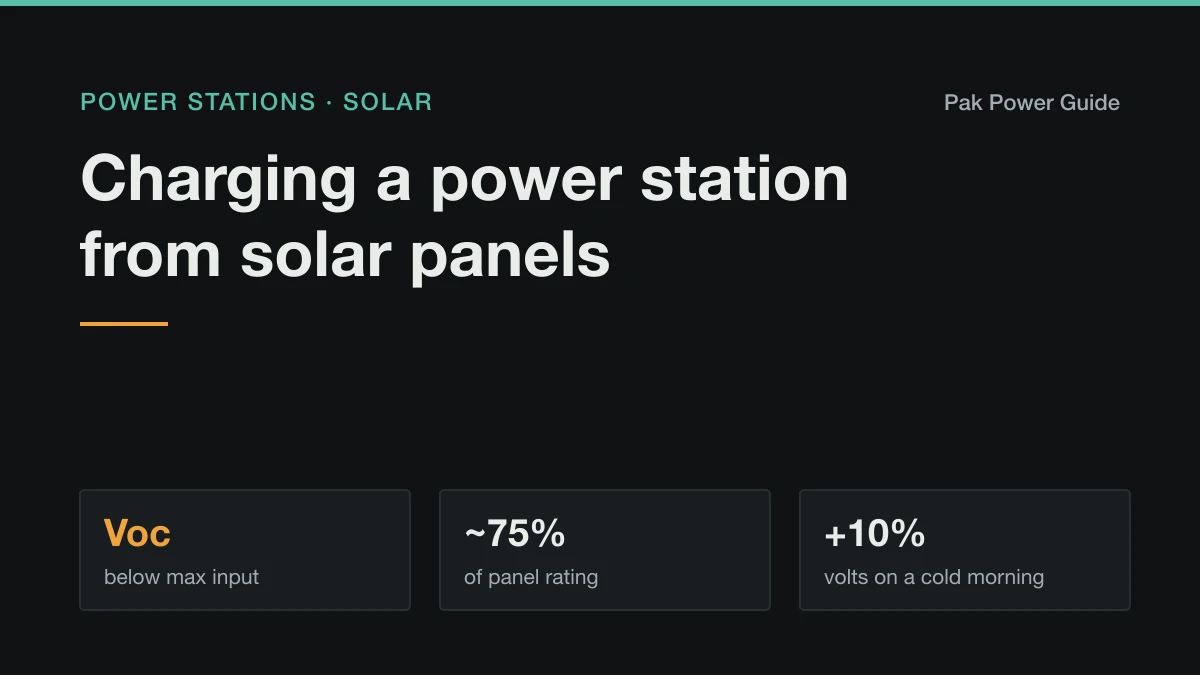
How to match solar panels to a power station's input voltage and current, series or parallel wiring, cold-weather voltage, and realistic charge times.
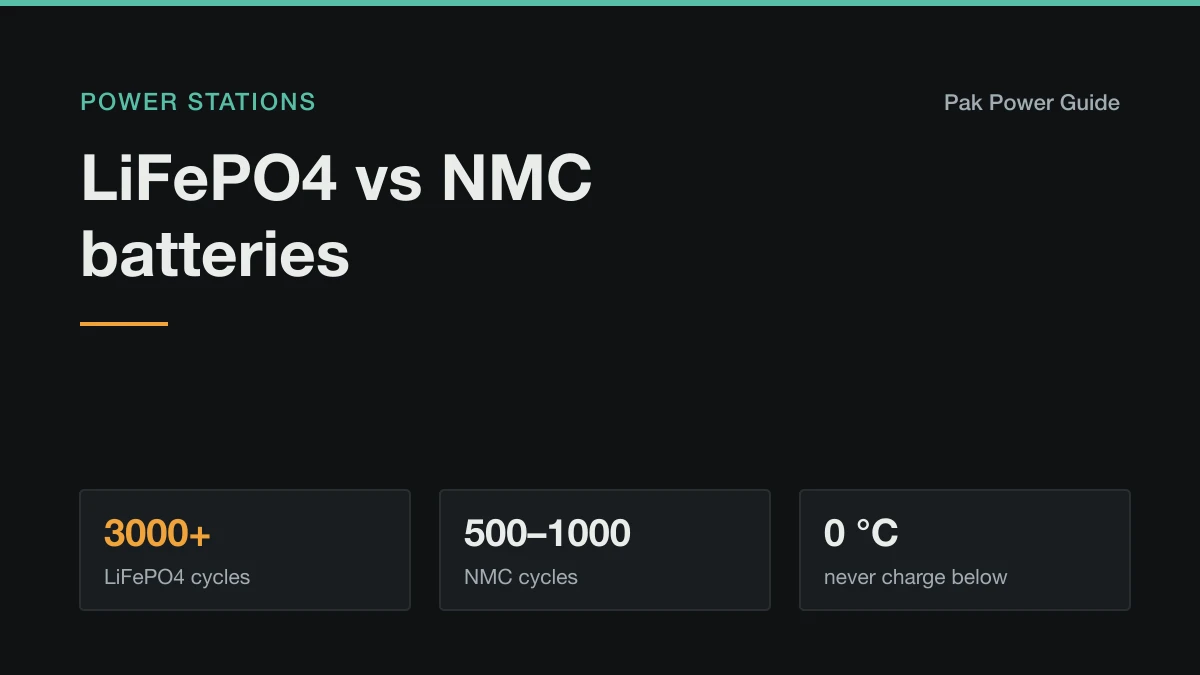
LiFePO4 lasts several times more cycles and is more heat tolerant; NMC is lighter. Which chemistry suits how you will use a power station.
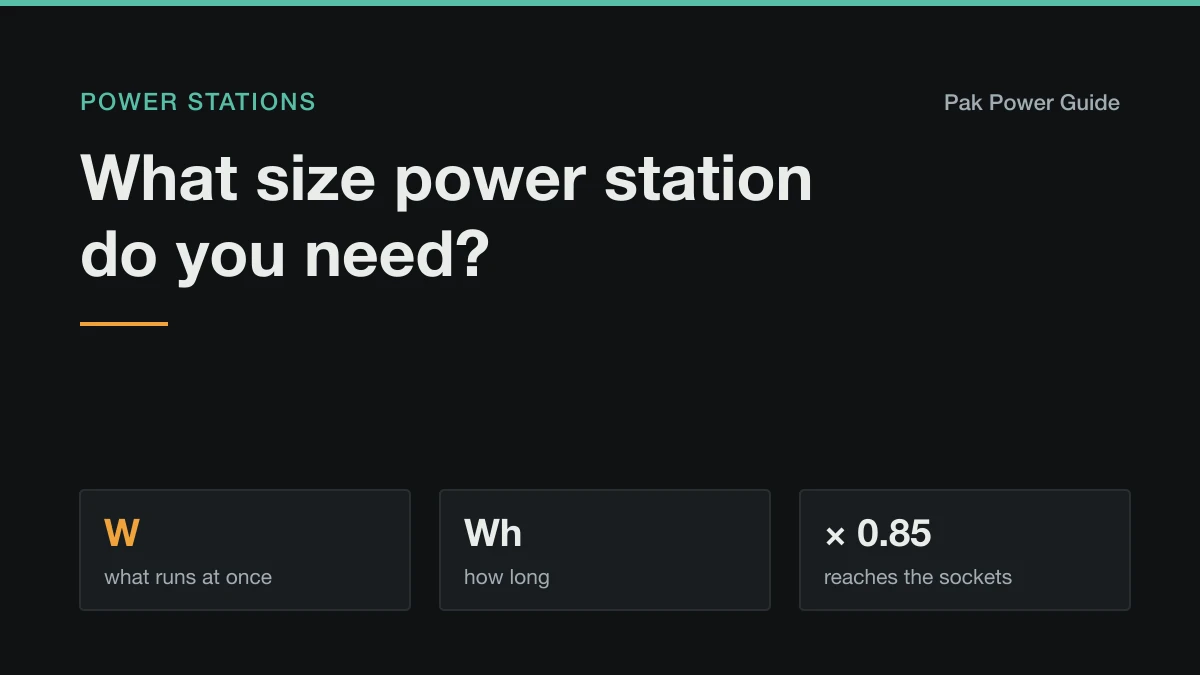
Two numbers pick a power station: output watts for what can run at once, watt-hours for how long. A five-step method with worked examples.
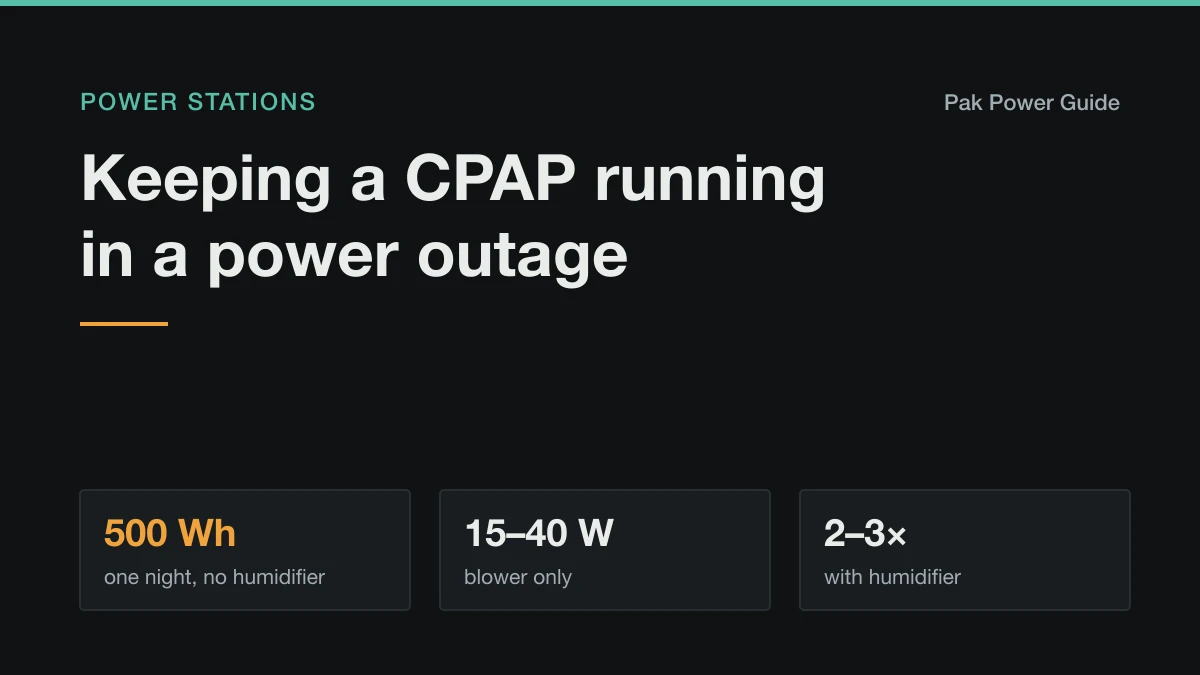
How much power a CPAP really uses, how big a battery gets you through the night, why DC beats AC, and the plan to have before a long outage.
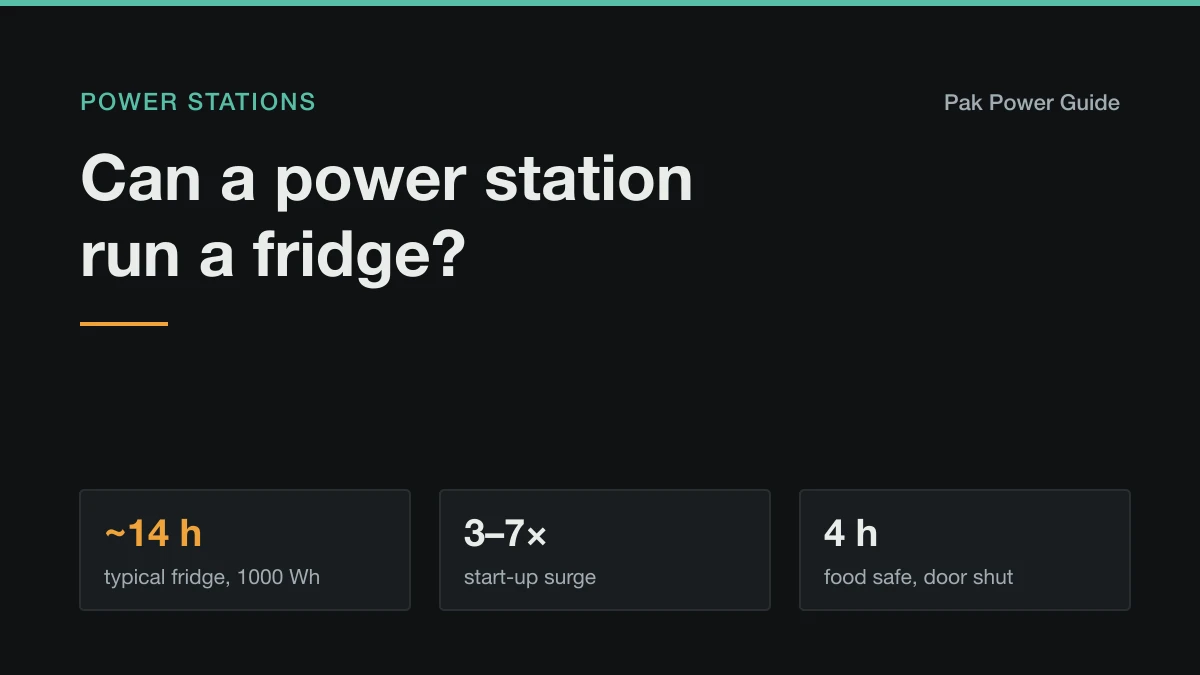
Usually yes, if it can supply the start-up surge. How to estimate hours from your fridge's daily kWh, and how long food stays safe while you decide.
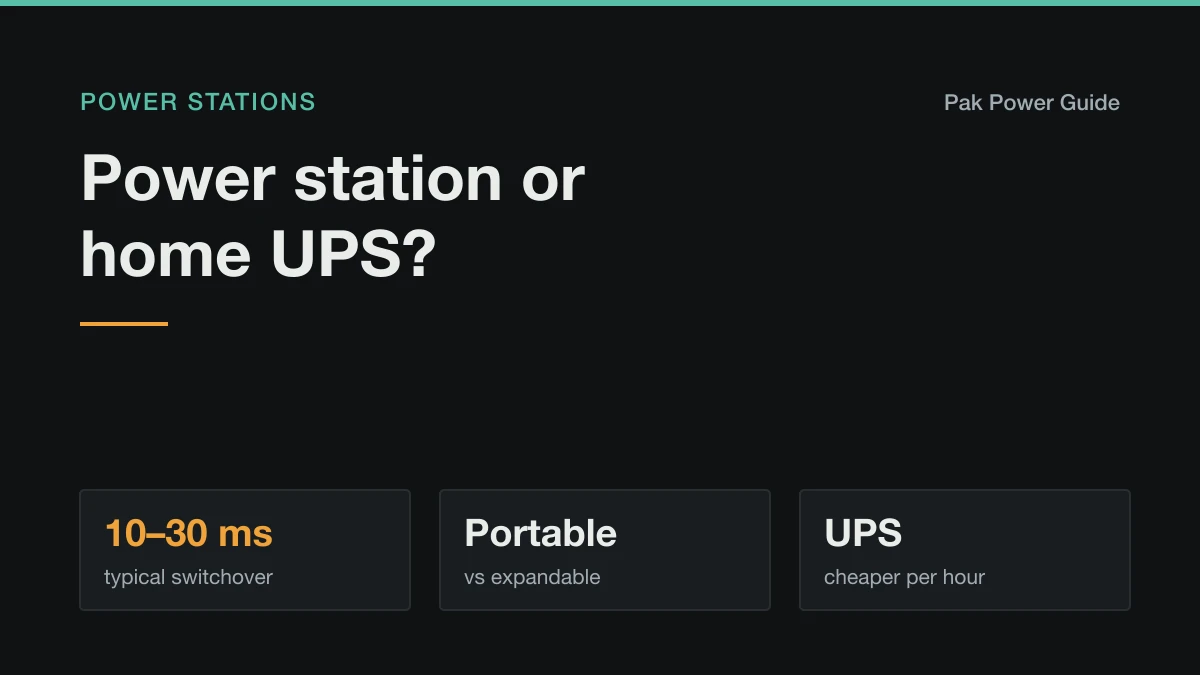
A power station is a UPS, charger and lithium battery in one box. When that convenience is worth paying for, and when a fixed inverter is the better buy.
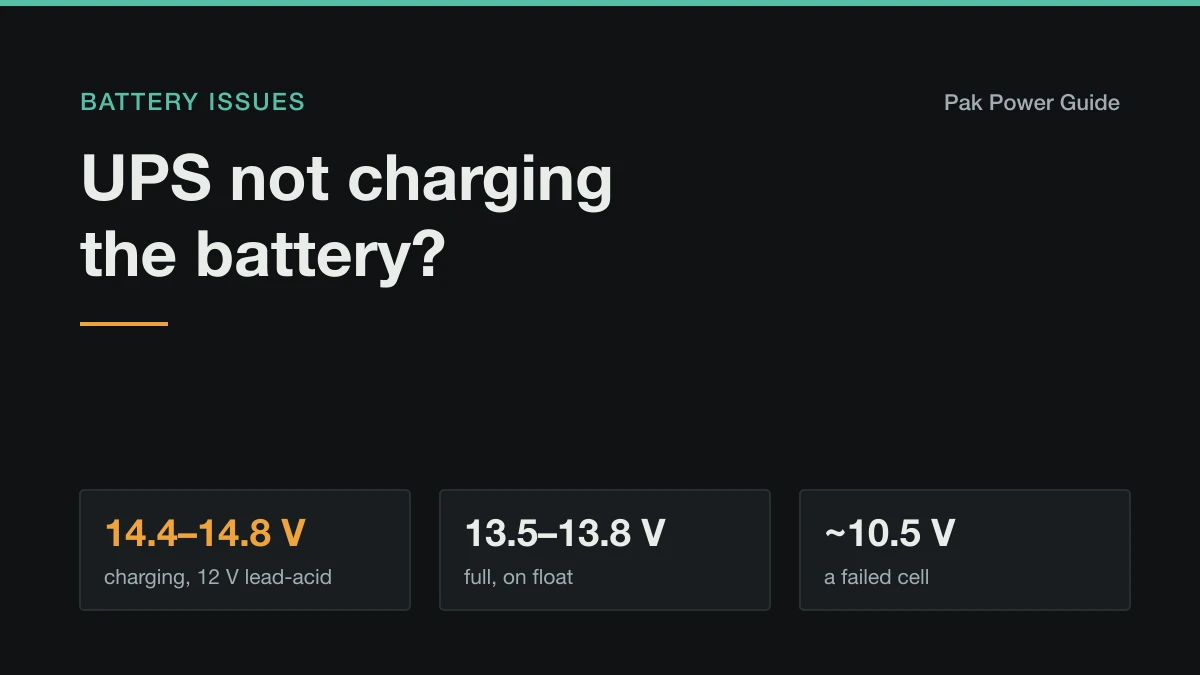
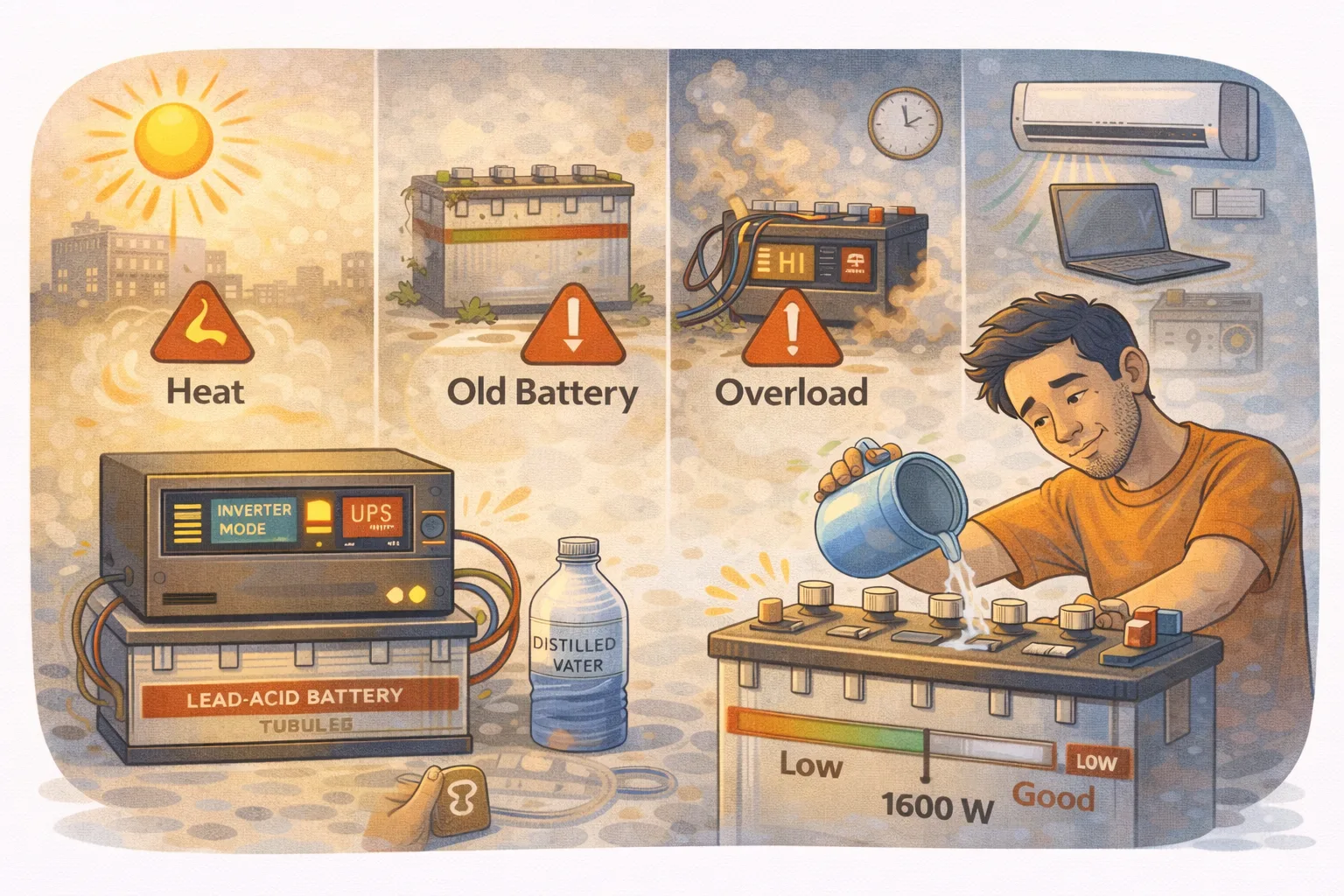
Topping up every few weeks means something is wrong: usually charge voltage set too high, heat, or too much charge current. The numbers to check each.
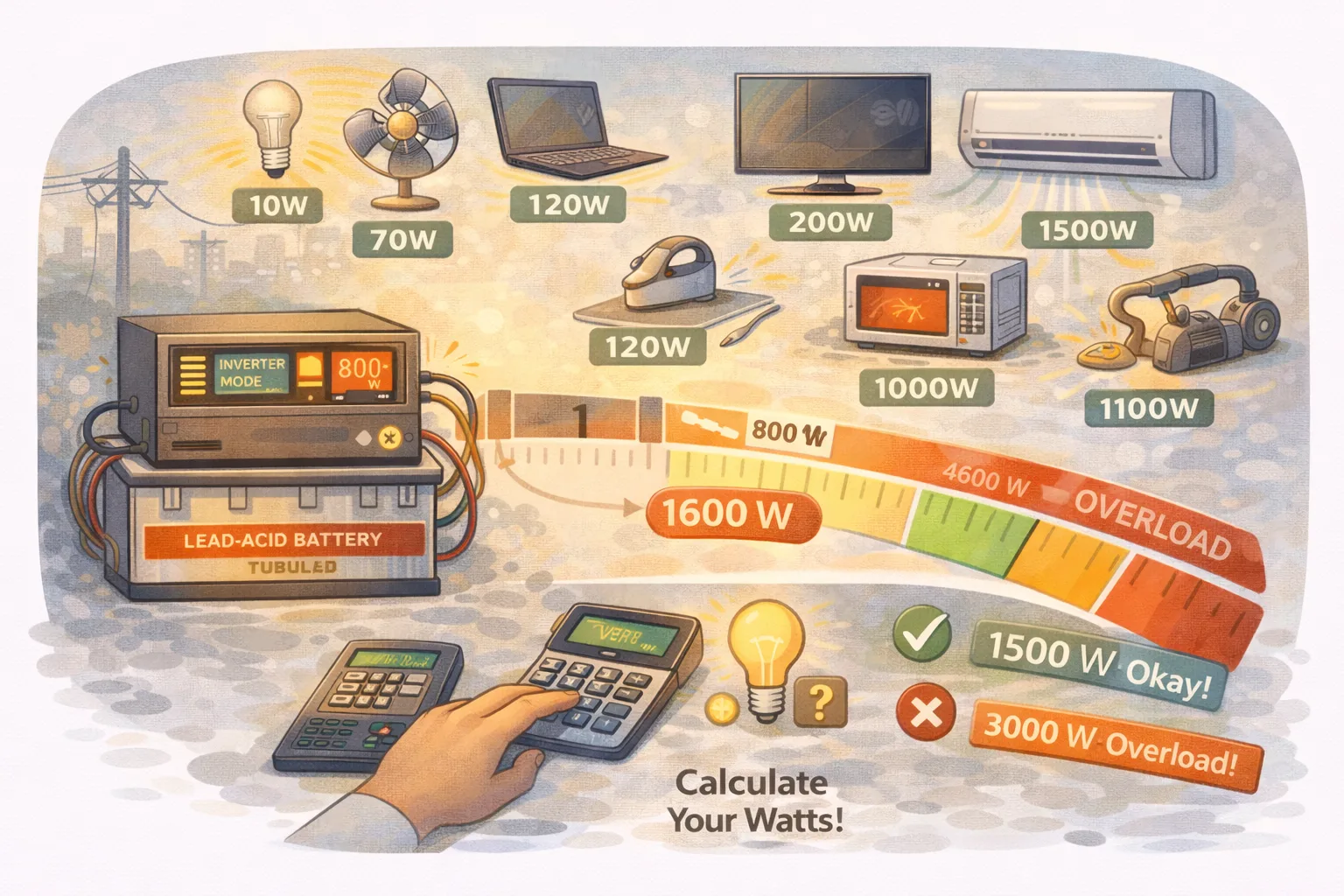
Two limits decide it: watts for what runs at once, watt-hours for how long. Work out both, including the start-up surge that trips inverters.
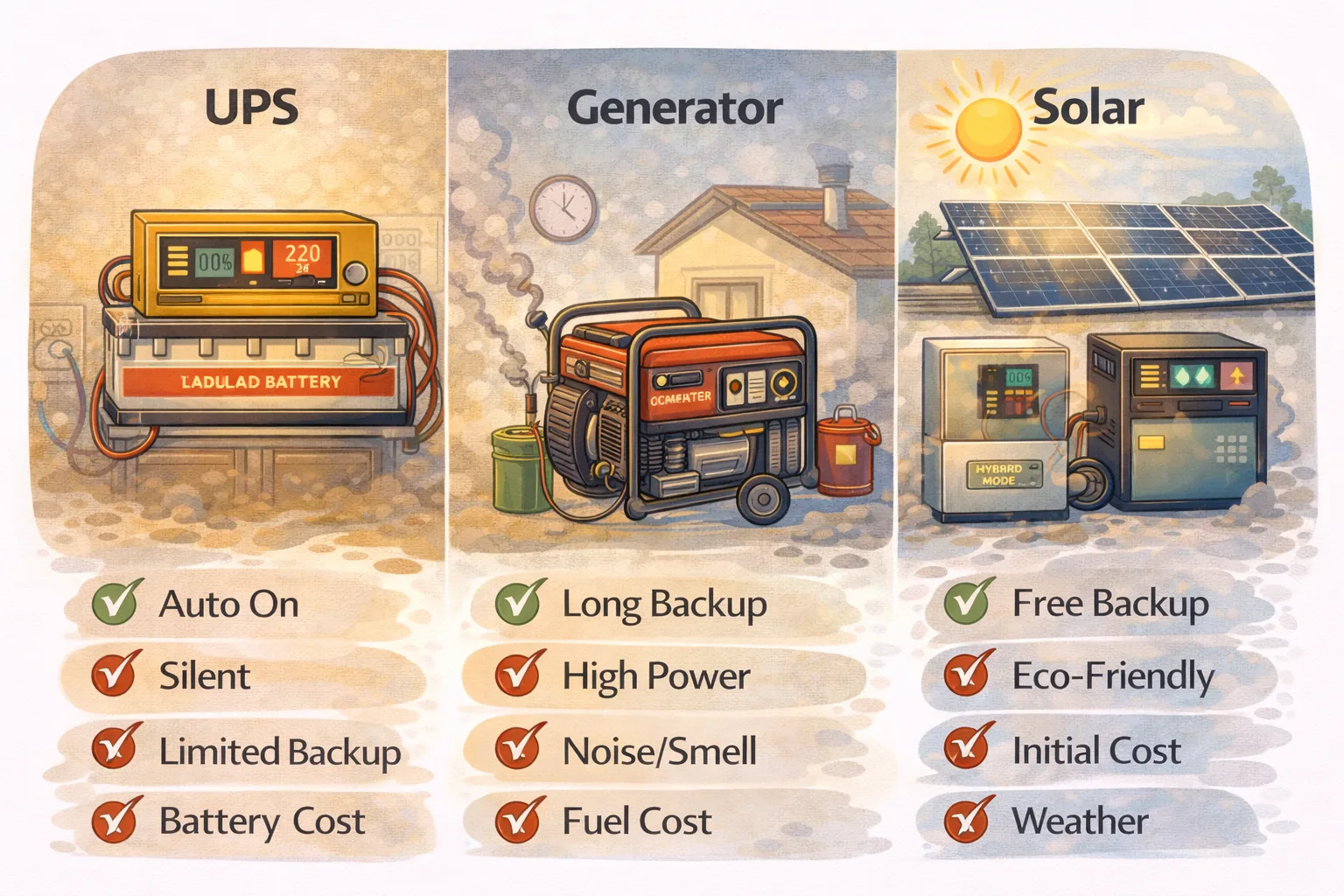
Battery, generator or panels? What each actually runs, what it costs over five years, and the safety rules — matched to how your outages behave.
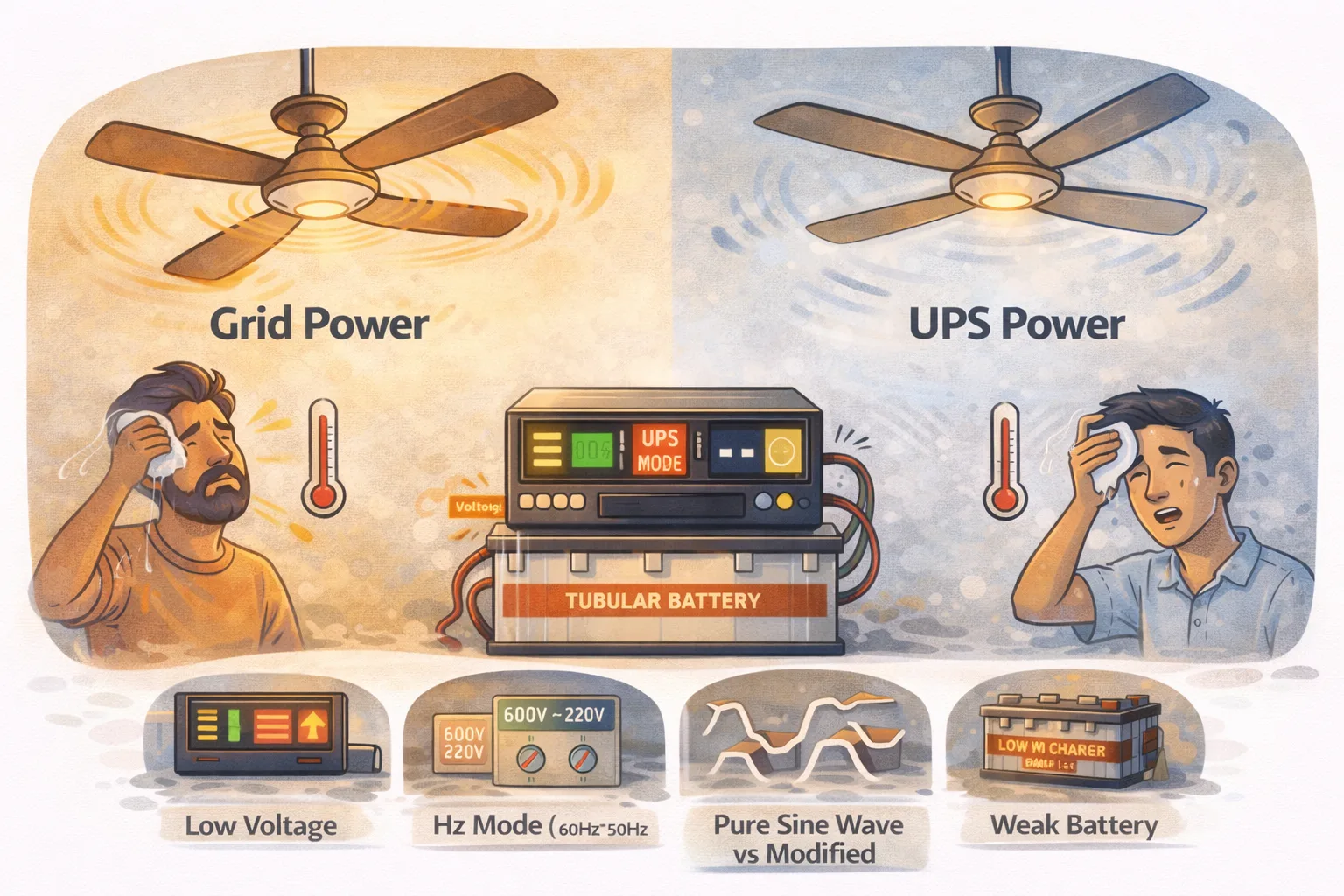
Fan speed follows voltage, and turning force its square, so a small sag shows. How to tell a weak battery from a waveform problem or a tired fan.
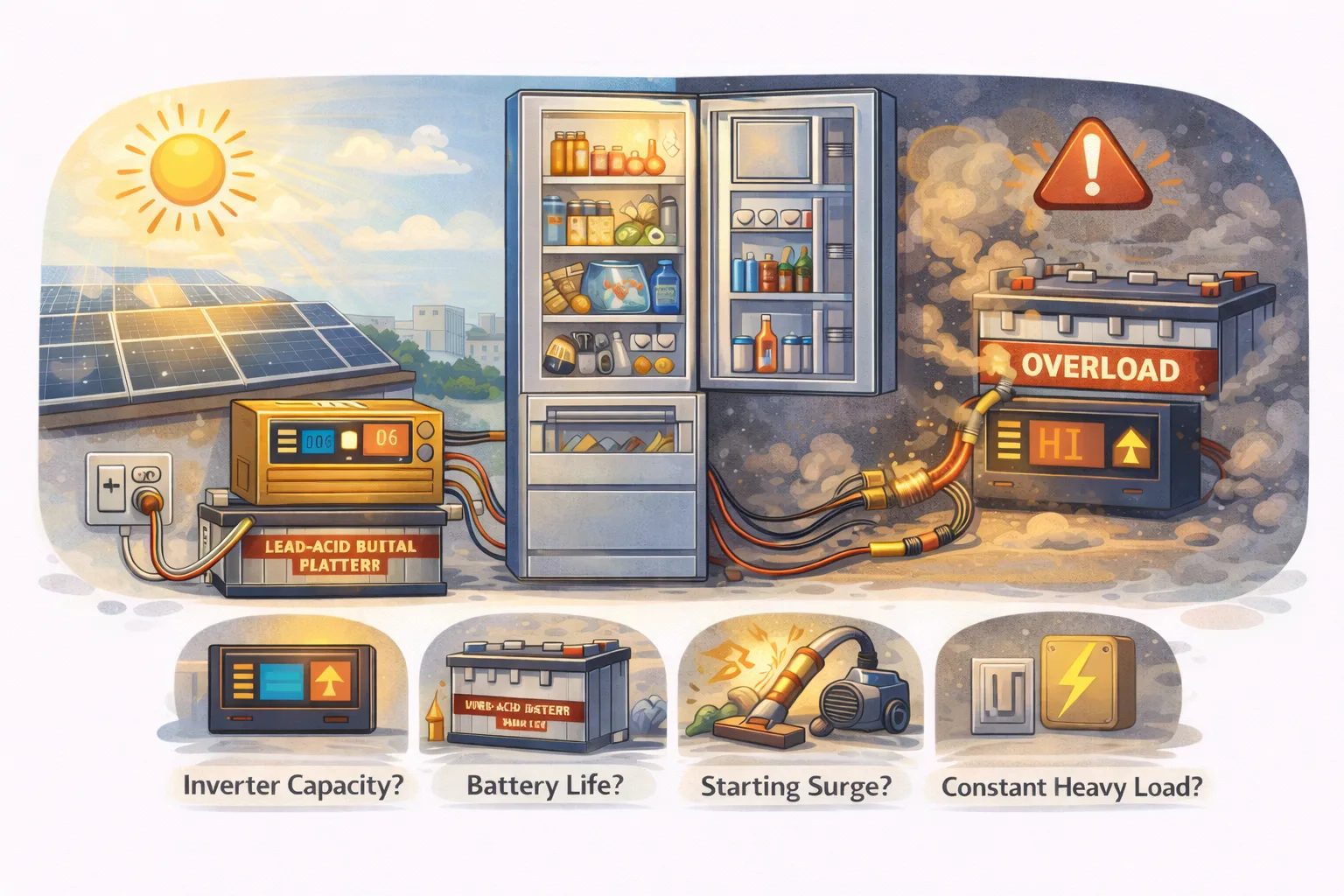
Often you do not need to — a closed fridge stays cold for about 4 hours. When you do, it comes down to surge rating, waveform and duty cycle.
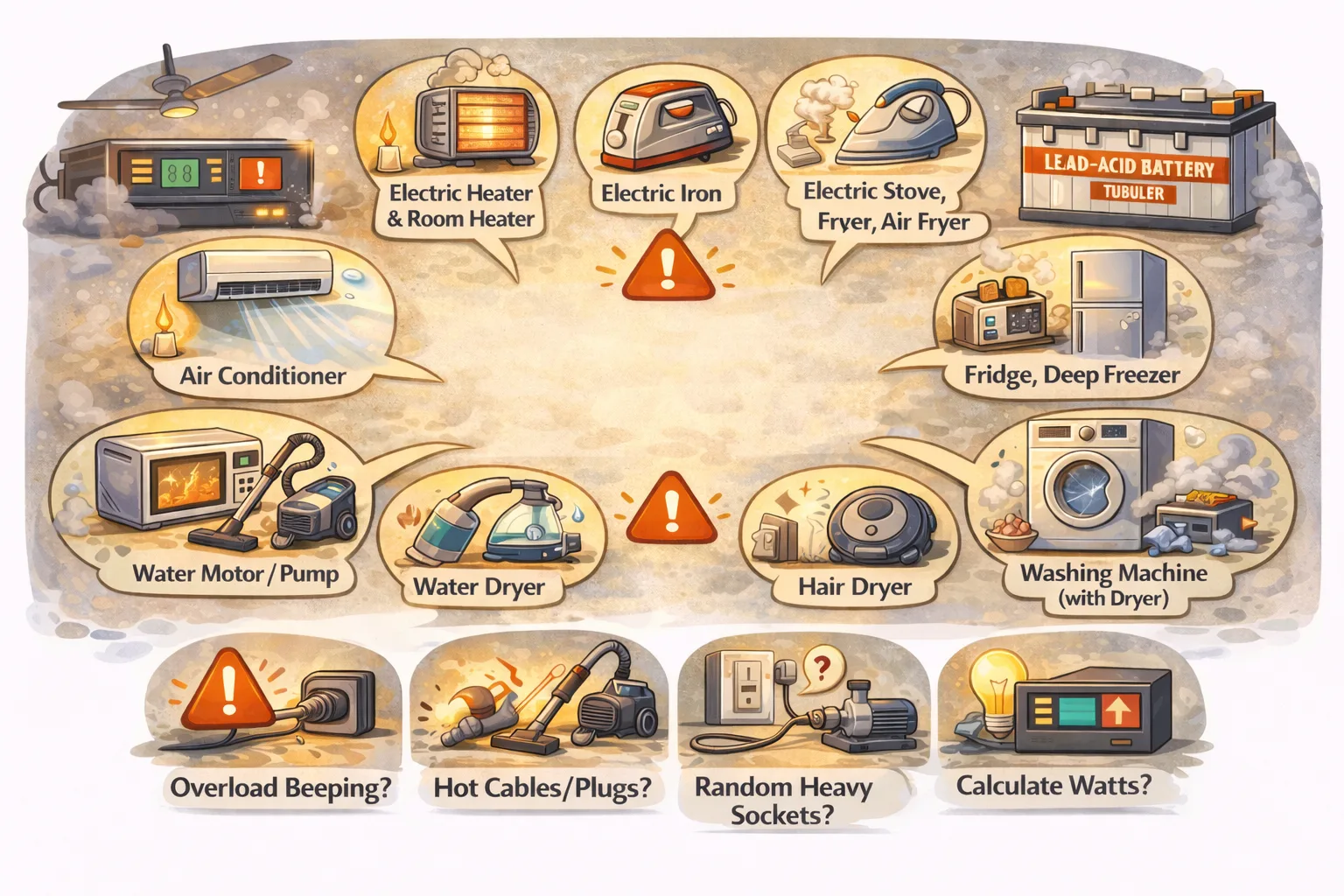
Nothing is truly forbidden, but an iron uses a whole evening of backup in half an hour. What each appliance costs in runtime, and what to move off.
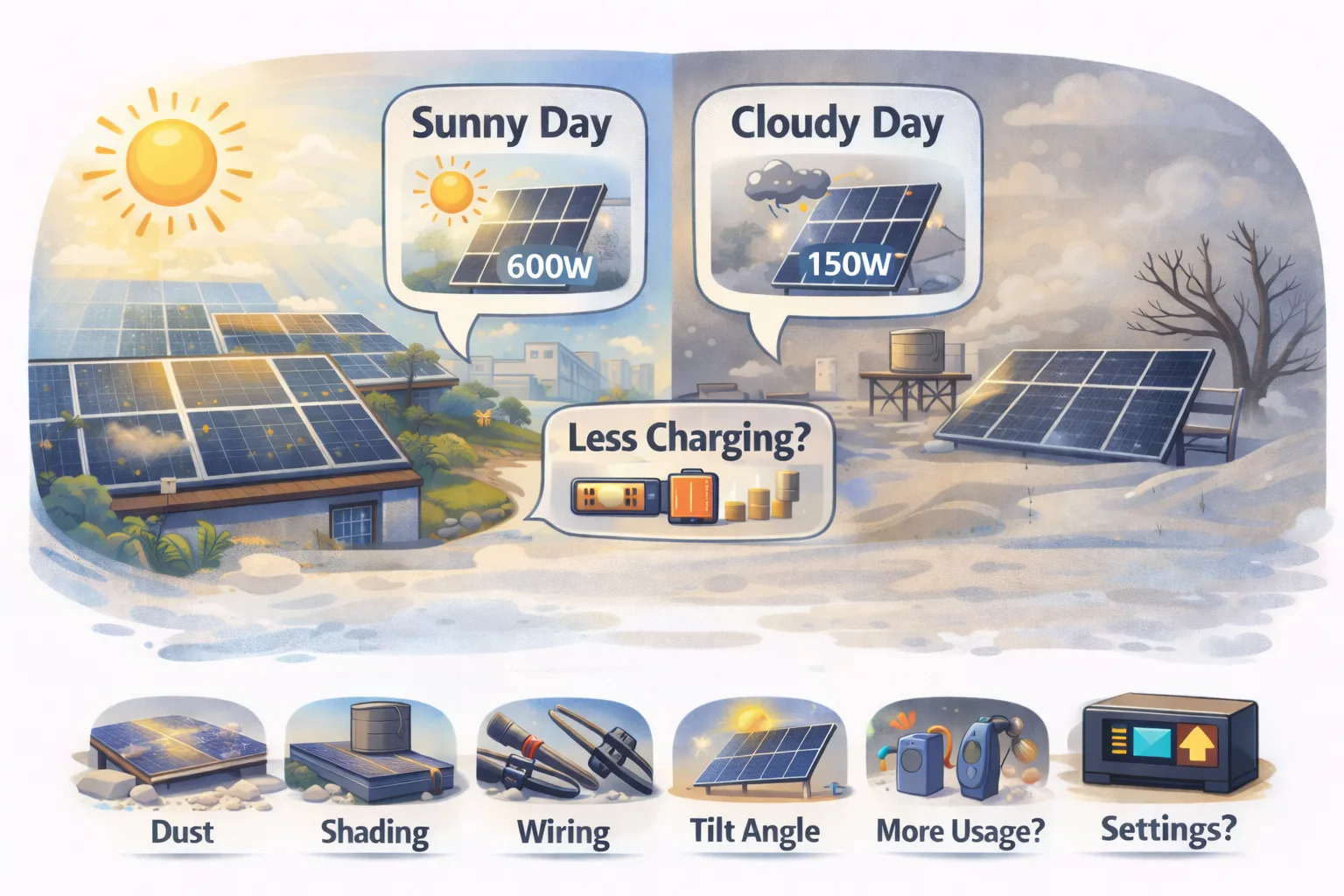
Yes — expect roughly half of summer output. The sum that tells you whether your drop is normal, or whether dust, shading or settings cost you more.
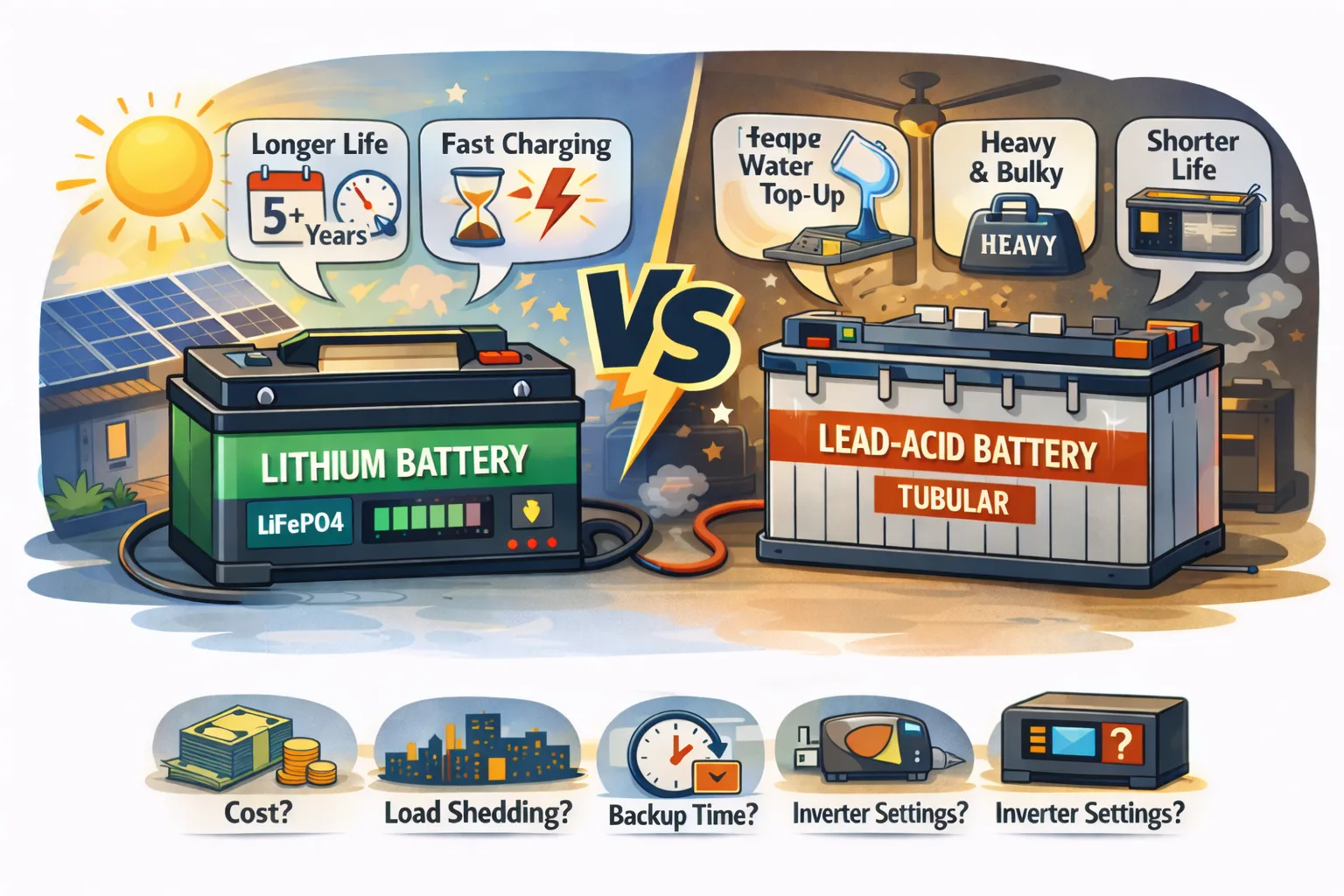
It turns on how often you deep-discharge. Cycle life, usable capacity and charging compared, plus the compatibility checks that catch people out.
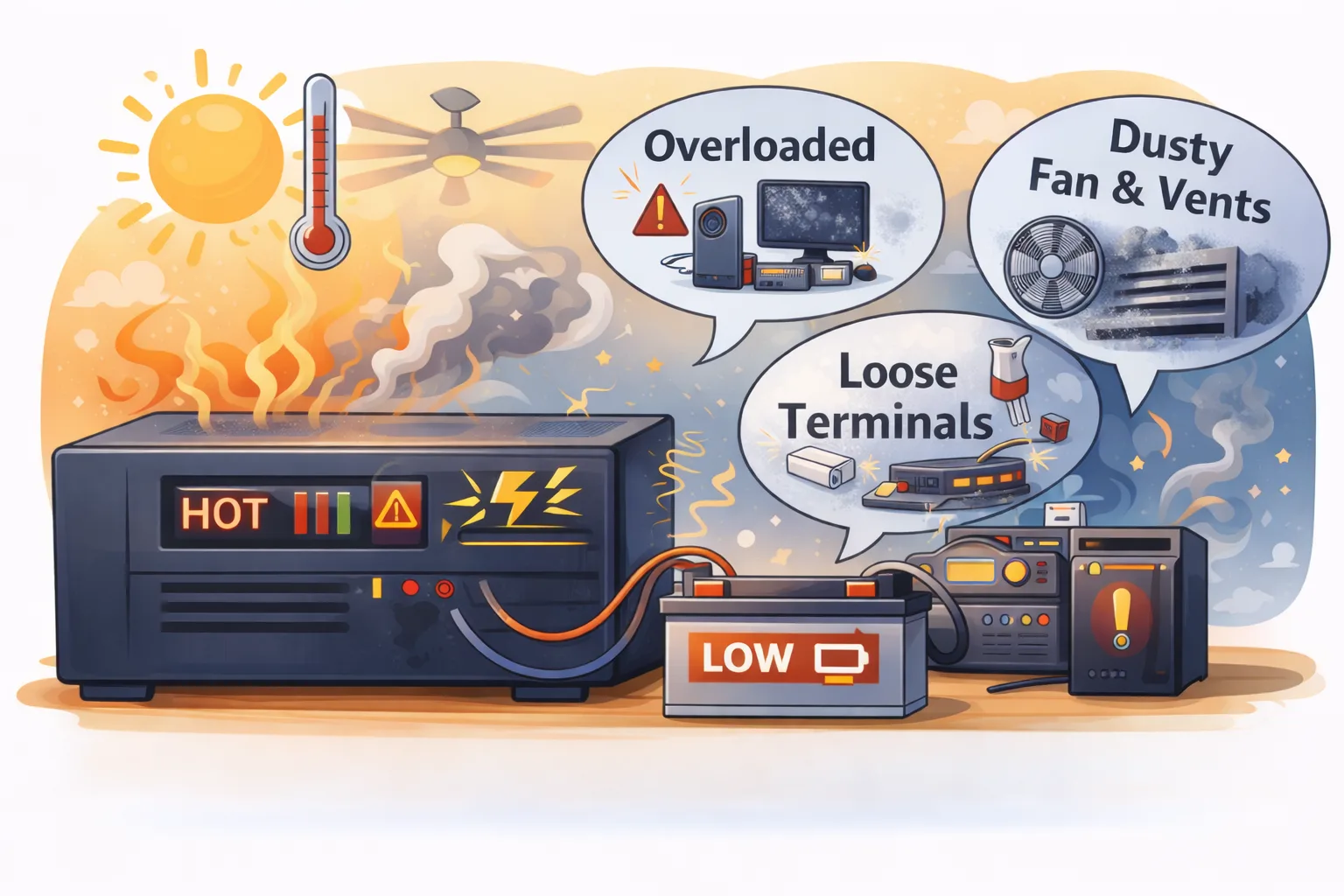
An inverter turns about a tenth of what it delivers into heat. Where that heat goes decides whether it shuts down — and how fast your batteries age.
A TV usually copes. A modern desktop often will not — active PFC power supplies expect a smooth input. Which devices mind, and how to tell what you have.
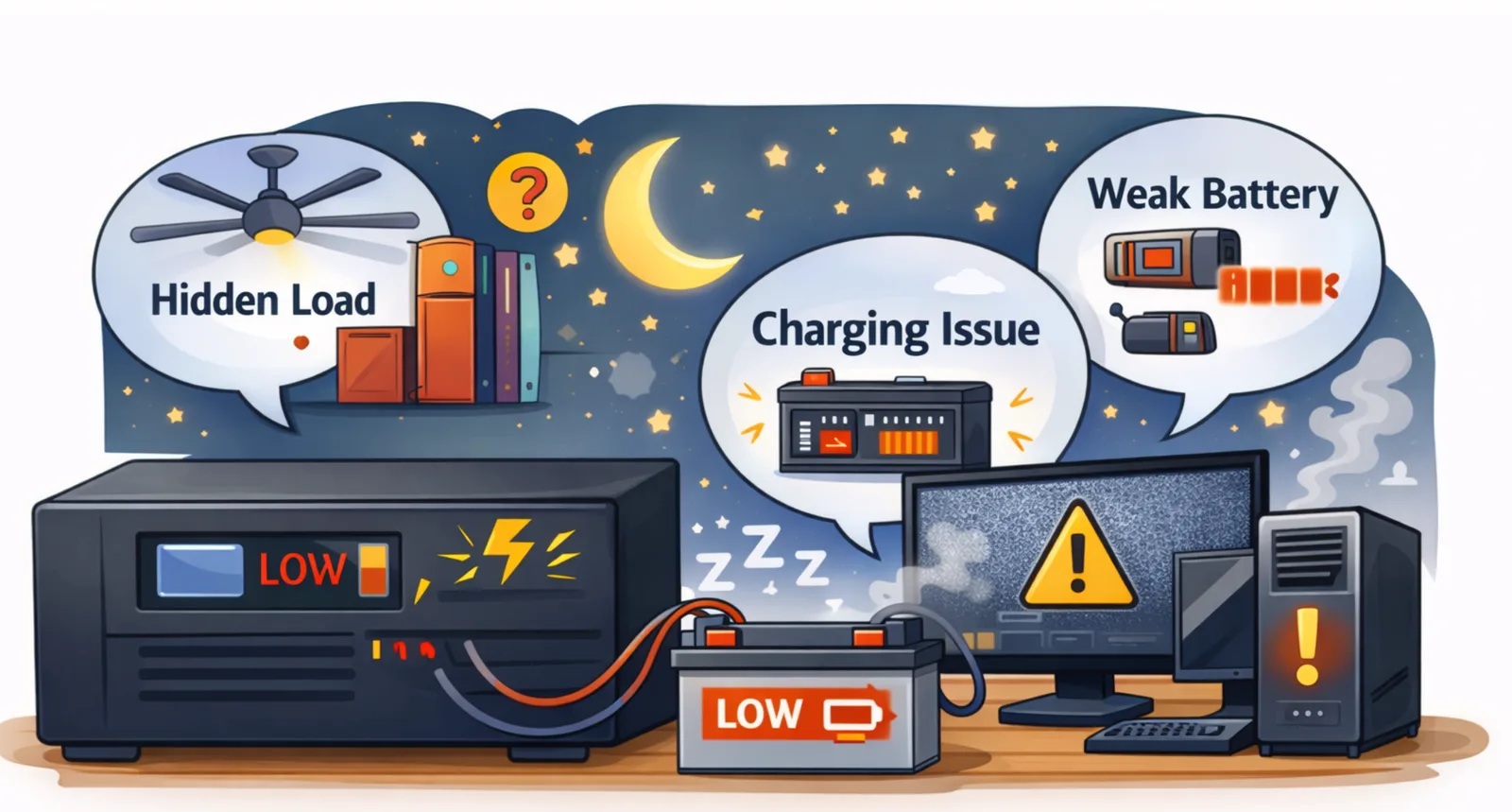
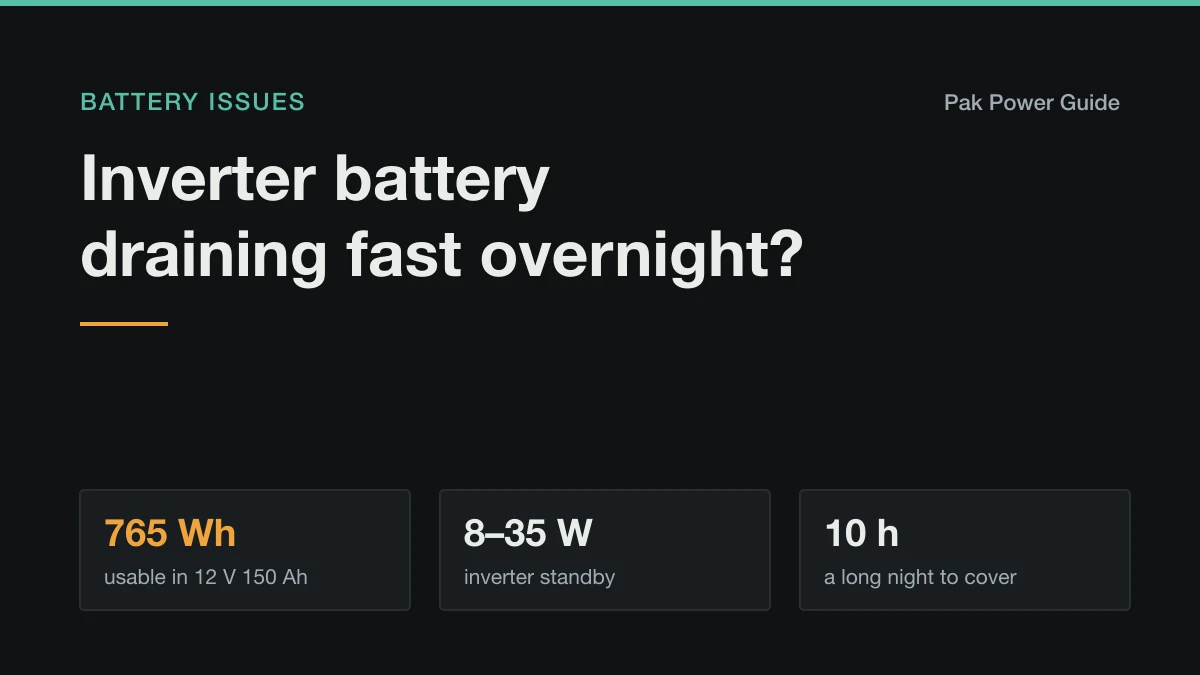
Usually it is not the battery. Standby draw, always-on devices and a bank that never fully charged cause most of it — with the numbers to check each.
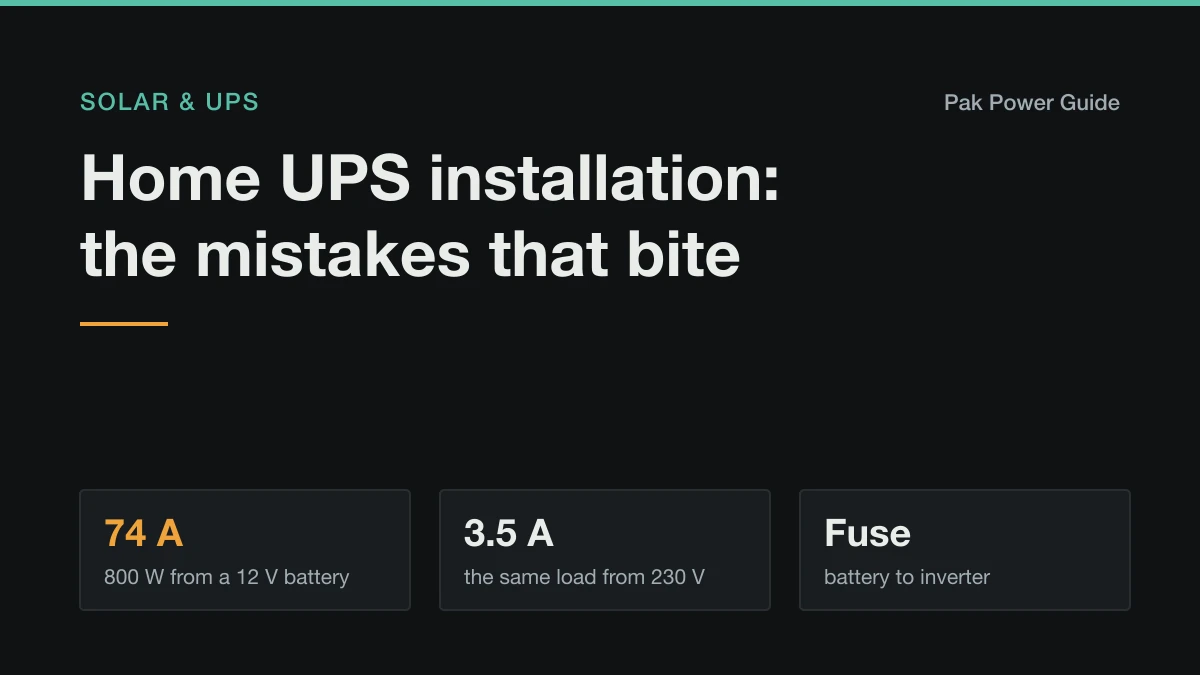
Most poor UPS installs fail on two things: cable too thin for the current, and no fuse between battery and inverter. The numbers for both, and the rest.
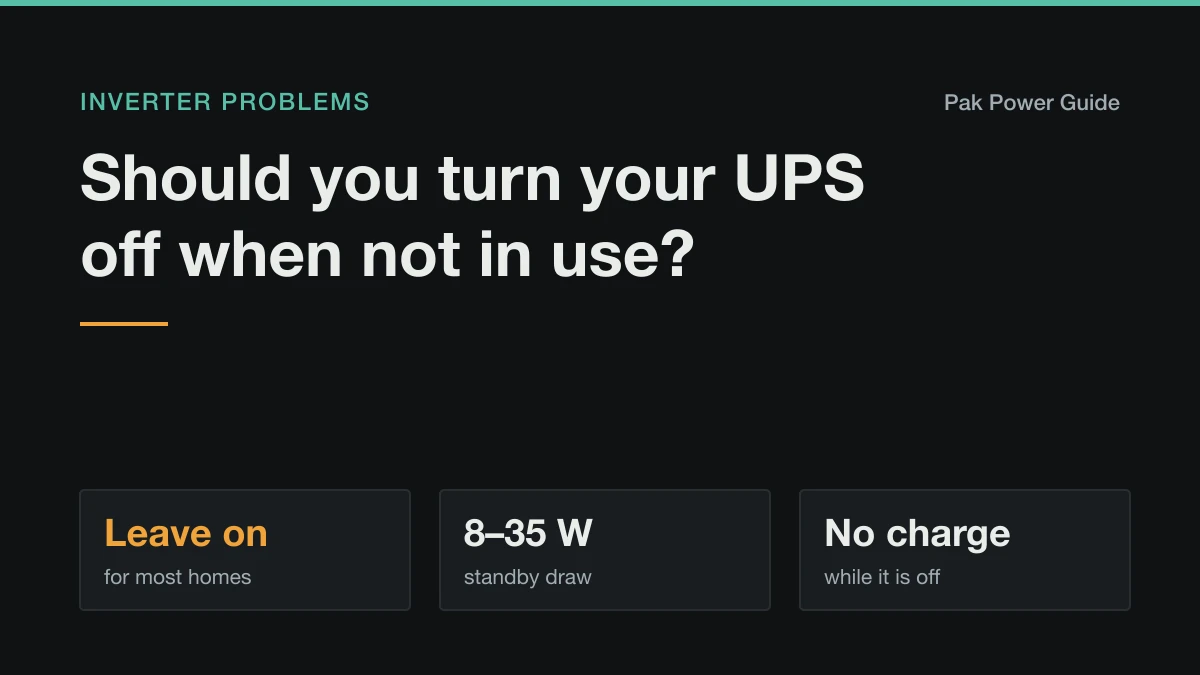
Usually leave it on. Switching off saves 8–35 W of standby but also stops charging, and a lead-acid battery left partly charged loses capacity permanently.
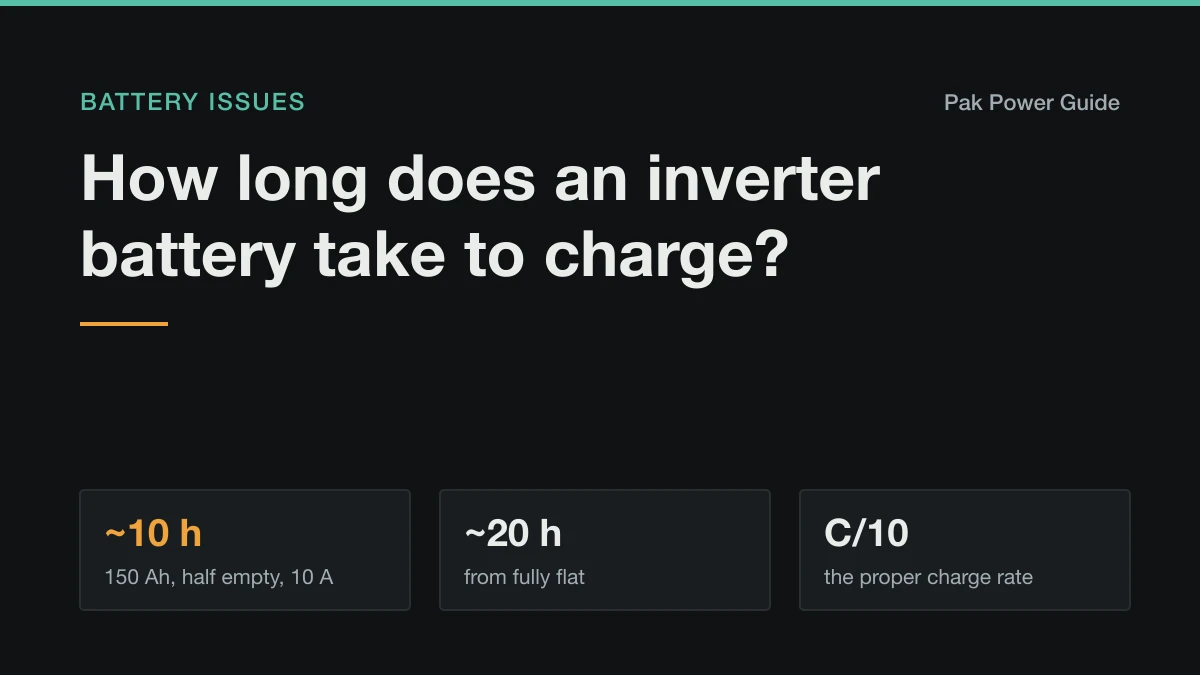
About ten hours for a 150 Ah battery from half empty on a 10 A charger, and the last fifth is the slowest. Why 'full' often is not, and what to check.
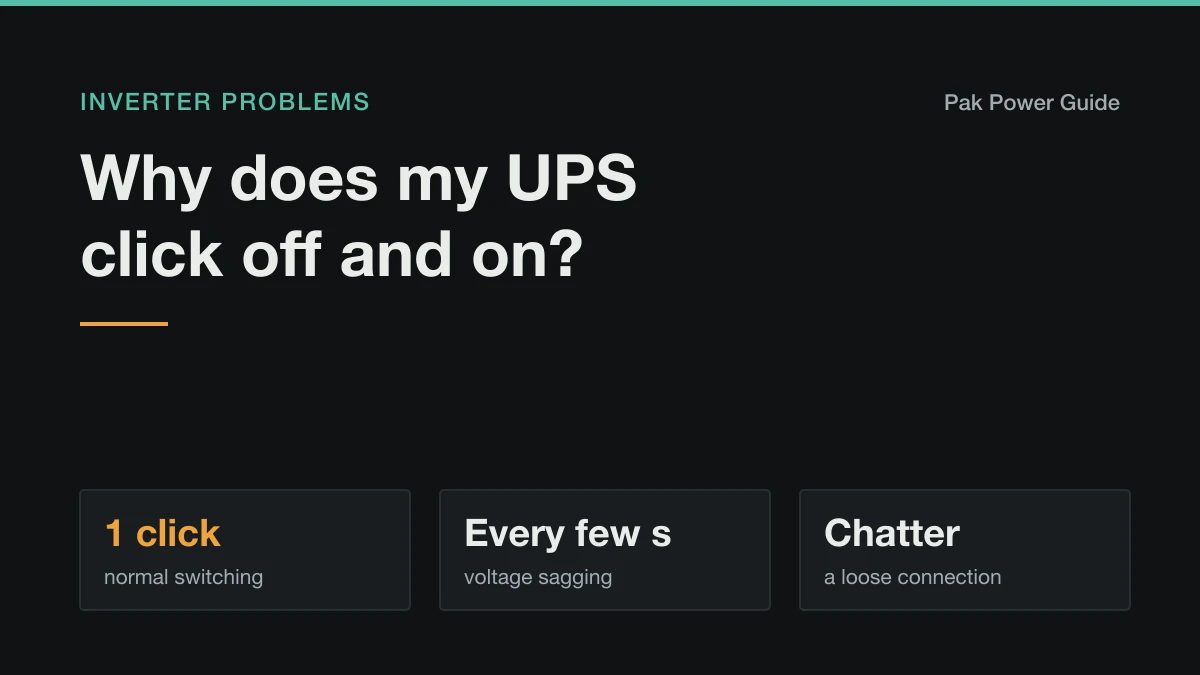
The rhythm tells you the cause: one click is normal switching, clicks every few seconds mean low voltage, and rapid chatter means a loose connection.
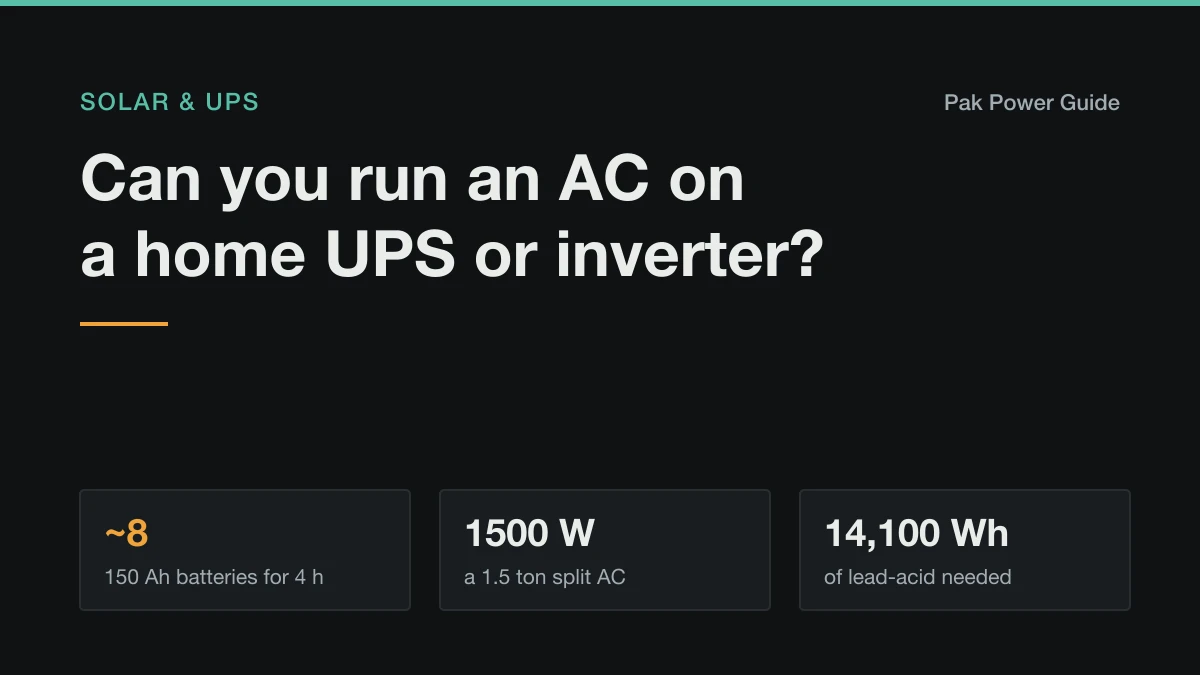
Four hours of a 1.5 ton AC needs about eight batteries. The arithmetic behind that, what a workable setup looks like, and what to do instead.