LiFePO4 vs NMC Power Stations: Lifespan, Safety and Cost
LiFePO4 lasts several times more cycles and is more heat tolerant; NMC is lighter. Which chemistry suits how you will use a power station.
Nearly every power station uses one of two lithium chemistries: LiFePO4 (lithium iron phosphate, also written LFP) or NMC (nickel manganese cobalt). The spec sheet names it, usually in small print. It matters more than most of the numbers printed large.
Short answer: buy LiFePO4 unless weight really matters to you. It lasts several times longer, tolerates heat better, and most current models use it anyway.
The differences that matter
| LiFePO4 (LFP) | NMC | |
|---|---|---|
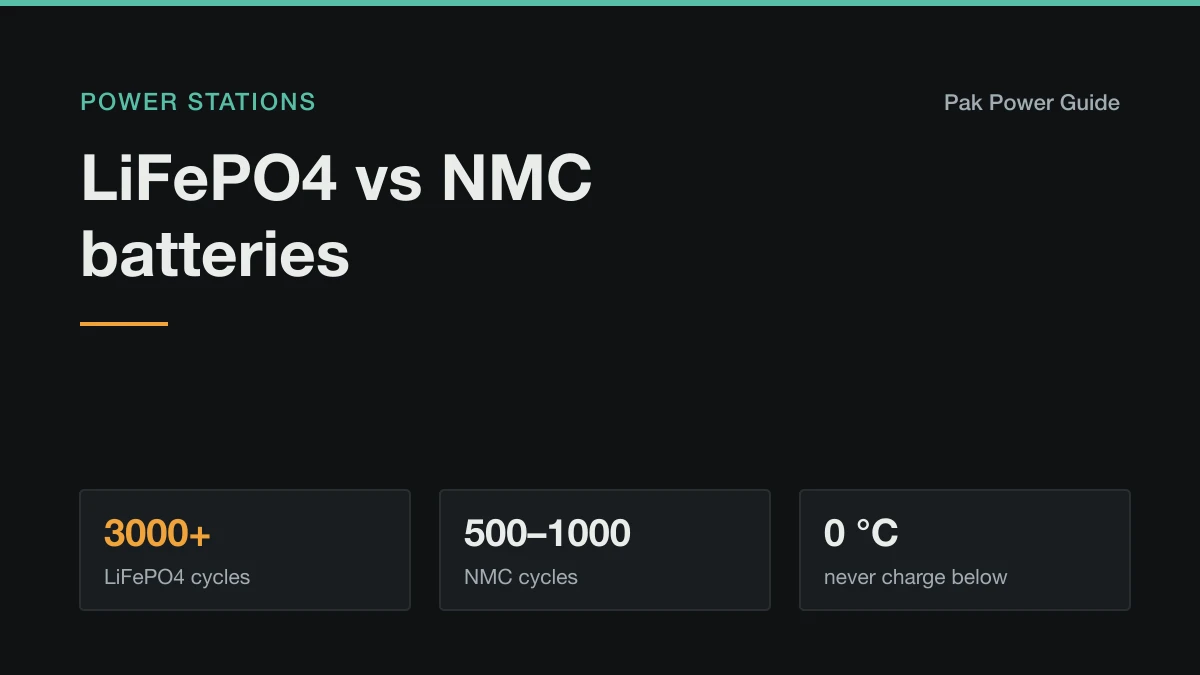
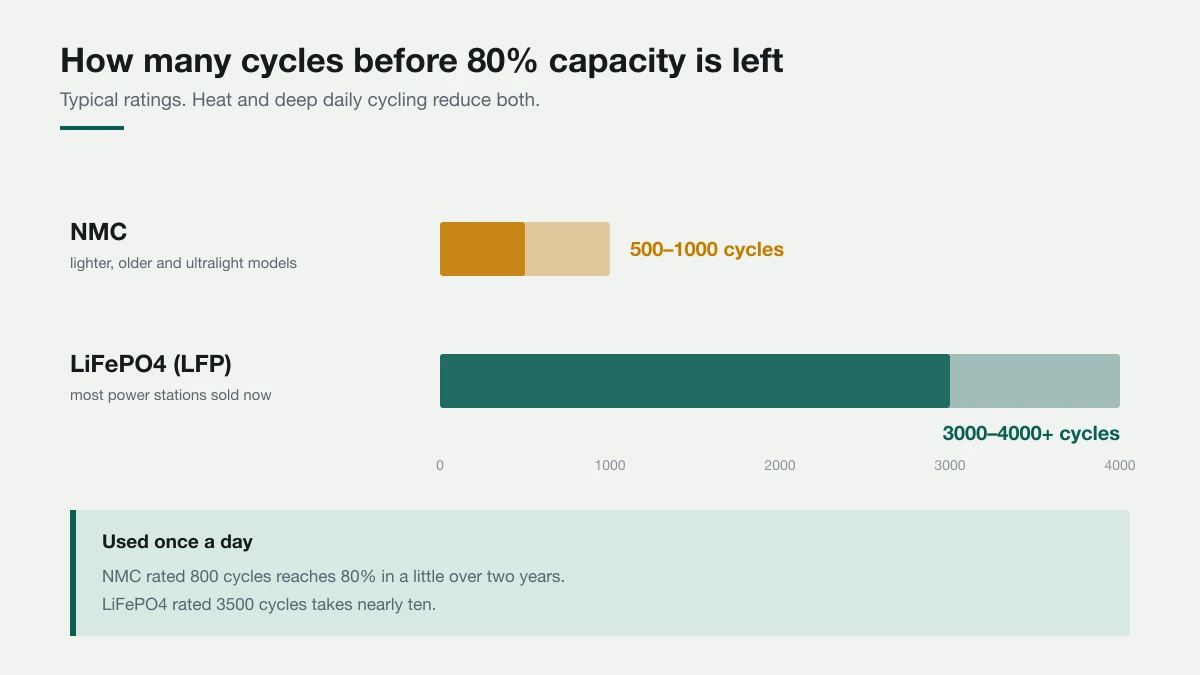
| Typical cycle life to 80% | 3000–4000+ | 500–1000 |
| Weight for the same Wh | Heavier, though the gap has narrowed | Lighter |
| Heat tolerance | High; very resistant to thermal runaway | Lower; runaway starts at lower temperatures |
| Nominal cell voltage | 3.2 V | 3.6–3.7 V |
| Cost per cycle | Low | Several times higher |
| Common in | Most power stations sold now | Older and ultra-light models |
Cycle life decides the real cost
A cycle is one full charge and discharge, or the equivalent in partial ones. Two 50% top-ups count as one.
If you use the station every day, for daily load shedding or off-grid, NMC rated for 800 cycles reaches 80% capacity in a little over two years. LiFePO4 rated for 3500 cycles takes nearly ten. Spread the price over the energy each delivers and LiFePO4 is several times cheaper to own, even if it costs more to buy. The generator vs battery cost calculator shows this as battery wear per month.
If you use it a few times a year, cycles barely matter. Age does: all lithium slowly loses capacity with time, faster when kept hot and full.
Safety
Both chemistries are safe in a well-built station with a good battery management system (BMS), which cuts power on overcurrent, overheating or a failing cell.
The difference shows when things go wrong. LiFePO4's chemistry is far more resistant to thermal runaway, the self-sustaining overheating behind lithium battery fires, and it releases much less energy if it does fail. For something that sits in a bedroom overnight running a CPAP or charging unattended, that margin is worth having.
Whatever the chemistry, buy from a brand with proper safety certification for your market, do not cover a station while it charges, and stop using one that is swollen, damaged or smells hot.
Cold, heat and storage
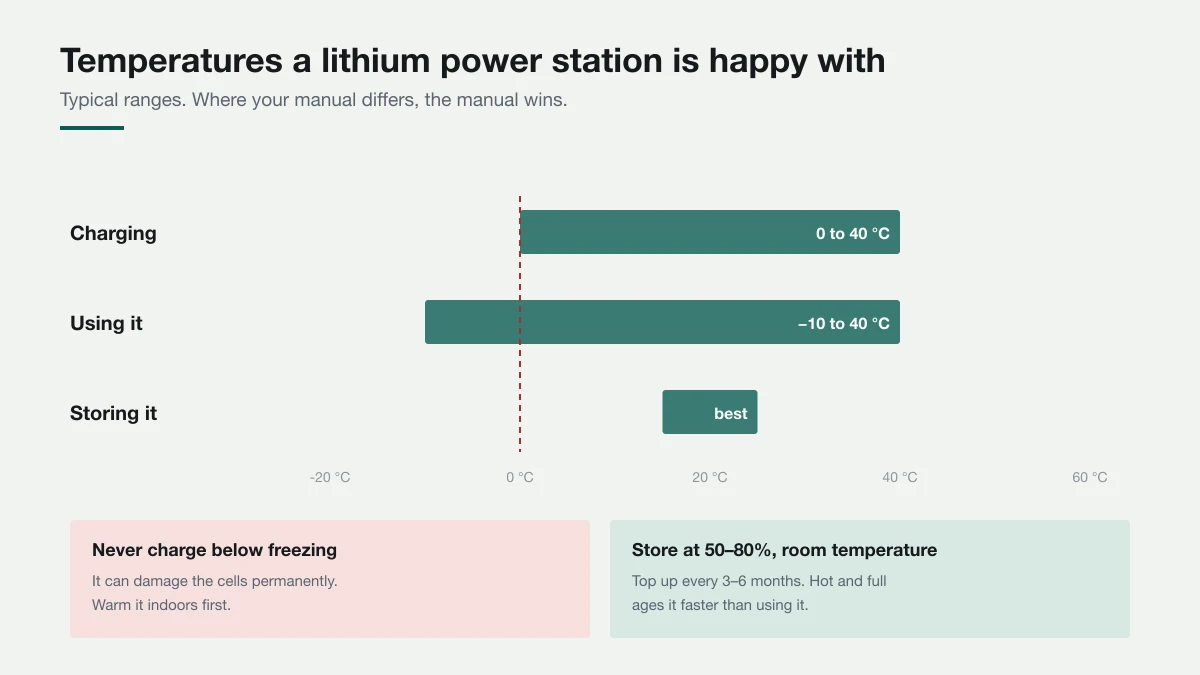
- Charging below freezing damages lithium cells. Most stations refuse to charge under 0 °C; some have self-heating packs. Warm it indoors first.
- Heat ages all lithium. Leaving a station in a hot car or garage in summer does more harm than months of use.
- Storage: 50–80% charge at room temperature, topped up every three to six months. A station left at 0% for months may not wake up.
Which to choose
- Daily or frequent use, home backup, bedroom use: LiFePO4.
- Carried long distances, used a few times a year: NMC's lower weight is a fair trade.
- Second-hand or old stock: check the manufacture date. Lithium ages on the shelf too.
The same comparison for fixed home batteries, with the lead-acid option included, is in lithium vs lead-acid for a UPS.
Work it out for your own setup
Common questions
Is LiFePO4 better than NMC for a power station?
For anything used regularly, yes. LiFePO4 typically lasts 3000 or more cycles to 80% capacity against roughly 500–1000 for NMC, and it is more tolerant of heat and abuse. NMC's advantage is weight: the same capacity is noticeably lighter.
How long does a LiFePO4 power station last?
Charged and emptied once a day, a pack rated for 3000 cycles to 80% would still hold most of its capacity after eight years. In practice, age, heat and the electronics also limit life, so ten years of occasional use is a reasonable expectation rather than a promise.
Can I charge a lithium power station in freezing weather?
Not below 0 °C (32 °F) for most models. Charging lithium cells below freezing can damage them permanently, so many stations block charging in the cold. Bring it indoors to warm up before charging. Discharging in the cold is allowed but gives less capacity.
How should I store a power station between outages?
At room temperature, charged to roughly 50–80%, and topped up every three to six months, or as the manual says. Keeping it permanently at 100% in a hot place shortens its life more than using it does.