How to Keep a CPAP Machine Running During a Power Outage
How much power a CPAP really uses, how big a battery gets you through the night, why DC beats AC, and the plan to have before a long outage.
A CPAP is one of the most useful things a small battery can power, and one of the easiest to size, because the load is modest and you know exactly how long the night is. The main decision is not the battery. It is whether the heated humidifier stays on.
This guide covers the electricity. It is not medical advice: if you rely on your machine, talk to your equipment supplier or clinician about your plan for outages.
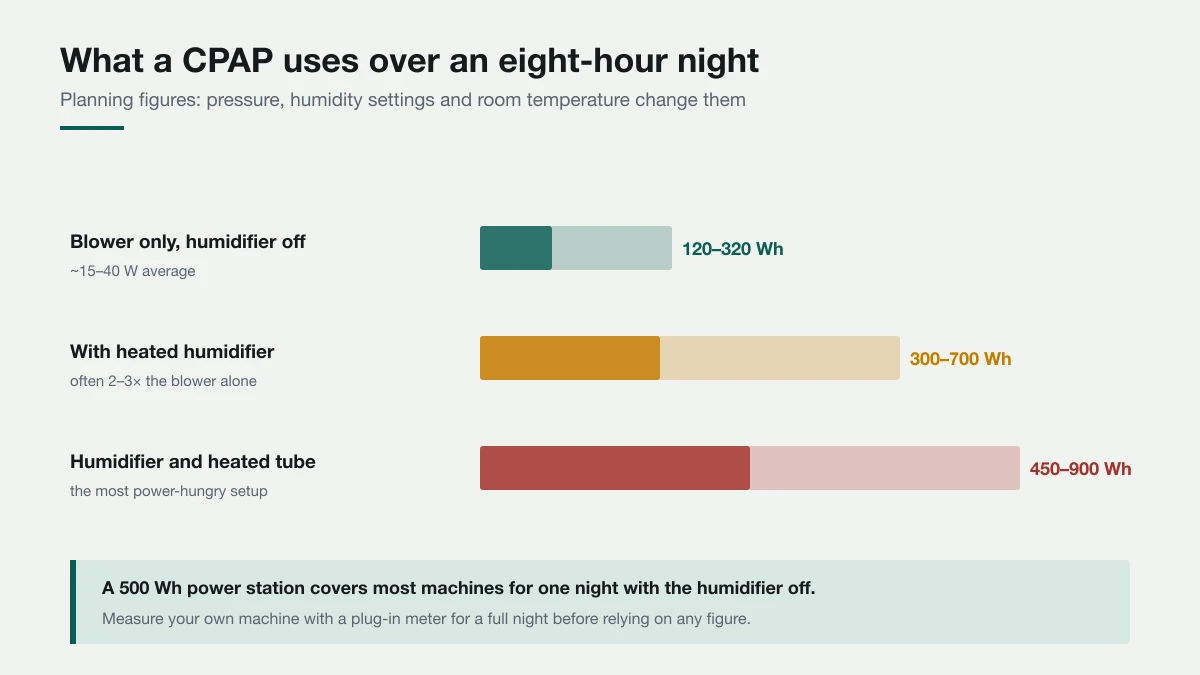
How much power a CPAP really uses
The power brick that comes with a CPAP is often rated 60–90 W or more, which is its maximum, not what the machine uses. Actual draw depends on pressure setting, mask leak and above all heating:
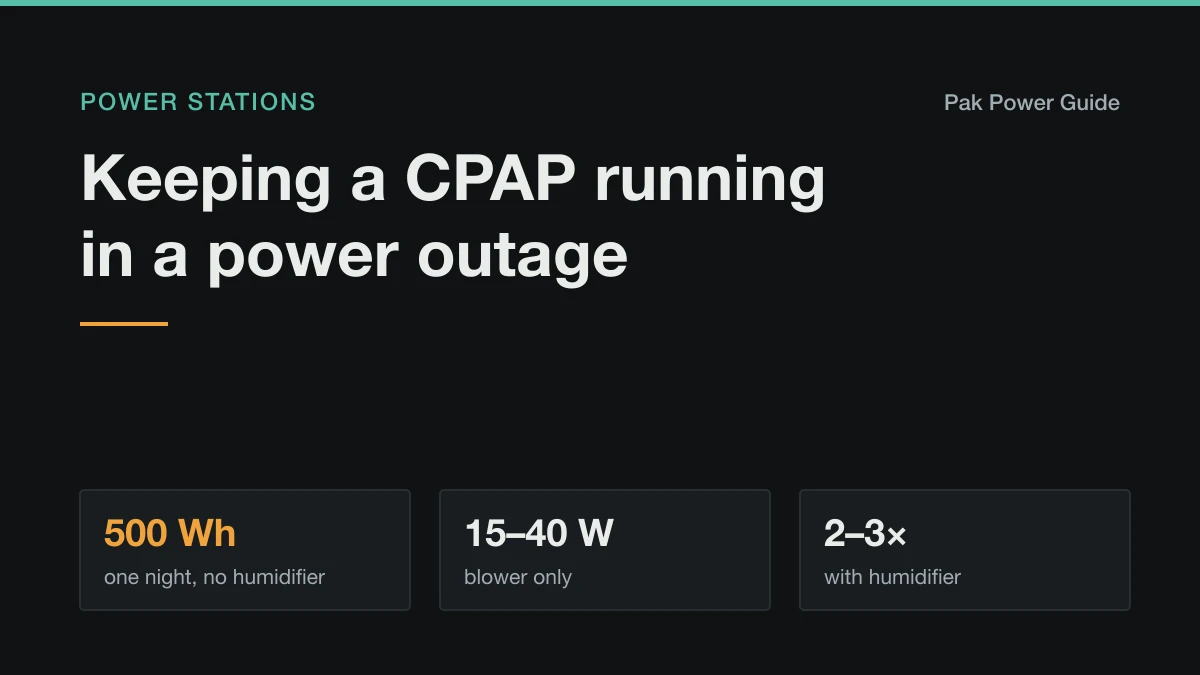
- Blower only, no humidifier: many machines average roughly 15–40 W.
- With the heated humidifier: often two to three times that, because heating water takes far more energy than moving air.
- Heated tubing adds more again.
Over an eight-hour night, that is the difference between about 150 Wh and 500 Wh or more. The machine's manual may list typical consumption, and a plug-in energy meter left on for a full night gives you your own figure, which is the one to plan with.
Sizing the battery
- Night energy = average watts × hours asleep. 30 W × 8 h = 240 Wh.
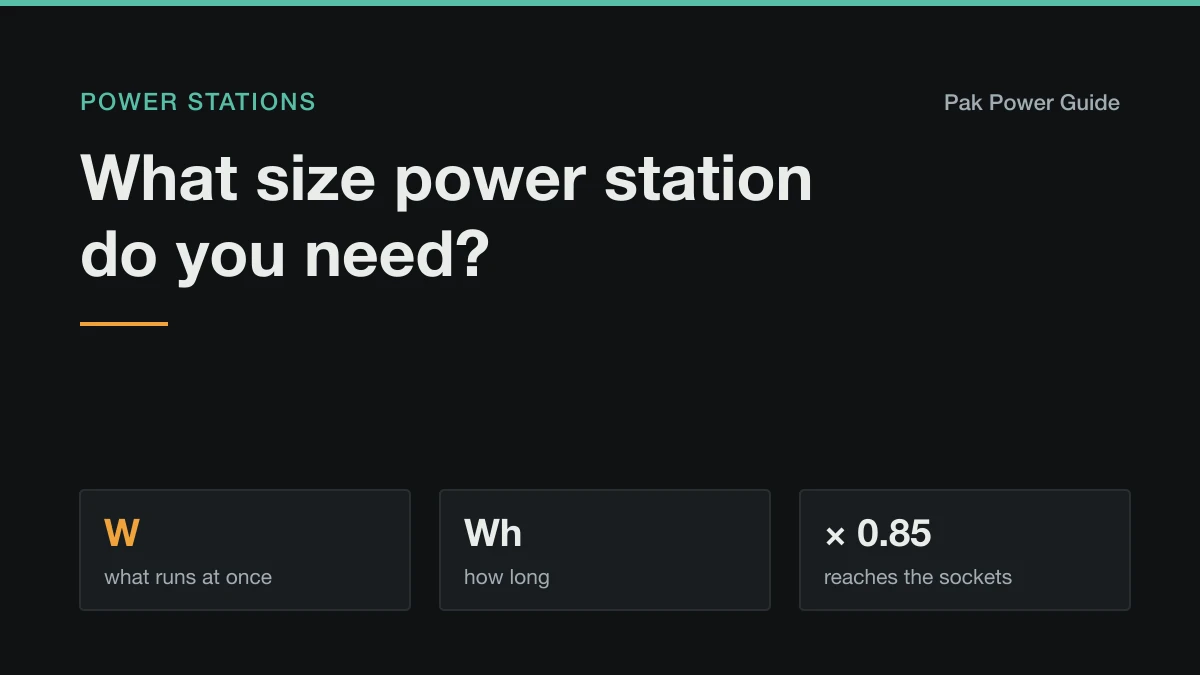
- Allow for inverter loss if you run from the AC socket: ÷ 0.85 → about 280 Wh.
- Add a margin for a cold night, a higher pressure or a leaky mask: × 1.3 → about 370 Wh.
So a 500 Wh power station gets most machines through one night without the humidifier, and a 1000 Wh one through two or three. With humidification on, the same 1000 Wh may give one night. The backup time calculator works this out for any battery and load.
DC is better than AC, if your machine supports it
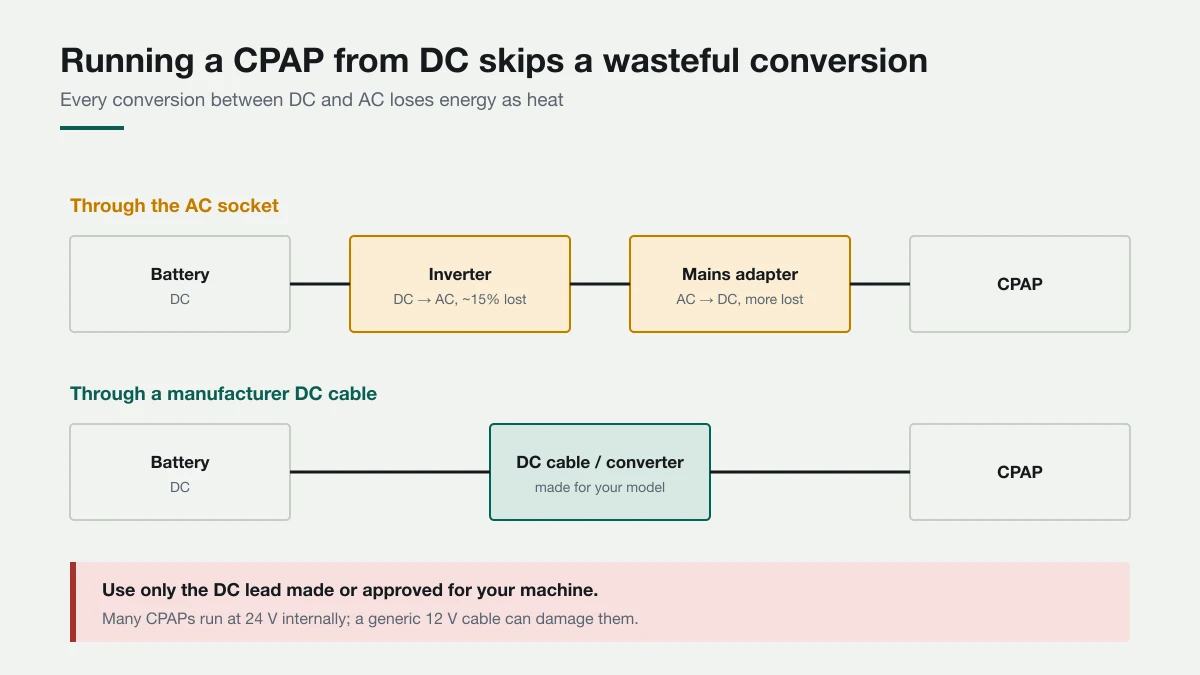
Plugging the CPAP's normal mains adapter into the power station's AC socket converts battery DC to AC, then the adapter converts it back to DC. Each step wastes energy, and the station's inverter uses a few watts of its own just being switched on.
Many CPAP manufacturers sell a DC power cable or converter that runs the machine straight from a 12 V source such as a power station's car-style socket or a separate battery. That can stretch the same battery noticeably further. Two cautions:
- Only use the DC lead made or approved for your model. Many machines run internally at 24 V, and a generic cable can damage them.
- Check the socket's current rating. Most car-style outlets on power stations supply up to 10 A, which is plenty for a CPAP without heating.
Settings that save the most
- Humidifier off, or the lowest setting that is comfortable. The biggest single saving by far.
- Heated tube off, and use a standard tube with an insulating cover if condensation is a problem.
- Keep the station's AC output off when using DC, so the inverter is not idling.
- Charge fully before bed whenever an outage is forecast, and keep the battery at room temperature. Cold batteries deliver less.
The plan for a long outage
A battery covers a night or two. A storm outage can last longer, so decide the rest in advance:
- How you recharge. Solar panels can refill a power station over a sunny day, covered in charging a power station from solar panels. A car can trickle-charge one slowly while running, outdoors.
- Where you would go if the battery runs out: family with power, a hotel, or a community centre opened for the outage.
- Registering as a priority customer. Many utilities keep a medical needs or priority register (in the UK, the Priority Services Register). It can mean advance warning of planned cuts and support during long ones, but not guaranteed early restoration.
- Keep your supplier's contact details on paper, with your machine's model and settings.
The broader checklist of what to do before, during and after an outage is in the printable power outage preparation checklist.
Work it out for your own setup
Common questions
How big a battery do I need to run a CPAP overnight?
Measure your machine's use first, but as a planning figure: without the humidifier many machines average roughly 15–40 W, so an 8-hour night uses about 120–320 Wh at the socket. Allowing for inverter loss and a margin, a 500 Wh power station covers most machines for one night without humidification. With the heated humidifier on, plan on two to three times as much.
Can I run my CPAP without the humidifier during an outage?
Most machines run normally with the humidifier switched off or removed, and it is the single biggest power saving. Some people find therapy less comfortable without humidification. Ask your equipment supplier or clinician if you are unsure whether it suits you.
Is it better to run a CPAP from DC or AC?
DC, where your manufacturer offers a DC power cable or converter. Running through the power station's inverter wastes around 15%, and some stations draw several watts just keeping the AC output on. Only use the DC lead made or approved for your model, because many machines need 24 V rather than 12 V.
What should I do if the outage lasts longer than my battery?
Have a plan before it happens: know where you would go (a relative, a hotel, a community cooling or warming centre), how you would recharge, and when to call your supplier. Many utilities keep a priority or medical needs register, which can mean earlier warnings of planned cuts, though not guaranteed restoration.