Battery Issues
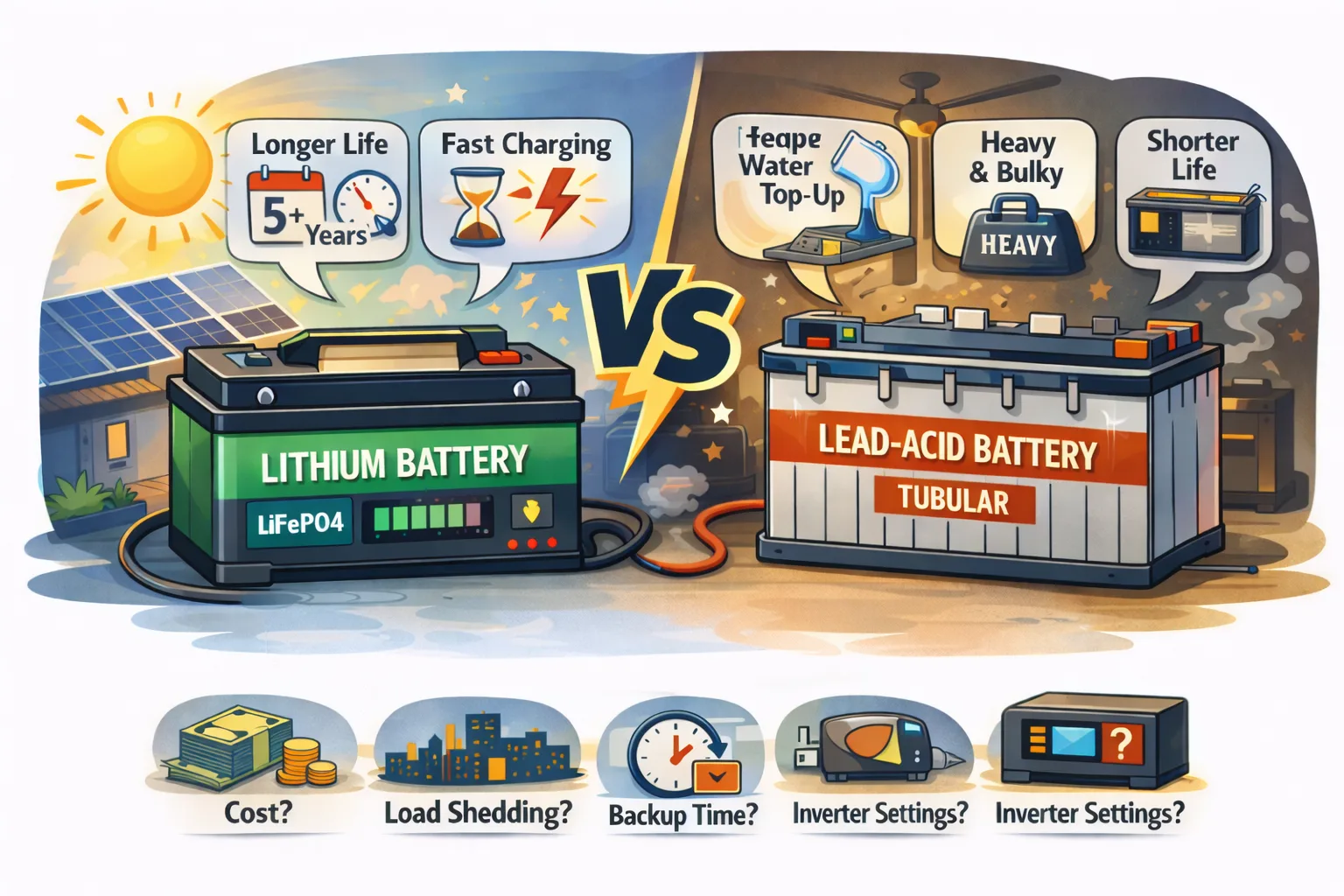
Which Battery Is Best for a Home UPS? Tubular, Dry (AGM/Gel) or Lithium
Tubular lead-acid is the value pick for occasional outages, lithium wins for daily ones, and sealed dry batteries suit rooms you cannot ventilate.
5 min read
Most backup complaints are really battery complaints: a bank that no longer lasts the evening, needs distilled water every few weeks, or never quite reaches full. It is rarely just an old battery. Charge voltage, charge current, standby draw and heat account for most of it, and these guides give the figures to measure against before you spend money on a replacement or a lithium upgrade.
9 guides
Tubular lead-acid is the value pick for occasional outages, lithium wins for daily ones, and sealed dry batteries suit rooms you cannot ventilate.
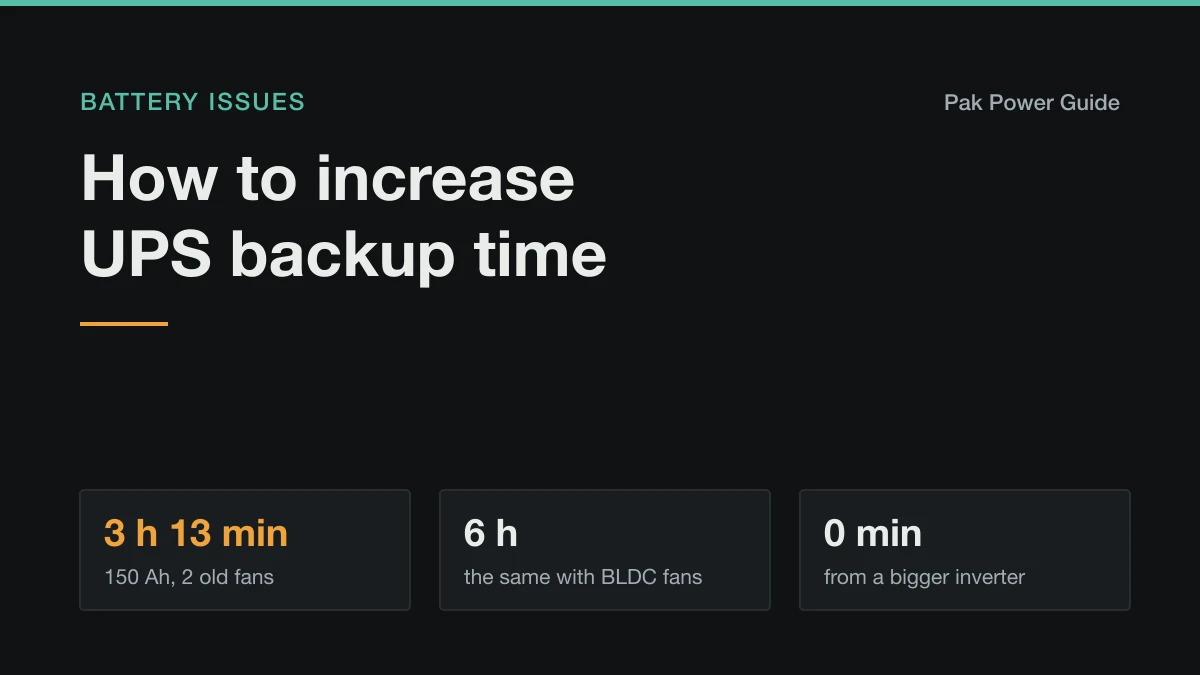
Swapping two old fans for BLDC fans nearly doubles backup on one battery. The eight changes that add real hours, from cutting load to adding capacity.
About 3–5 years for a sealed computer UPS battery, 2–6 for tubular lead-acid and 10+ for LiFePO4. Heat and daily deep discharge shorten them all.
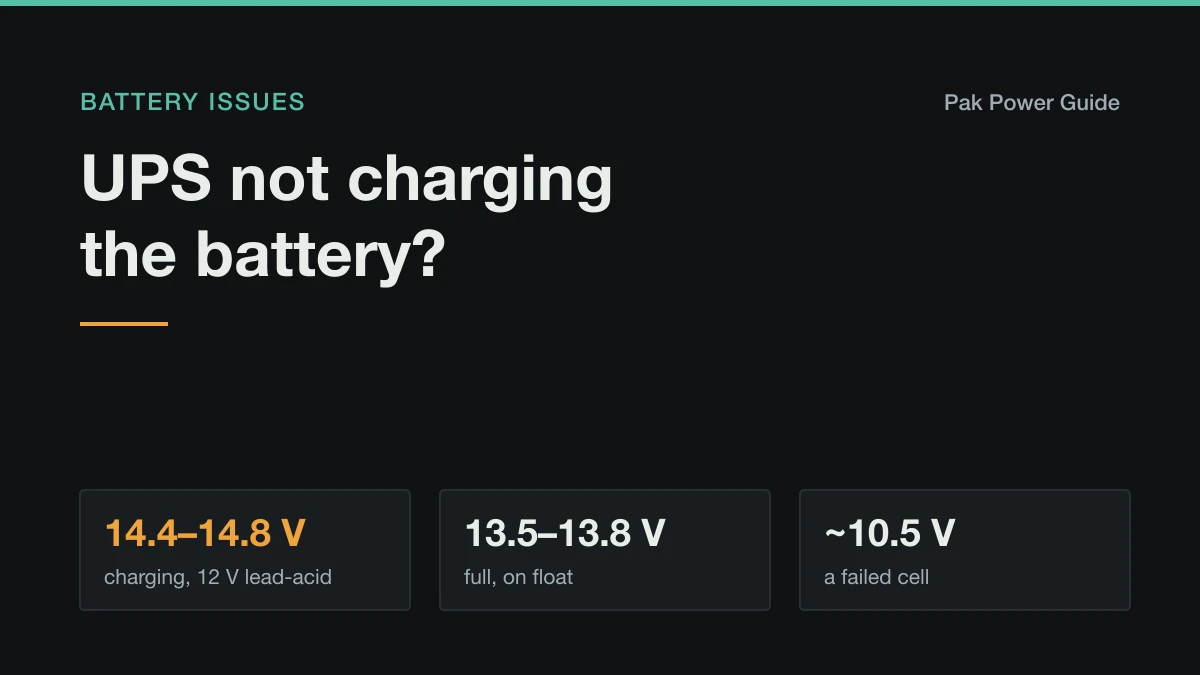
Low mains voltage, a wrong battery setting, a loose terminal or a worn battery cause most of it. How to tell which with one multimeter reading.
With cuts every day, the battery must refill between them. How to size for recharge time as well as backup, and why lithium often pays off.
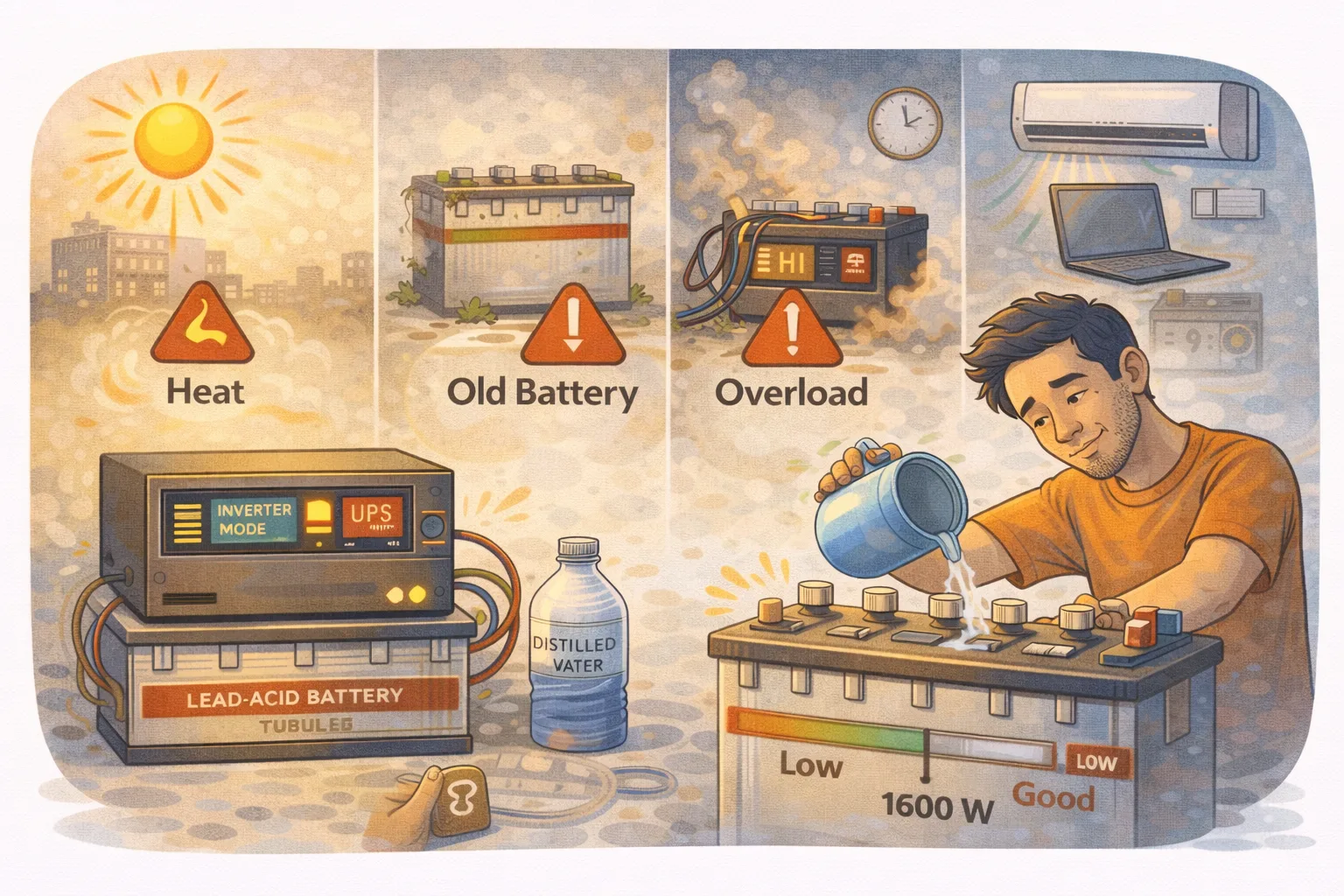
Topping up every few weeks means something is wrong: usually charge voltage set too high, heat, or too much charge current. The numbers to check each.
It turns on how often you deep-discharge. Cycle life, usable capacity and charging compared, plus the compatibility checks that catch people out.
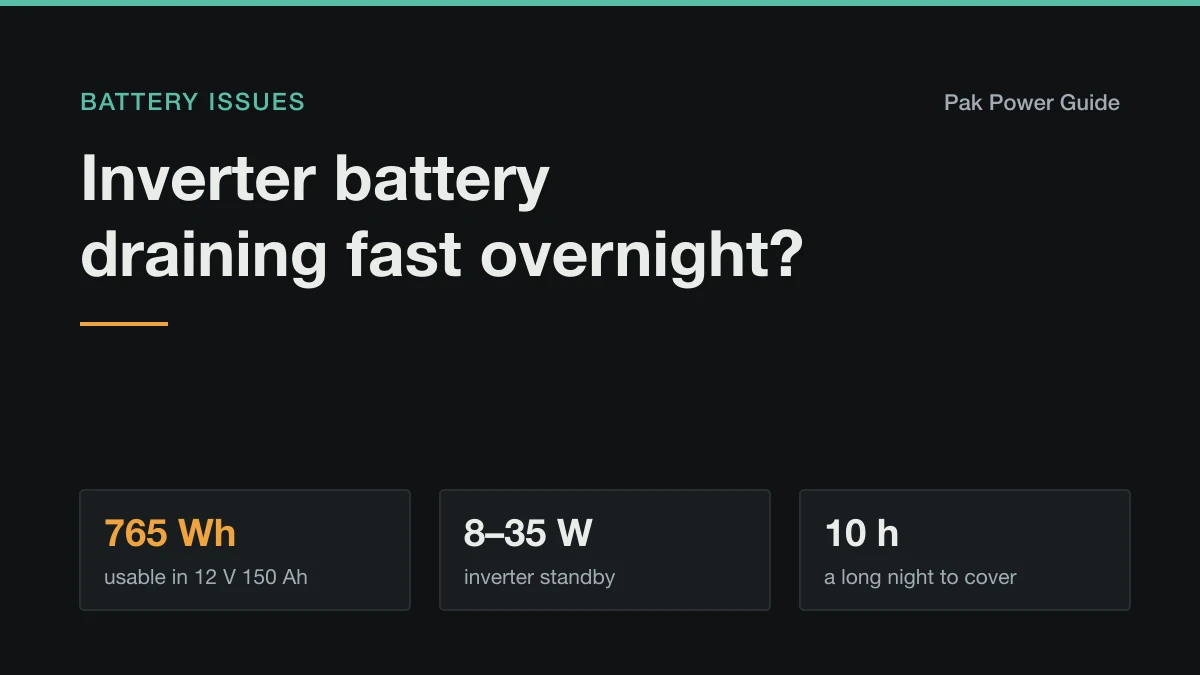
Usually it is not the battery. Standby draw, always-on devices and a bank that never fully charged cause most of it — with the numbers to check each.
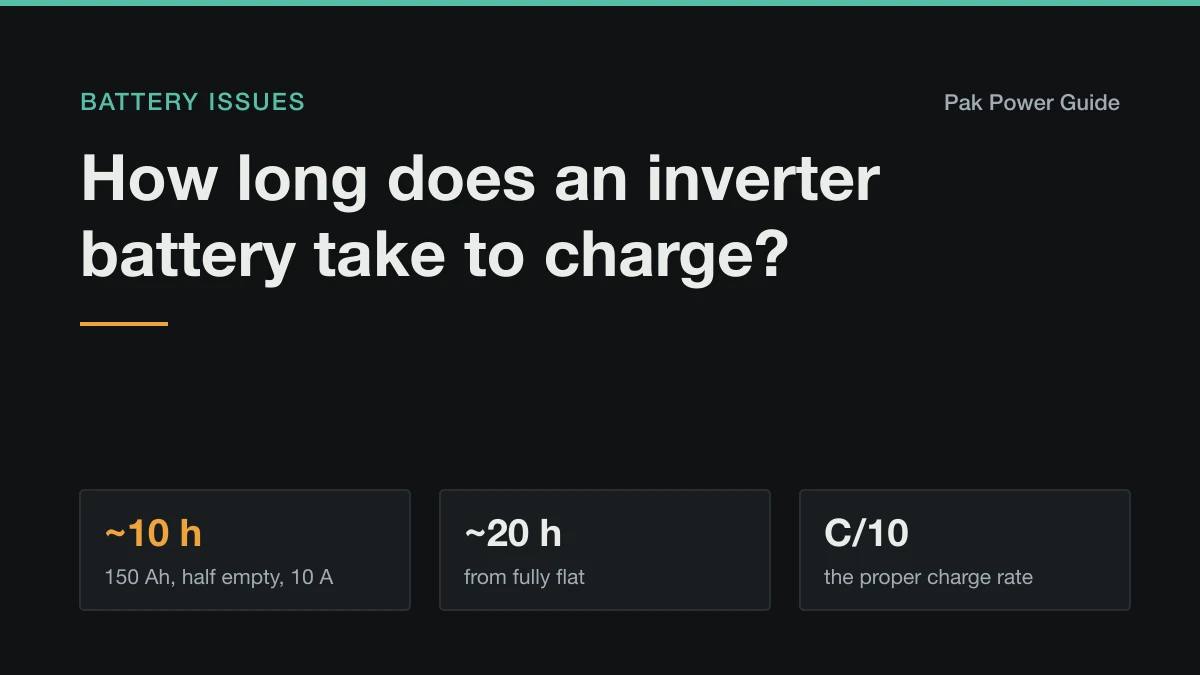
About ten hours for a 150 Ah battery from half empty on a 10 A charger, and the last fifth is the slowest. Why 'full' often is not, and what to check.