Inverter Problems
UPS Overload: What It Means and How to Fix It
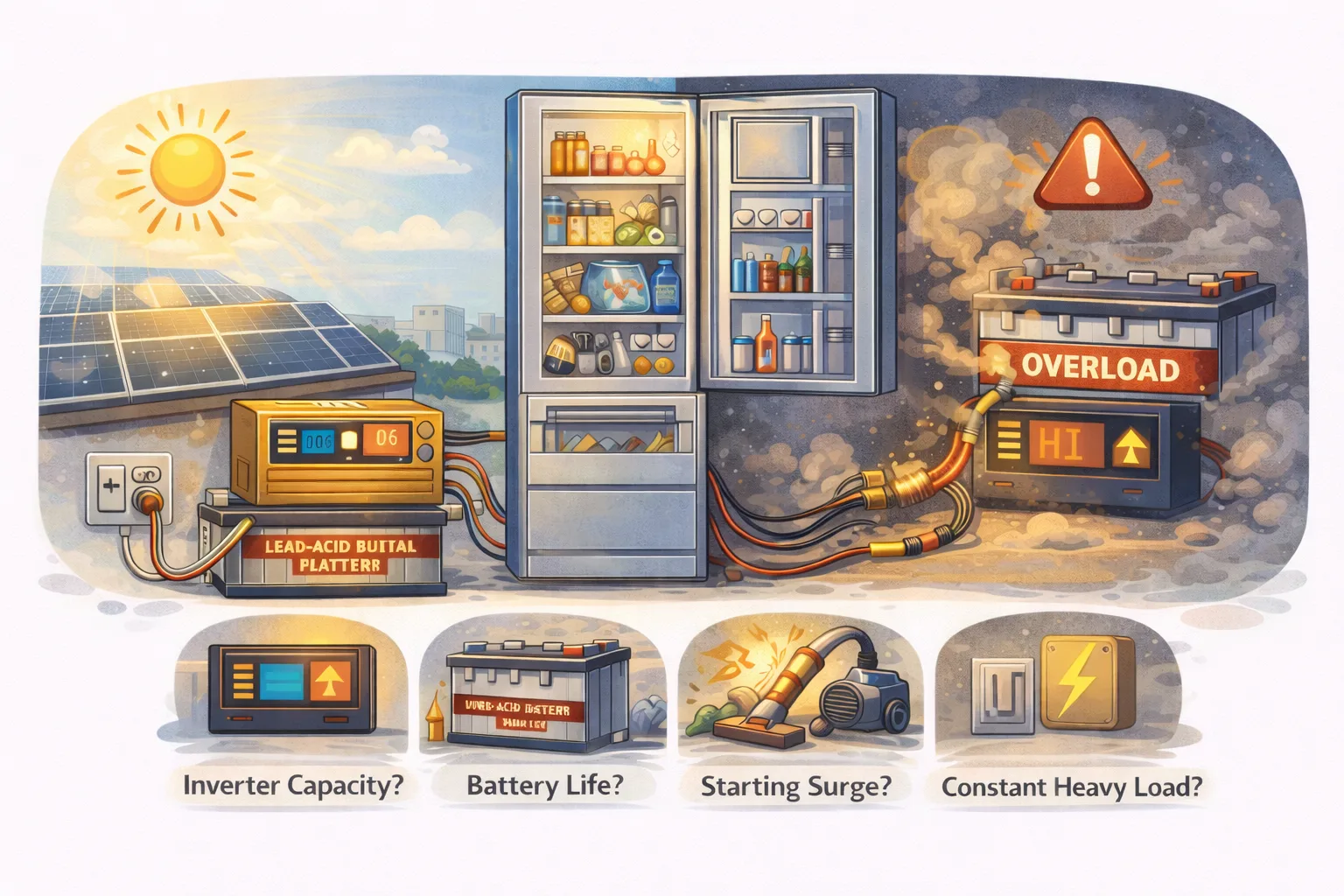
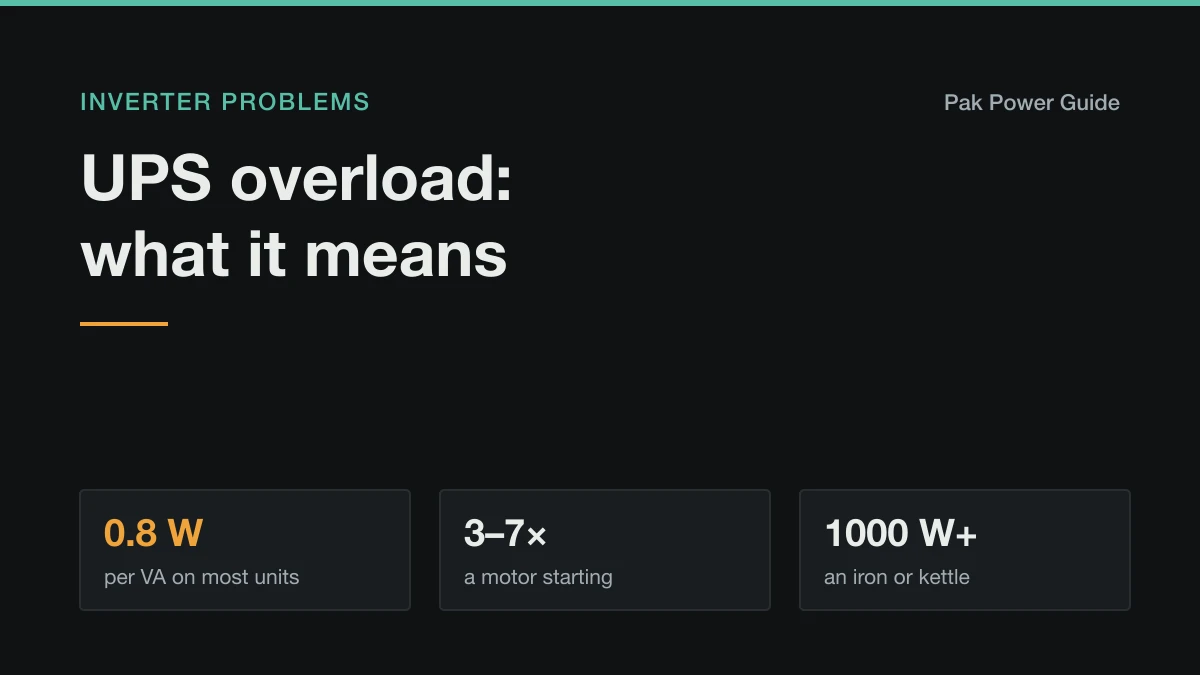
Overload means the load is more than the UPS can supply, or a motor's start-up surge is. How to find which appliance, and when it means a short circuit.
4 min read
Most inverter trouble shows up as a symptom before it becomes a failure: a beep pattern, a relay that clicks, an overload that cuts the power, a unit that runs hot in summer, a fridge or desktop PC that will not run on backup. These guides start from the symptom and work back to the cause, with the figures you need to check your own UPS, and they say plainly when a problem needs an electrician rather than a screwdriver.
7 guides
Overload means the load is more than the UPS can supply, or a motor's start-up surge is. How to find which appliance, and when it means a short circuit.
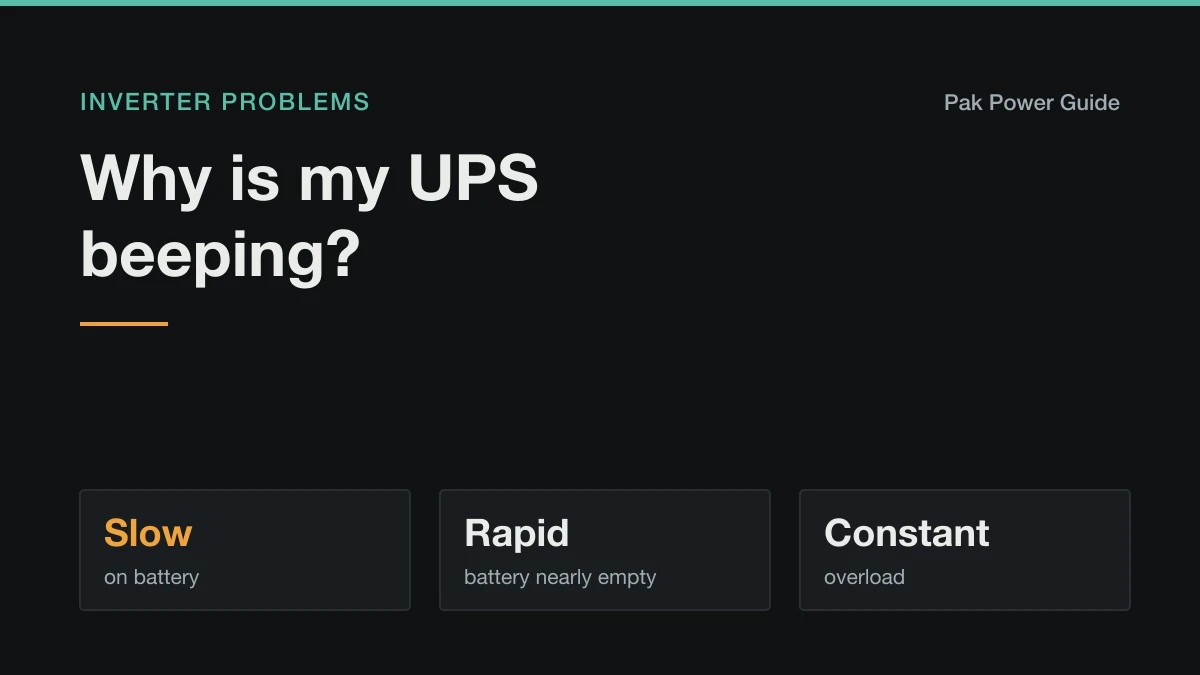
The pattern tells you why: a beep every few seconds means it is on battery, rapid beeping means the battery is low, and a constant tone means overload.
Often you do not need to — a closed fridge stays cold for about 4 hours. When you do, it comes down to surge rating, waveform and duty cycle.
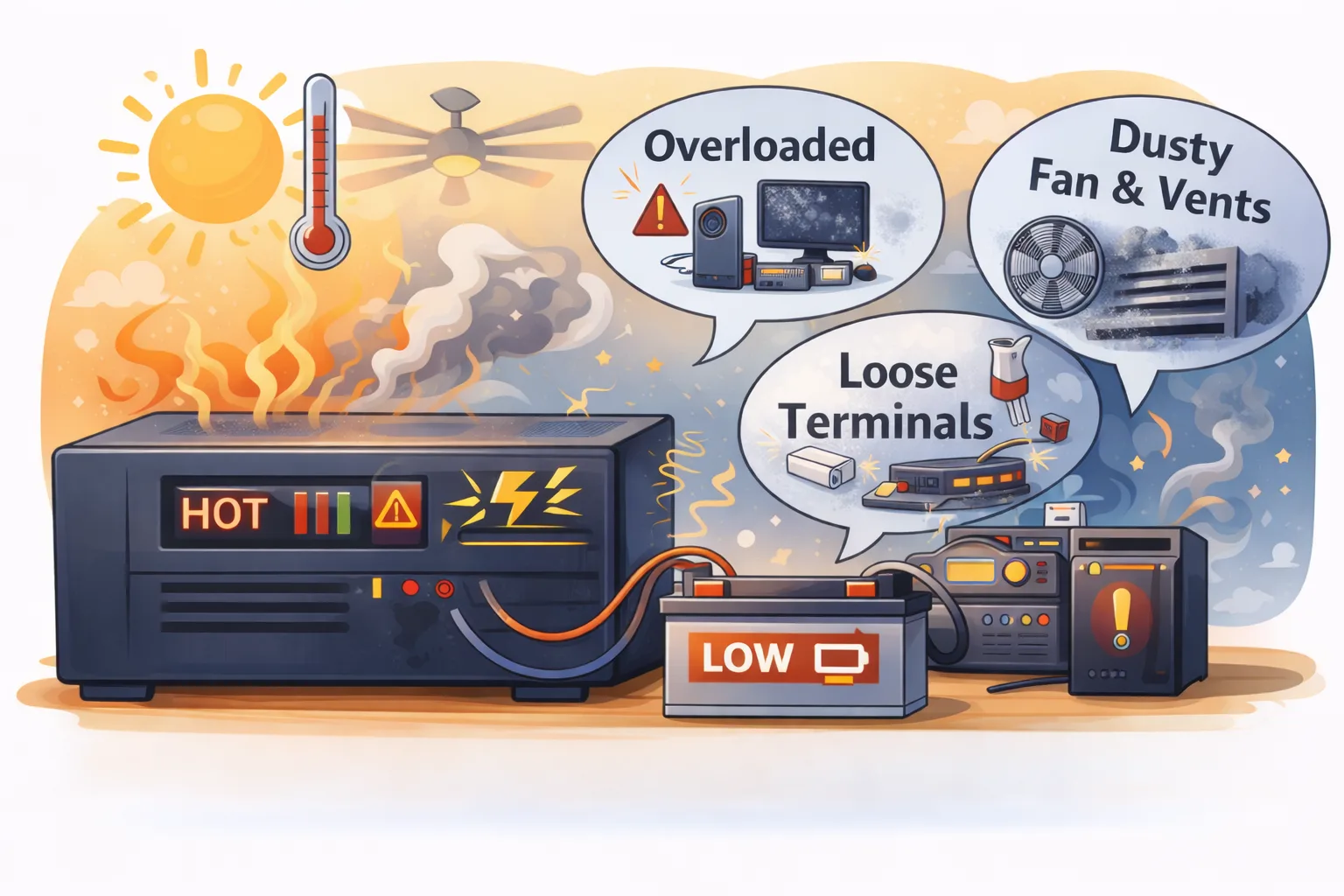
An inverter turns about a tenth of what it delivers into heat. Where that heat goes decides whether it shuts down — and how fast your batteries age.
A TV usually copes. A modern desktop often will not — active PFC power supplies expect a smooth input. Which devices mind, and how to tell what you have.
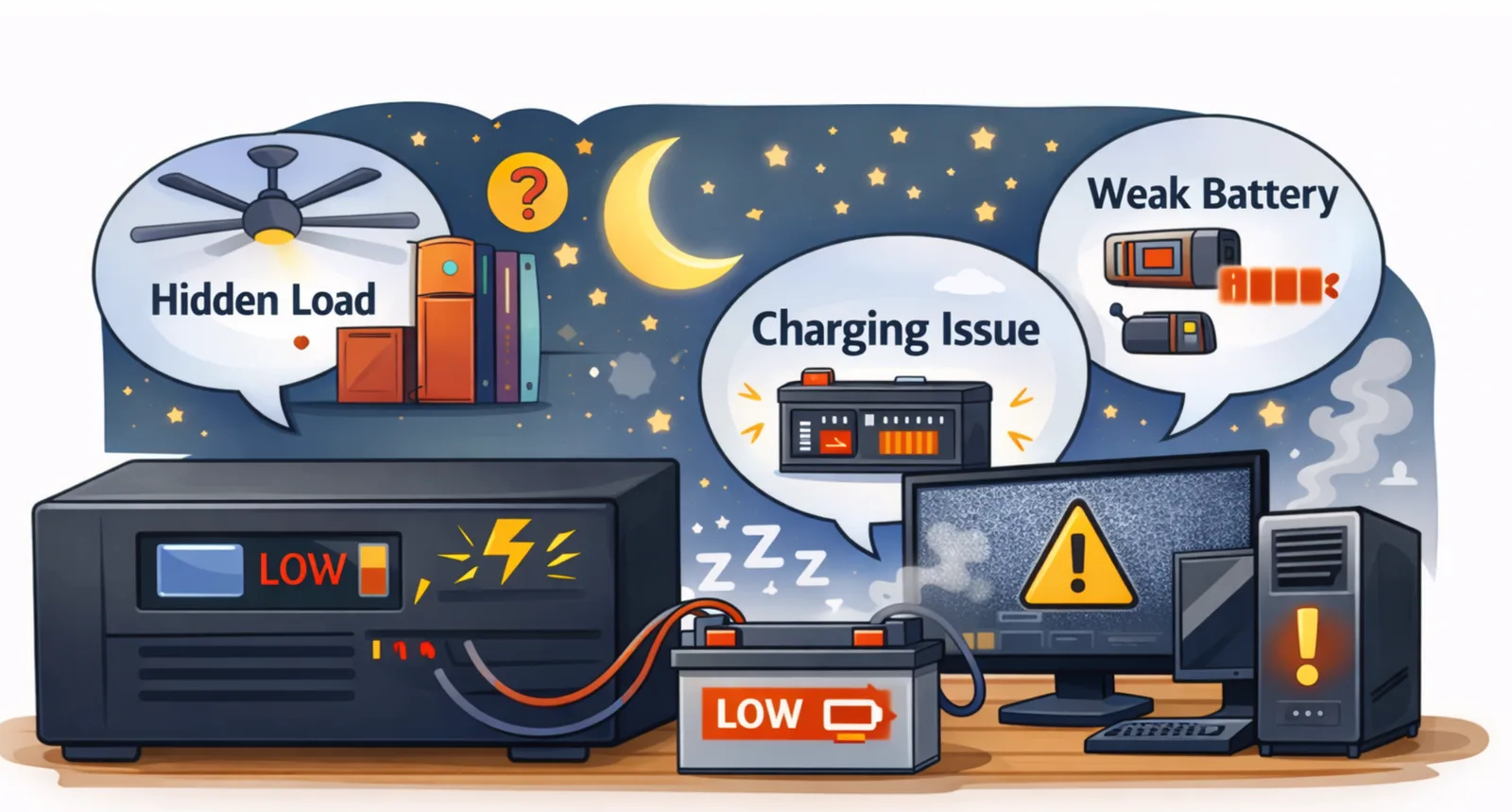
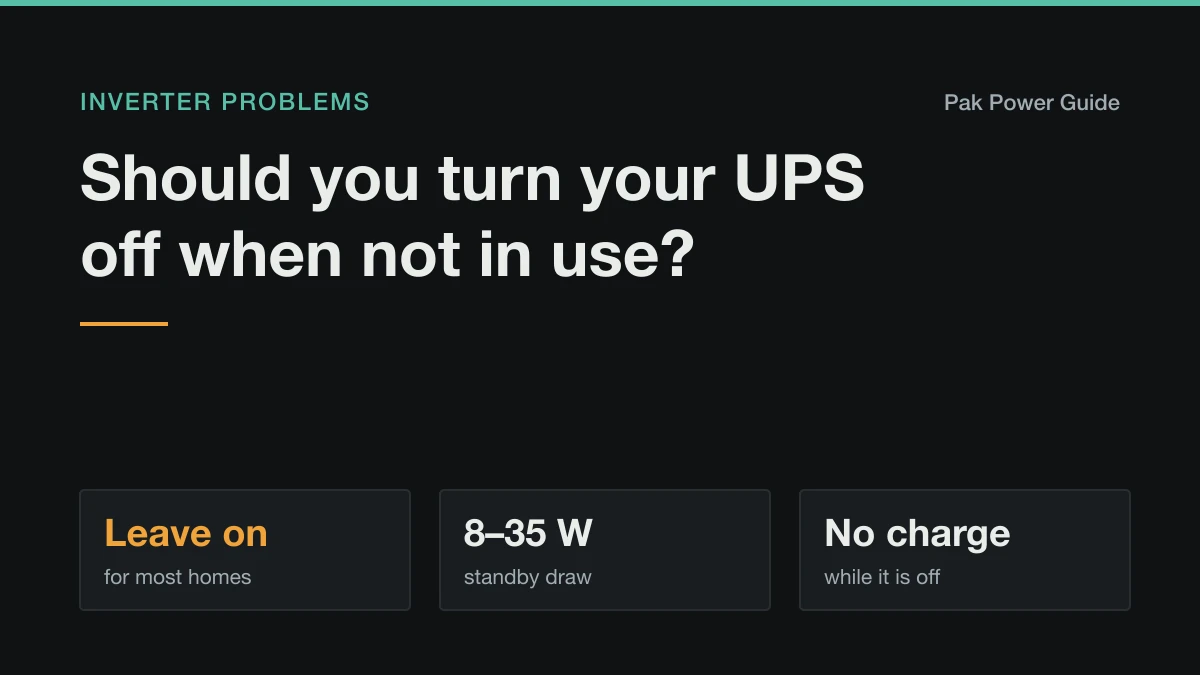
Usually leave it on. Switching off saves 8–35 W of standby but also stops charging, and a lead-acid battery left partly charged loses capacity permanently.
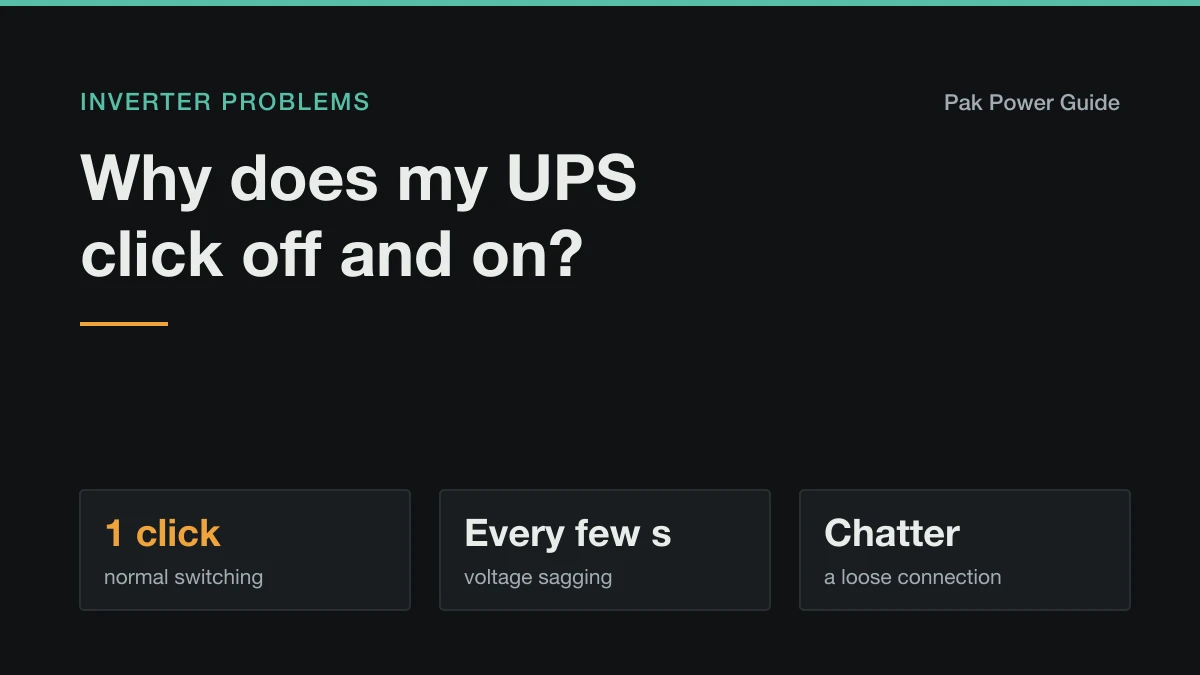
The rhythm tells you the cause: one click is normal switching, clicks every few seconds mean low voltage, and rapid chatter means a loose connection.