Winter Power Outage: Keeping Heat, Water and Phones Going
A gas furnace still needs electricity. How much backup keeps it running, why electric heaters flatten batteries, and safe ways to stay warm in an outage.
In a winter outage the problem is not light, it is heat. And most people are surprised to learn that a gas or oil furnace stops too, because its blower, igniter and controls all run on electricity.
The good news: those electrical parts need far less power than heat itself. Keeping a furnace running is realistic on battery backup. Heating a room with electricity is not.
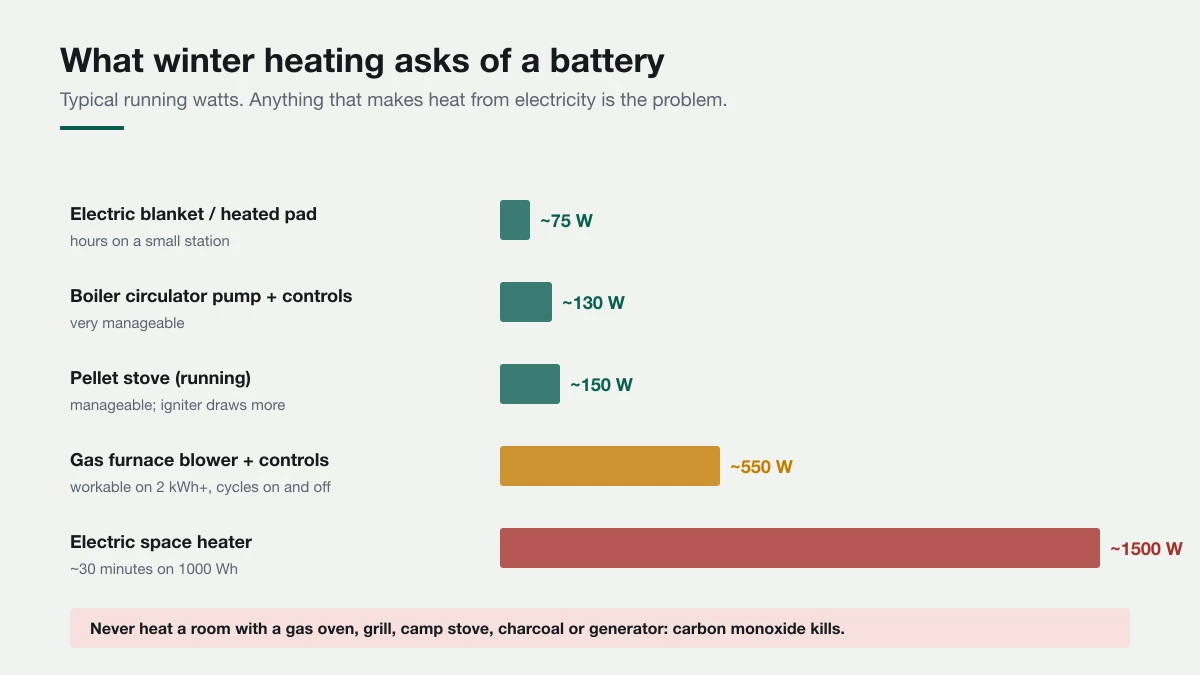
What your heating needs from backup
| Heating | Electricity needed | Realistic on batteries? |
|---|---|---|
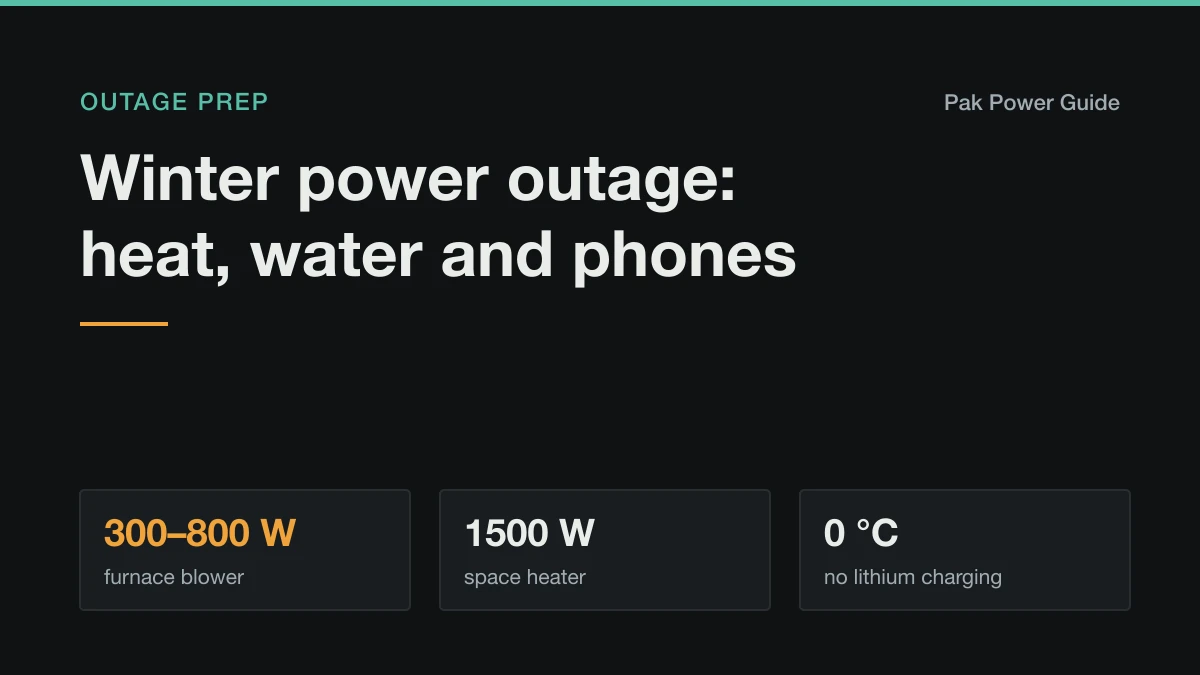
| Gas or oil furnace (forced air) | Blower + controls: ~300–800 W running, surge at start | Yes, with a large station or inverter |
| Gas or oil boiler (radiators) | Circulator pump + controls: ~60–200 W | Yes, and easier |
| Pellet stove | ~100–200 W running; igniter higher | Yes |
| Heat pump | 2000–5000 W+ | Not on portable batteries |
| Electric space heater | 750–1500 W | Minutes, not hours |
| Electric blanket / heated pad | 50–100 W | Yes, for many hours |
Blowers vary a lot. Newer furnaces with variable-speed (ECM) blowers draw much less than older ones. The furnace's rating plate lists the blower motor, and a clamp meter reading tells you exactly.
Running a furnace from backup
A furnace does not run continuously. In cold weather it might run 30–60% of the time. A 500 W blower at 50% duty uses about 250 Wh an hour, so a 2000 Wh station keeps it going for roughly six hours, less as it gets colder. Use the inverter size calculator with the gas furnace blower row, and check that surge rating.
Three things to get right:
- Connection. Most furnaces are hard-wired. Having an electrician fit a transfer switch, interlock or approved furnace inlet is the safe way to power one from a generator or power station. Do not improvise by backfeeding a socket.
- Pure sine wave power. Furnace control boards and ECM motors can misbehave on a modified sine wave. Power stations are pure sine; check cheap inverters.
- Grounding. Some furnace ignition controls need a proper ground reference to detect a flame. If a furnace runs from a generator but locks out, that is a known cause for an electrician to look at.
Staying warm without heating the house
When backup cannot cover the furnace, heat people, not rooms:
- Pick one room, ideally small, sunny and away from outside walls. Close its door and cover windows at night.
- Electric blankets and heated pads draw 50–100 W. A 1000 Wh station runs one for 8–15 hours.
- Layers, hats and sleeping bags do more than any small heater.
- Hot water bottles filled before the power goes, or from a gas hob, while it is safe to use.
Carbon monoxide: the winter killer
CO poisoning rises sharply during winter outages. Never heat a home with a gas oven, grill, camp stove, charcoal or a generator. Only use fuel-burning heaters designed and approved for indoor use, follow their ventilation rules, and keep a battery-powered CO alarm near sleeping areas.
Batteries in the cold
- Capacity drops in the cold. Keep power stations and batteries in the heated part of the house.
- Lithium must not be charged below 0 °C (32 °F). Many stations refuse to. Warm it indoors first.
- Lead-acid loses capacity and freezes more easily when discharged. Keep it charged.
Water and pipes
- Drip taps on outside walls and open the cupboards beneath them.
- If the house is getting cold and the outage will be long, shut off the water main and drain the pipes.
- A sump pump may be needed when snow melts. It is a heavy load with a big surge, so include it in your sizing.
Before winter, work through the printable power outage preparation checklist, and for storm outages generally see hurricane and storm season preparation.
Work it out for your own setup
Learn it by playing
Common questions
Can a power station run a gas furnace?
Often, yes. A gas furnace needs electricity for its blower, igniter and controls, typically 300–800 W while running, with a start-up surge. It cycles on and off, so a 2000 Wh station may run it for several hours in cold weather. Because most furnaces are hard-wired, connecting one safely needs an inlet or transfer switch fitted by an electrician.
Can I run an electric space heater on a battery?
Only briefly. A typical space heater draws 1500 W, so a 1000 Wh power station runs it for about half an hour. Electric blankets and heated pads use 50–100 W and keep a person warm for far longer on the same battery.
Is it safe to heat my house with a gas oven or grill during an outage?
No. Gas ovens, grills, camp stoves and charcoal produce carbon monoxide and are not designed to heat rooms. Use only heaters approved for indoor use, keep a battery-powered carbon monoxide alarm, and ventilate as the manufacturer requires.
How do I stop pipes freezing when the power is out?
Let taps drip slowly, open cupboard doors under sinks on outside walls, and keep the house as warm as you safely can. If the outage will be long and the house is getting cold, shut off the water at the main and drain the pipes.