Sizing a backup system means meeting two separate limits. The inverter decides what can run at once. The battery decides how long it keeps running. This calculator works out both from the appliances you tick.
How the numbers are worked out
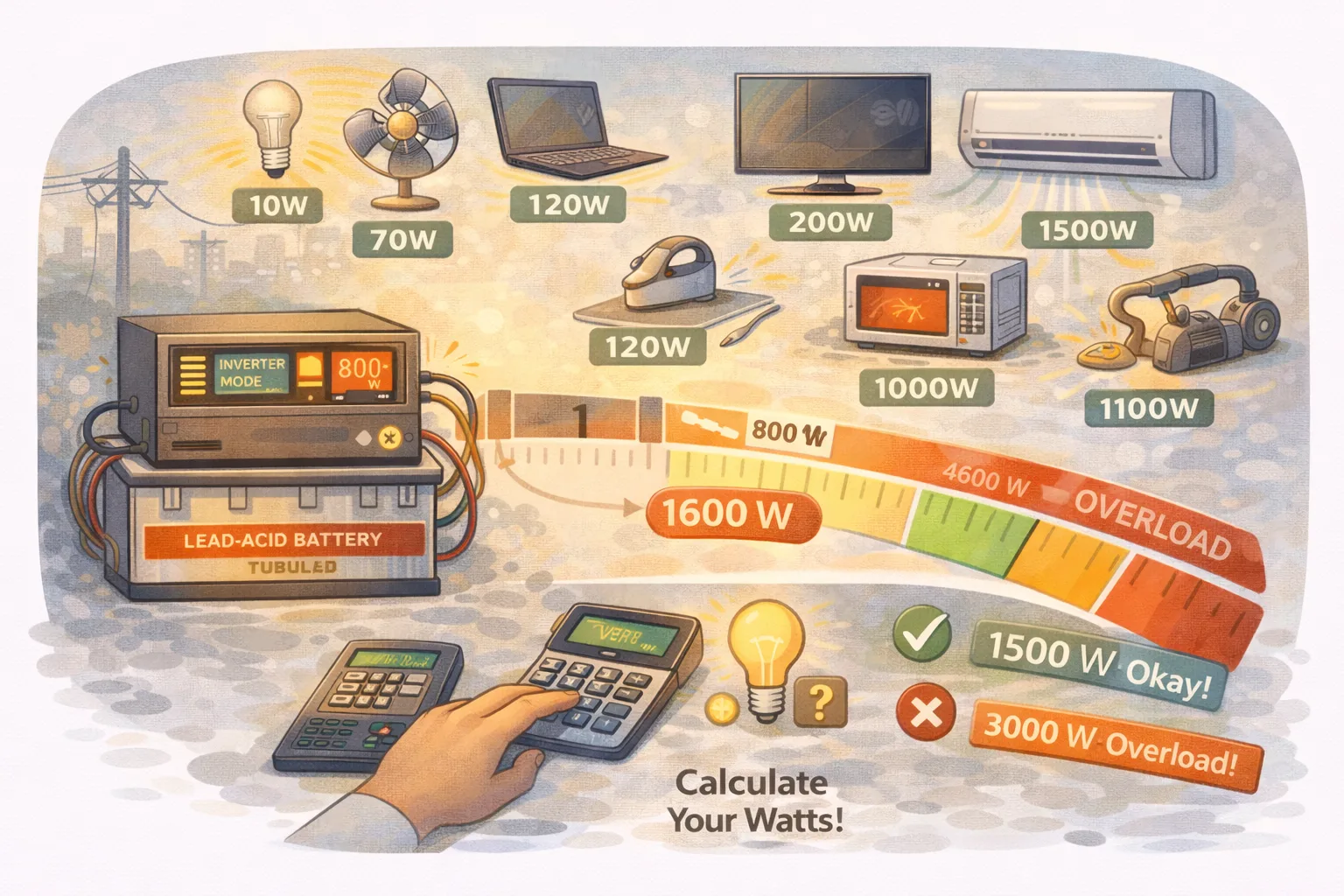
- Running load: watts × how many, for everything you selected.
- Start-up peak: the running load plus the largest extra surge from one motor starting. Only one is assumed to start at a time. If a fridge and a pump could start together, add them to the "other" row.
- Inverter size: running load × 1.25, rounded up to a common rating. An inverter living at 100% runs hot and trips on small surges.
- Energy: watts × outage hours, reduced for appliances that cycle on and off. A fridge compressor runs about 40% of the time, so it uses far less energy than its watts suggest.
- Battery: that energy grossed up for inverter loss and usable depth, then divided by the system voltage for amp-hours.
Getting the watts right
The figures in the table are typical planning values. The appliance's rating label, or a plug-in energy meter, will always be more accurate. Ceiling fans vary from about 30 W for a BLDC fan to 80 W for an older induction model, and fridges vary a lot with age and size.
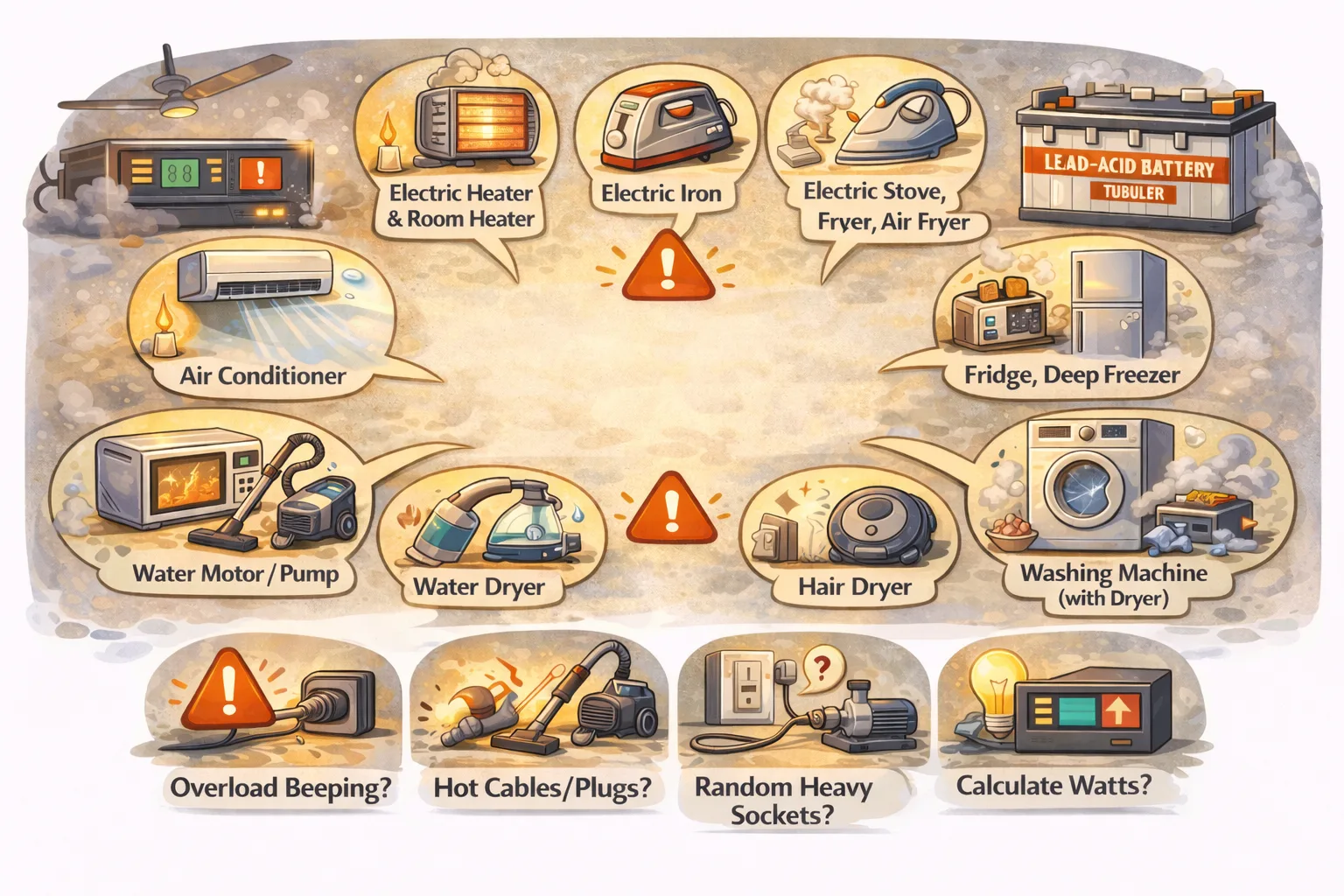
Leave heating appliances off the list: irons, kettles, heaters and cookers draw 1000–2000 W each and empty a battery in minutes. The guide to what to avoid running on a UPS explains why.
Power station or inverter and batteries?
A portable power station of the watt-hours shown will cover the same outage, as long as its continuous and surge ratings also meet the inverter figures above. For outages of several hours every day, a fixed inverter with a larger battery bank usually costs less per hour of backup. The guide to power stations vs a home UPS compares the two.
Common questions
What size inverter do I need for a house?
Add the running watts of everything that must work at the same time, add 25% headroom, and round up to a size you can buy. Then check the inverter's surge rating covers the biggest motor starting on top of that load. A typical essentials list of fans, lights, router and TV lands between 600 and 1000 W.
What is the difference between VA and watts on an inverter?
Watts are the real power your appliances use. VA is apparent power and is always the larger number. Home inverters typically deliver about 0.8 W per VA, so a 1000 VA unit is good for roughly 800 W. Always compare your load with the watt figure.
Why do fridges and pumps need a bigger inverter?
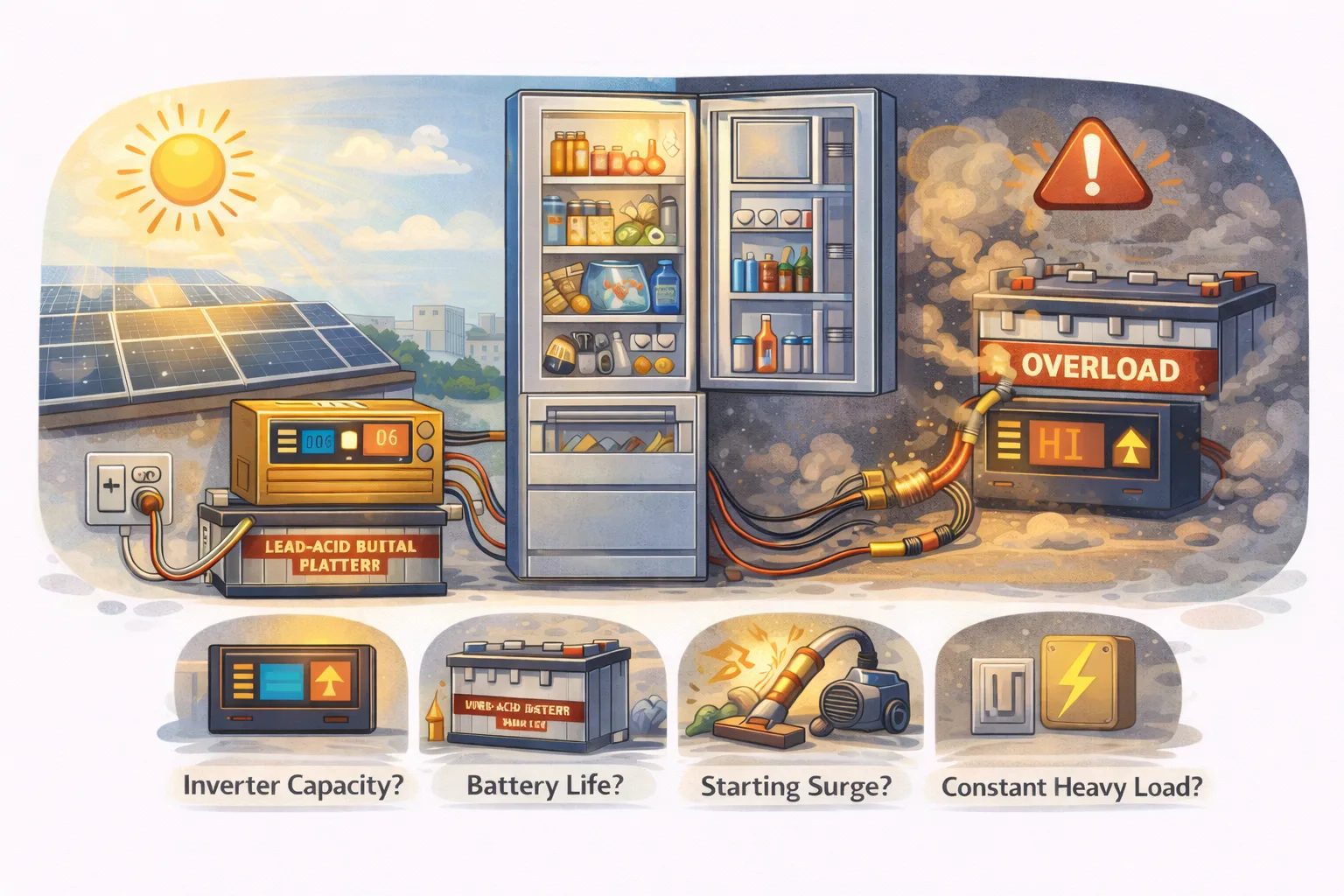
Motors draw several times their running power for a second or two as they start. A 180 W fridge can need 800 W or more to start. If the inverter's surge rating cannot supply that, it trips even though the running load looks small.
Should I choose 12 V, 24 V or 48 V?
Match voltage to size. Up to about 1200 W, 12 V is fine. From there to about 3000 W, 24 V halves the current and the cable size. Above that, 48 V. Higher voltage means thinner cables, less heat and less voltage sag when motors start.
Put this calculator on your site
Free for installers, forums, schools and blogs. Paste this where you want it to appear. It stays up to date automatically and keeps a small credit link.
<iframe src="https://pakpowerguide.com/embed/inverter-size-calculator/" title="Inverter, Battery & Power Station Size Calculator by Pak Power Guide" width="100%" height="820" style="border:1px solid #dde2dd;border-radius:2px;max-width:100%" loading="lazy"></iframe>