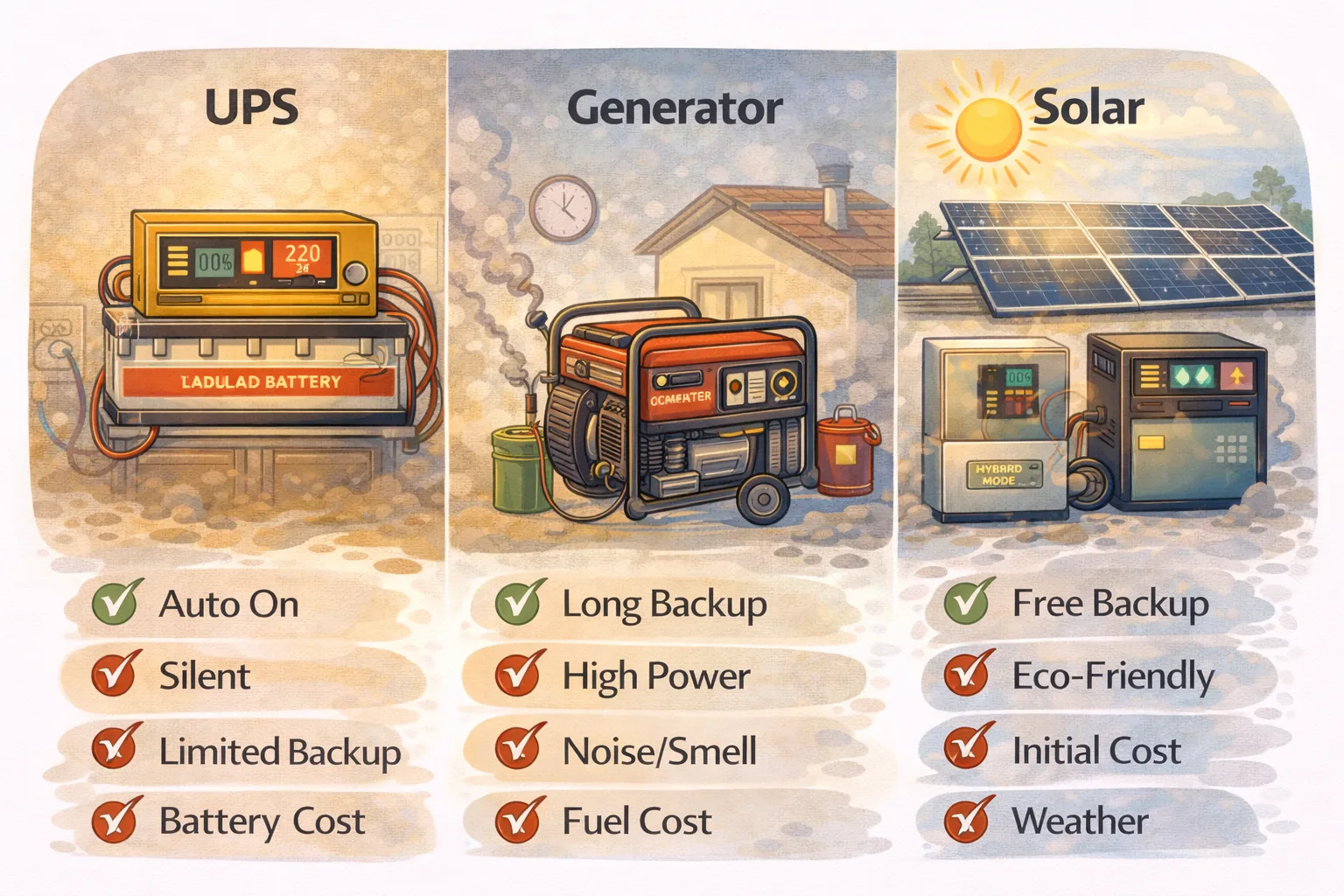
Everyone knows a generator burns fuel. Fewer people count what a battery system costs to run, because it looks free: the battery simply recharges when the power comes back. It is not free, but it is usually cheap, and this calculator puts both on the same monthly bill.
Generator side
- Fuel. Litres per hour at your load × outage hours × fuel price. Leave the fuel use blank to estimate it for a portable petrol set: roughly 0.2 L/h to keep the engine turning plus about 0.6 L for each kWh delivered. If your generator's manual gives a run-time chart, use that instead.
- Servicing. Oil changes, spark plugs, filters and repairs, spread per month.
Battery side
- Recharging. Energy used ÷ 0.85 for the inverter ÷ 0.85 for the charger, × your electricity price. About 38% more than the energy you used comes back off the grid.
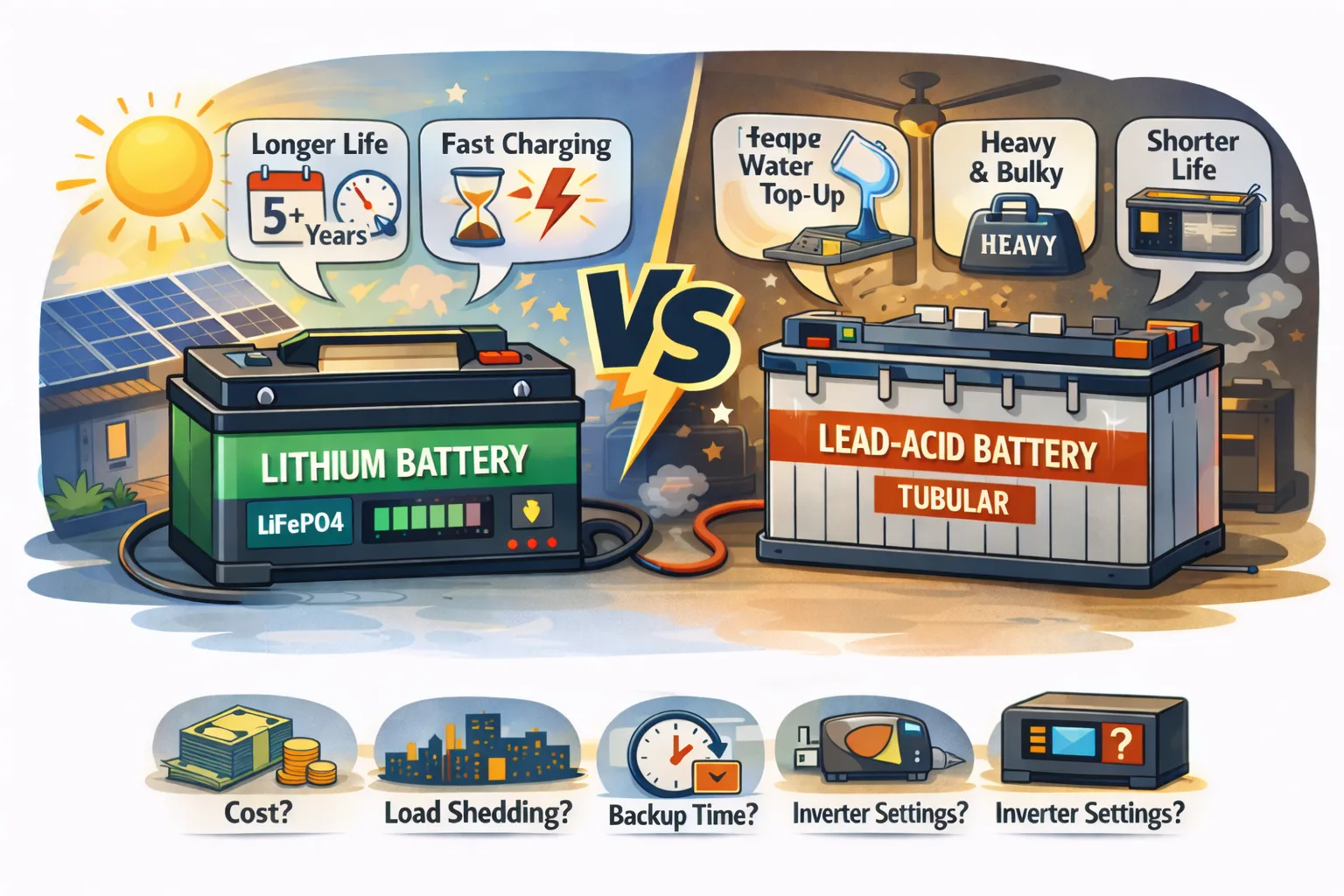
- Wear. System price ÷ (rated cycles × usable kWh) for every kWh delivered. This is what makes lead-acid dearer to run than it looks, and lithium cheaper than its price suggests.
What the numbers leave out
A generator also brings noise, fumes, trips to buy fuel, and the risk of carbon monoxide poisoning, which kills people every storm season. A battery system is silent and switches over by itself, but it only helps if it can recharge between outages. The calculator warns when one charge does not cover a day's outage. To size a battery that does, use the inverter and battery size calculator.
Common questions
Is it cheaper to run a generator or an inverter with batteries?
For short, frequent outages at light loads, battery backup is almost always cheaper to run: recharging from the grid costs little, and a lithium battery spreads its price over thousands of cycles. Generators win for long outages at heavy loads, and when the grid is off so long that batteries cannot recharge.
How much fuel does a small generator use?
A portable petrol generator uses roughly 0.3–0.5 litres an hour at light load and 1 litre or more near full load, depending on size and whether it is an inverter type. Running a large generator for a small load is the least efficient case, because the engine burns fuel just to keep turning.
What does battery wear cost?
Batteries have a limited number of cycles, so every kWh you take out uses up a little of the purchase price. A LiFePO4 system rated for 3000 cycles costs far less per kWh than lead-acid rated for 500–800, even though it costs more up front.
Is it safe to run a generator in a garage with the door open?
No. Carbon monoxide builds up to dangerous levels even with doors open. Run generators outdoors, well away from doors, windows and vents, and fit a battery-powered carbon monoxide alarm indoors.
Put this calculator on your site
Free for installers, forums, schools and blogs. Paste this where you want it to appear. It stays up to date automatically and keeps a small credit link.
<iframe src="https://pakpowerguide.com/embed/generator-vs-battery-cost-calculator/" title="Generator vs Battery Backup Running Cost Calculator by Pak Power Guide" width="100%" height="820" style="border:1px solid #dde2dd;border-radius:2px;max-width:100%" loading="lazy"></iframe>