Payback is simple arithmetic dressed up in a lot of sales talk. Solar generates a predictable amount of energy at your location. Each unit either replaces electricity you would have bought, or is exported for whatever your utility pays. Subtract upkeep and compare the total with what you paid.
What goes into it
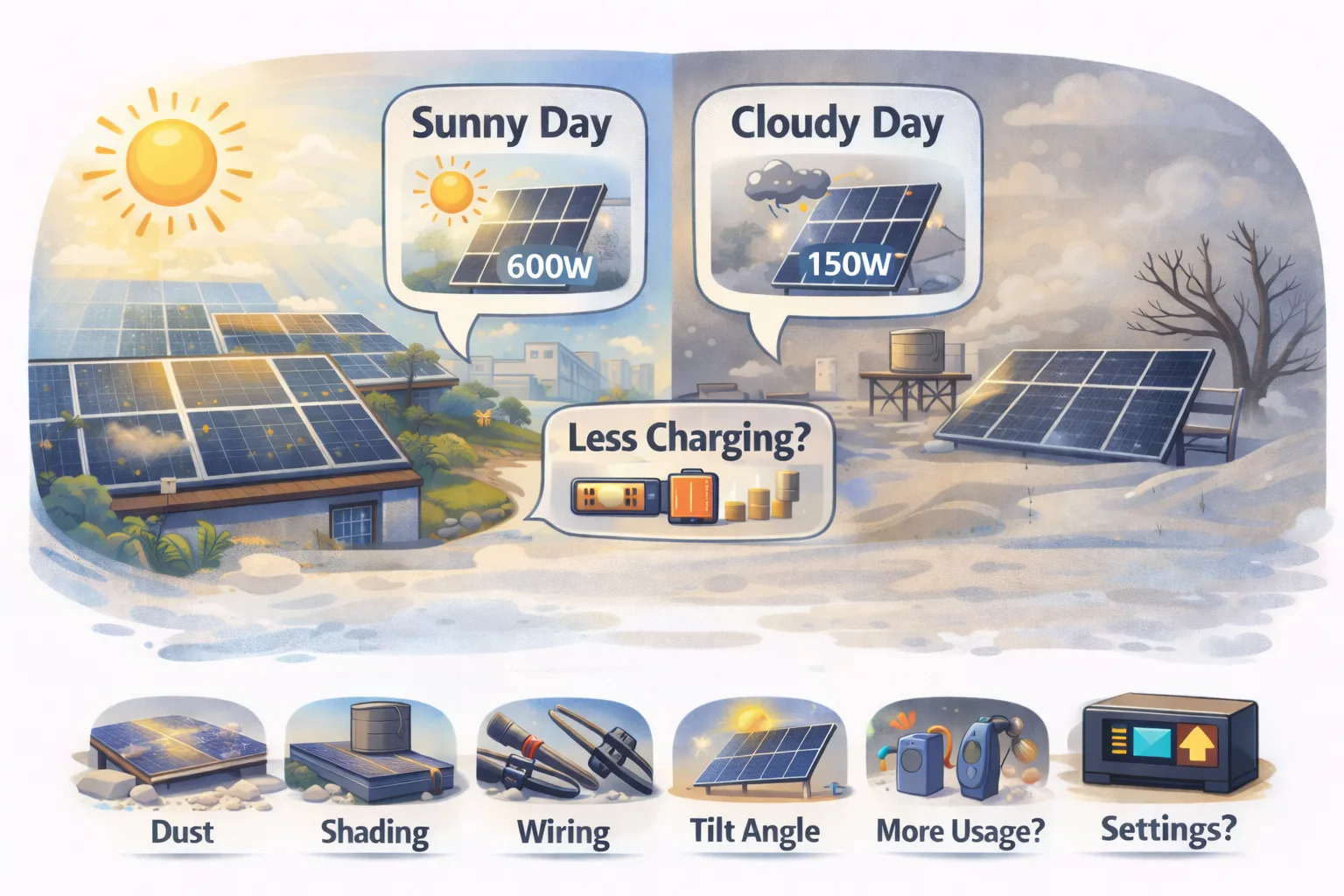
- Generation = system kW × peak sun hours × 365 × 0.75. The 0.75 performance ratio covers heat, dust, wiring and inverter losses, which together usually take 15–25%; it is deliberately the cautious end.
- Panel ageing of 0.5% a year, typical for modern panels under a 25–30 year output warranty.
- Savings = units used at home × your tariff + units exported × the export rate, both rising each year by the tariff increase you enter.
- Upkeep comes off every year: cleaning, inspections, and a fund towards replacing the inverter, which usually lasts 10–15 years.
Filling it in honestly
Use the price of your most expensive electricity units if you are on slabbed or tiered tariffs, because solar removes the top of your bill first. Be realistic about self-use: a household out at work all day with no battery may use only a third of what the panels make.
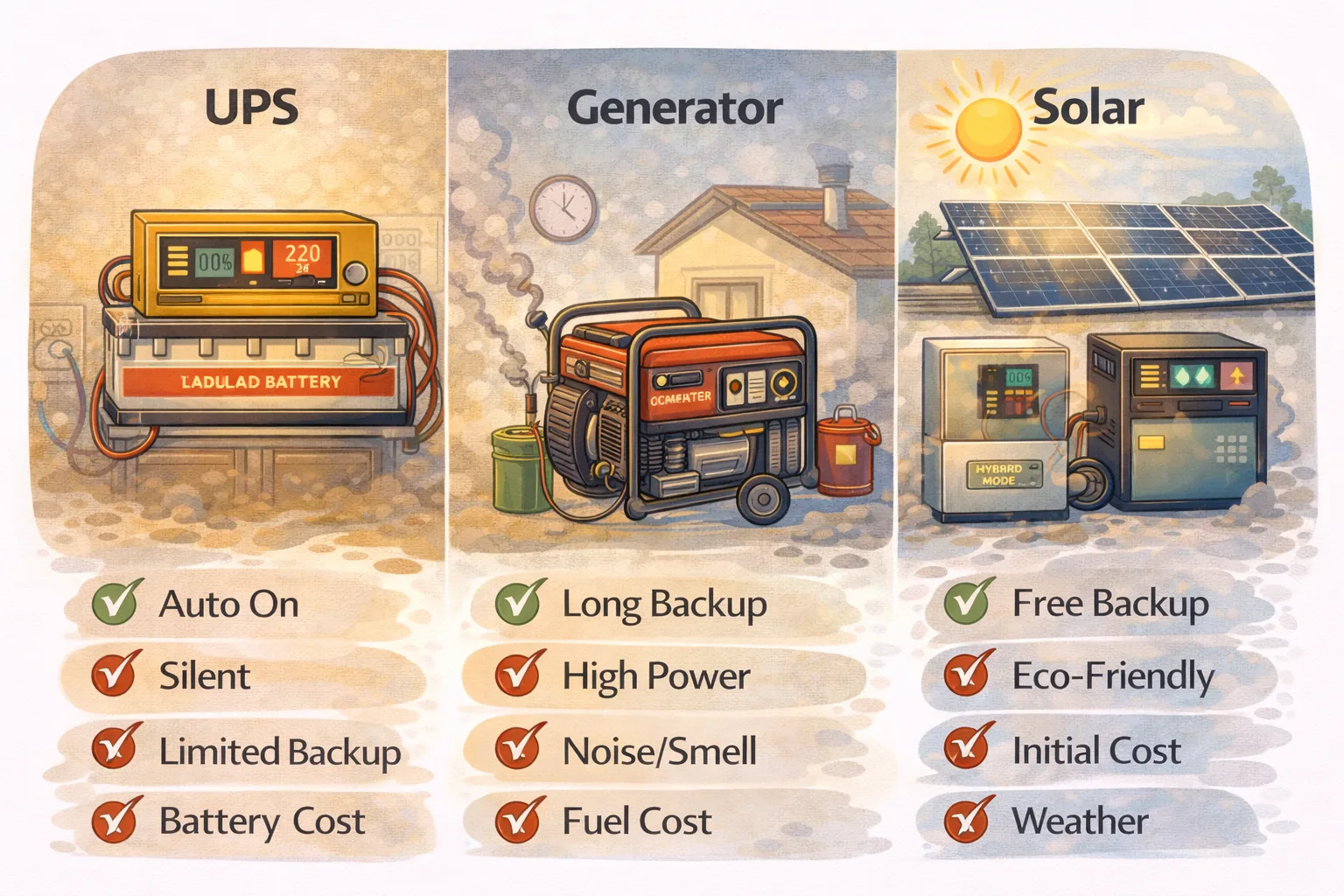
Payback is not the whole story. In places with long daily outages, a hybrid system with a battery keeps the fans on as well as cutting the bill, and it is worth paying more for that. The comparison of UPS, generator and solar looks at backup value as well as cost.
Common questions
How long does it take for solar panels to pay for themselves?
Commonly 4 to 10 years. The biggest factors are how much you pay for electricity, how sunny it is, and how much of the solar you use yourself rather than export. Expensive tariffs and daytime use bring payback down to 3–5 years; cheap electricity and low export rates stretch it past 10.
What are peak sun hours?
The number of hours per day that sunshine would deliver if it arrived at full strength (1000 W per square metre), averaged over the year. A 1 kW array gets roughly 1 kWh per peak sun hour before losses. Solar maps such as the Global Solar Atlas show the figure for any location.
Does the calculator include batteries?
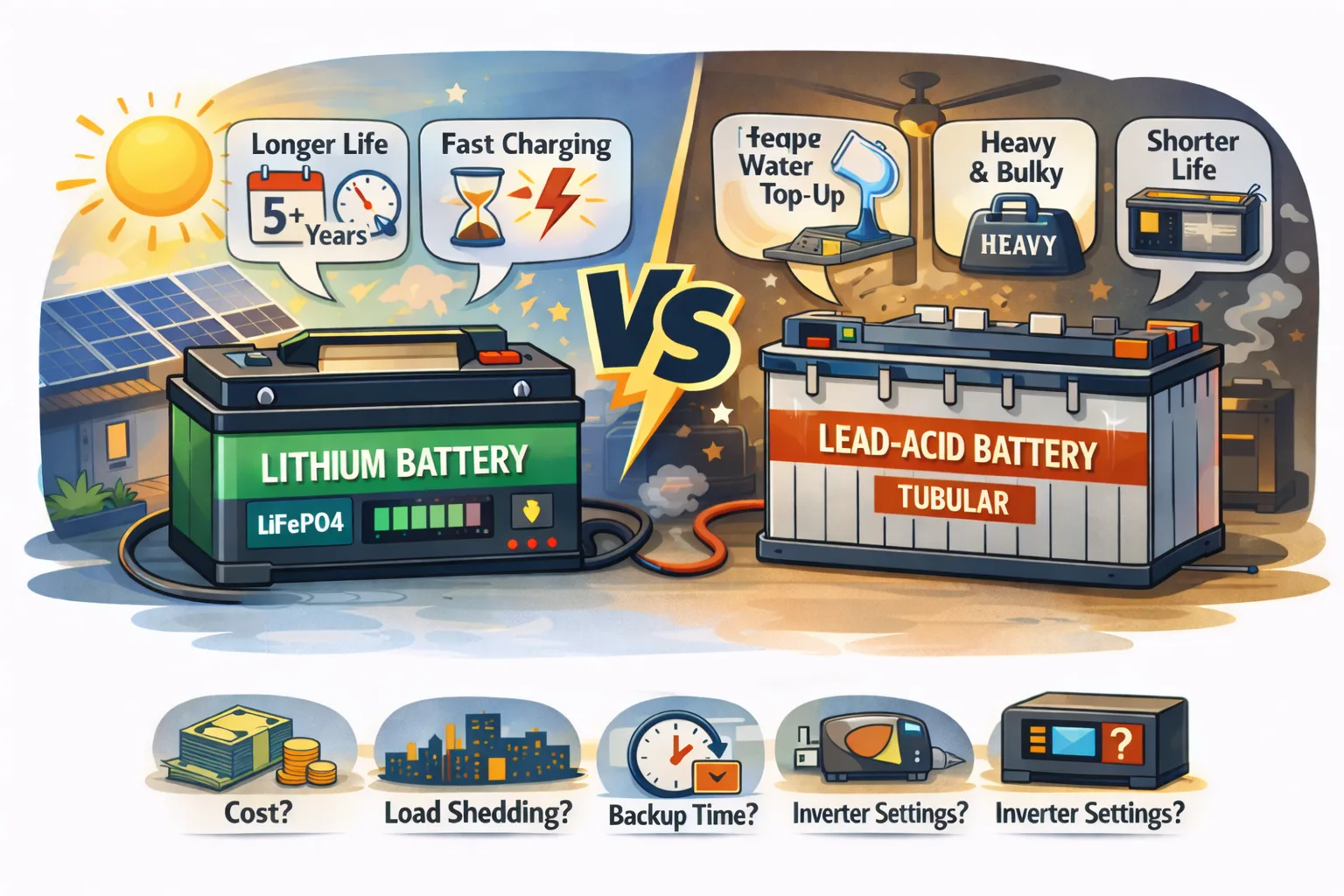
No. Batteries add backup during outages and let you use more of your own solar, but they add cost and wear out sooner than panels. To include one, add its price to the installed cost, raise the self-use percentage, and allow for its replacement in upkeep.
Why does self-consumption matter so much?
Every unit you use yourself saves the full price you would have paid. An exported unit earns only the export rate, which is often far lower. Running washing machines, pumps and water heaters in the middle of the day is the cheapest way to shorten payback.
Put this calculator on your site
Free for installers, forums, schools and blogs. Paste this where you want it to appear. It stays up to date automatically and keeps a small credit link.
<iframe src="https://pakpowerguide.com/embed/solar-payback-calculator/" title="Solar Payback Calculator by Pak Power Guide" width="100%" height="820" style="border:1px solid #dde2dd;border-radius:2px;max-width:100%" loading="lazy"></iframe>