The number on a battery is not the number of hours you get. This calculator starts from the label and takes off each loss that happens in real use, so the answer matches what you see during a power cut.
What it takes into account
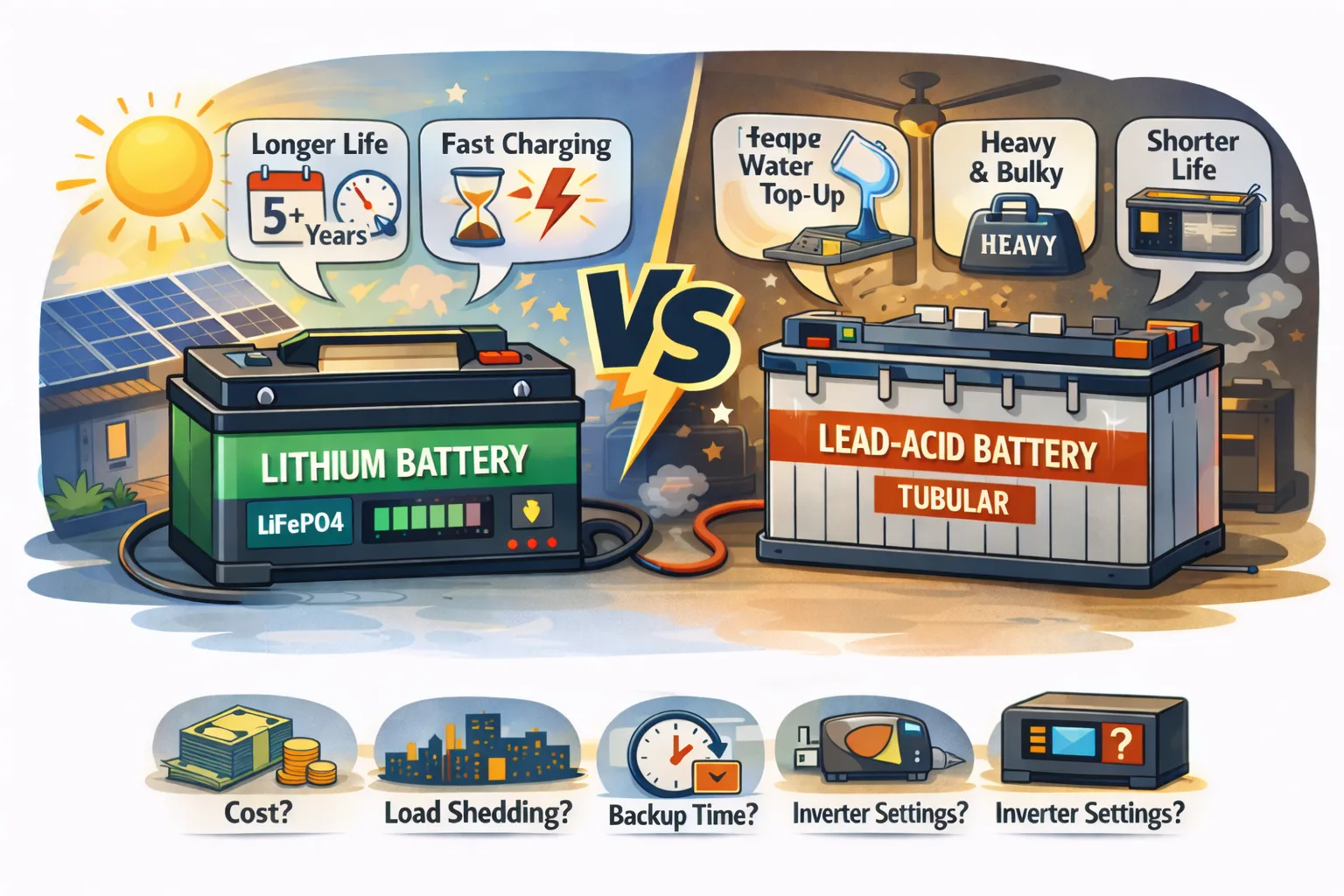
- Usable depth. Lead-acid batteries (tubular, flooded, AGM or gel) last longest when you only use about half their capacity. LiFePO4 lithium handles about 90%. A power station's rated watt-hours are already the usable pack.
- Inverter loss. Turning battery DC into household AC costs roughly 15%, and that loss becomes heat inside the inverter.
- Heavy loads. Lead-acid capacity is rated over 20 hours. Drain it in two and you get noticeably less, an effect described by Peukert's law. Lithium barely suffers from it.
- Age. A battery a few years old holds less than it did new. Choose the condition that matches how backup has changed since installation.
Reading the result
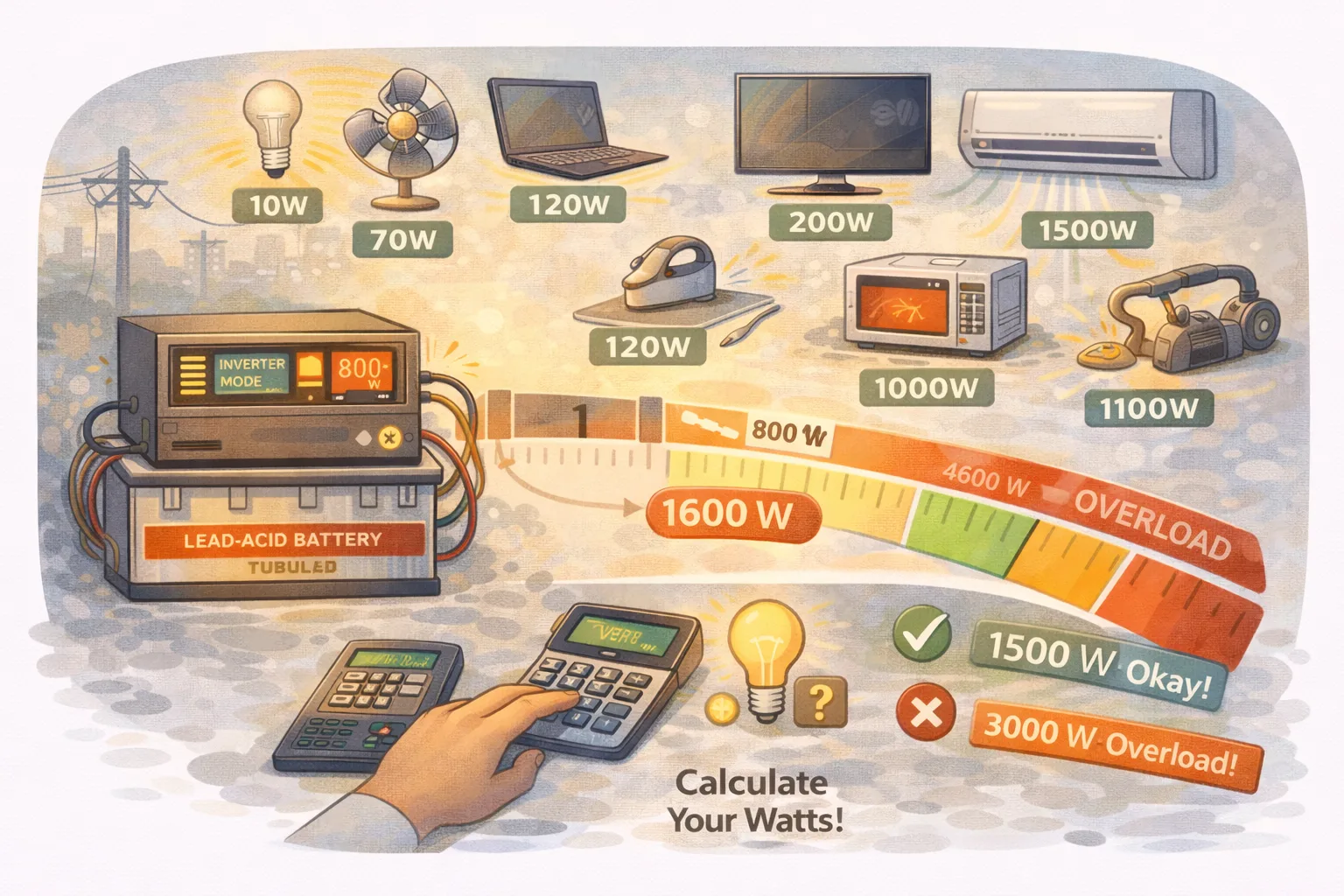
The sticker maths figure is what dividing the label by your load suggests. The realistic figure is what to plan around. If you want more hours, you have two levers: cut the load (LED bulbs, efficient fans, keep heaters and irons off backup) or add usable battery. A bigger inverter does not add any runtime.
The discharge rate is shown as a C-rate: 0.1 C means the load would empty the bank in about ten hours on paper. Lead-acid is happiest well below 0.2 C. When the calculator warns about a high rate, expect voltage to sag and the inverter to cut out on low battery before the figure shown.
If you are still choosing a system, the inverter and battery size calculator works the other way round: from your appliances to the inverter and battery you need.
Common questions
How do I calculate battery backup time by hand?
Multiply battery volts by amp-hours to get watt-hours (12 V × 150 Ah = 1800 Wh). Multiply by the usable depth (0.5 for lead-acid, 0.9 for LiFePO4) and by 0.85 for inverter loss, then divide by your load in watts. 1800 × 0.5 × 0.85 ÷ 400 W is about 1.9 hours. Heavy loads on lead-acid give somewhat less again, which the calculator allows for.
Why is my real backup shorter than the calculator says?
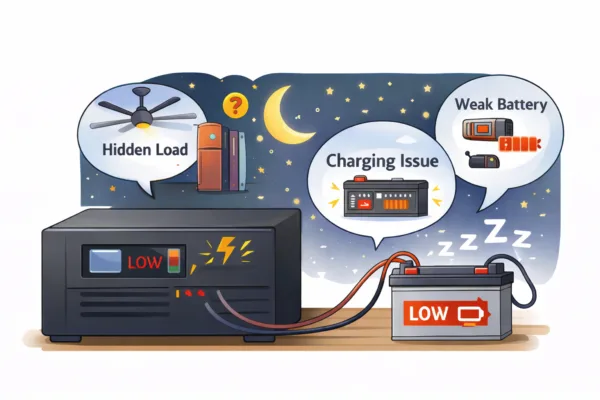
The usual causes are a battery older or weaker than you think, a load bigger than you think (measure it on the inverter display or with a plug-in meter), and standby draw from the inverter itself. If backup has halved in a year, see why an inverter battery drains fast.
Does wiring batteries in series or parallel change backup time?
Not the stored energy. Two 12 V 150 Ah batteries hold 3600 Wh either way. Series (24 V) halves the current for the same load, which runs cables cooler and holds voltage better under surge, so on a heavy load a 24 V bank often delivers slightly more of its energy in practice.
How many hours will a 150 Ah battery last?
On one 12 V 150 Ah lead-acid battery, roughly 3 hours at 200 W, 1½ hours at 400 W and under an hour at 700 W, if the battery is healthy. A lithium battery of the same rating lasts nearly twice as long because you can use far more of it.
Put this calculator on your site
Free for installers, forums, schools and blogs. Paste this where you want it to appear. It stays up to date automatically and keeps a small credit link.
<iframe src="https://pakpowerguide.com/embed/backup-time-calculator/" title="Inverter Battery Backup Time Calculator by Pak Power Guide" width="100%" height="820" style="border:1px solid #dde2dd;border-radius:2px;max-width:100%" loading="lazy"></iframe>