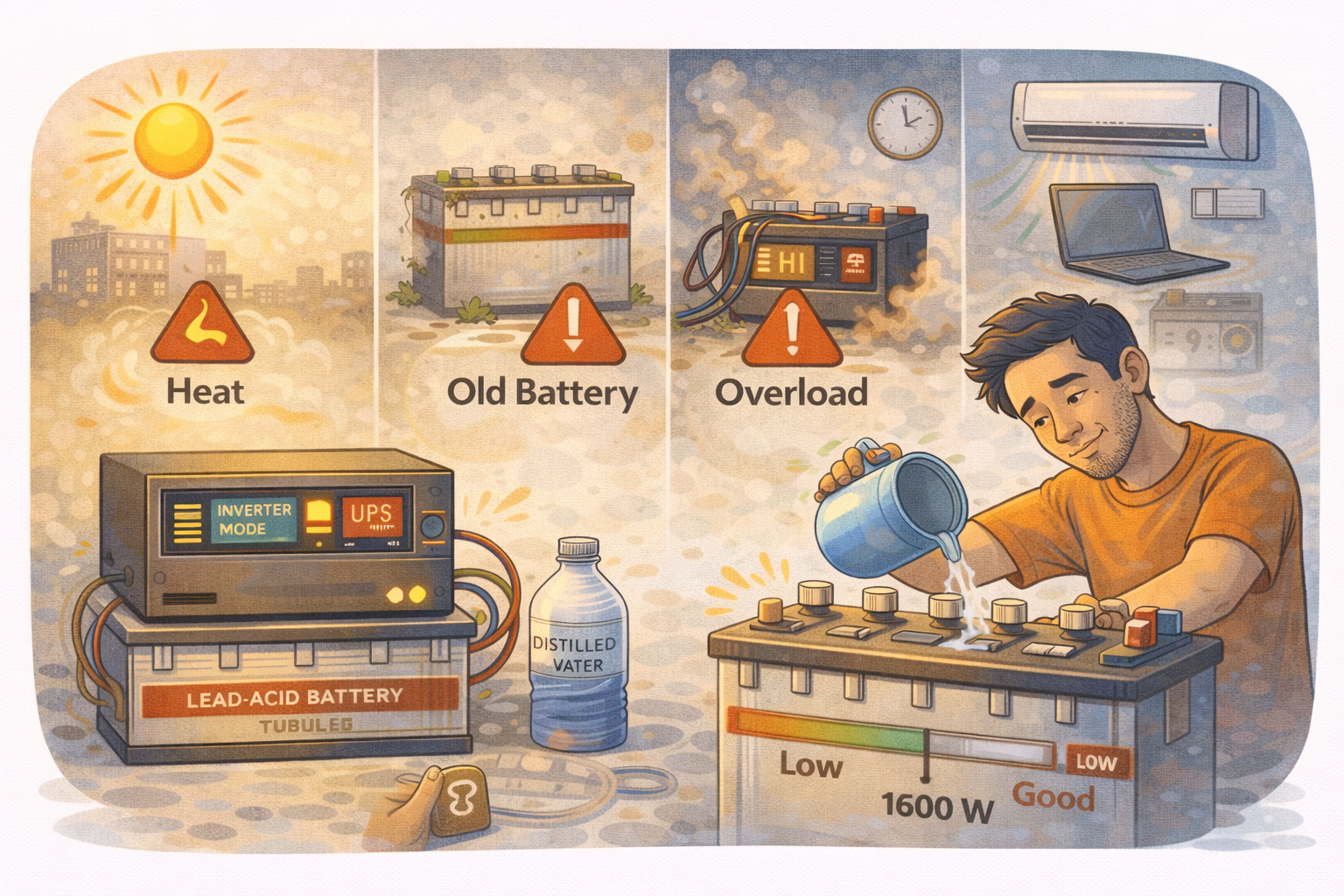
In Pakistan, load shedding makes batteries work harder than people expect. When the mains supply goes off (your local utility could be K-Electric, WAPDA/discos, or another provider depending on the city), the inverter shifts to battery mode. Then when power returns, it charges again. This daily charge–discharge cycle is normal here, but it also speeds up battery wear.
If you have a lead-acid inverter battery (the kind with caps on top), you might notice you’re refilling water again and again. Some people end up topping up every few weeks, and they start wondering if something is wrong.
Most of the time, frequent water loss is a sign of overcharging, high heat, poor charging settings, or battery aging. It can also happen if the battery is being used too deeply every day.
This guide helps you understand why it happens and what you can safely check at home.
First: Which Batteries Need Water and Which Don’t?
Batteries that need water
These are usually called:
-
Flooded lead-acid
-
Wet cell
-
Tubular battery (common for UPS/inverters)
They have removable caps and liquid electrolyte inside. Water level must be maintained.
Batteries that should NOT be opened
These include:
-
Maintenance-free (sealed) lead-acid
-
AGM / Gel
-
Lithium batteries (if you have a modern system)
If your battery is sealed and has no caps, don’t try to open it. Water refilling applies mainly to flooded/tubular batteries.
What “Battery Water” Actually Is
People call it “battery water,” but it should be distilled water (also called demineralized water). Not tap water. Not mineral water. Not RO waste water.
The battery electrolyte is a mix of acid and water. During charging, some water can turn into gas (hydrogen and oxygen) and leave through vents. That’s why the level drops over time.
A small amount of water loss is normal. Very frequent water loss is not.
The Most Common Reasons You’re Refilling So Often
1) Overcharging (the biggest cause)
If the inverter/charger is charging at too high a voltage, it “boils” the battery more than it should. You may even hear slight bubbling during charging. That bubbling is gas release, and it consumes water.
Overcharging often happens when:
-
the charging mode is set incorrectly
-
a cheap charger has no proper regulation
-
the inverter is faulty
-
the battery is old and needs higher current, so the charger keeps pushing
Signs
-
Battery feels warm during charging
-
Strong smell near the battery area
-
Water level drops quickly
-
Battery terminals get more corrosion
2) Very high room temperature and poor ventilation
In summer, many batteries sit in hot corners: store room, kitchen side, under stairs, closed cabinet, or near the inverter heat.
Heat increases evaporation and also increases gassing during charging. So even “normal” charging causes more water loss in high temperatures.
Signs
-
Battery area feels hot or suffocating
-
Water loss is much worse in summer months
-
Inverter and battery both feel warm for long periods
3) Frequent deep discharge due to long load shedding
If outages are long, batteries discharge deeply, then the inverter charges them hard when mains returns. That aggressive charging cycle causes more gassing and more water loss.
This is common when people run:
-
multiple fans
-
lights
-
TV
-
router
-
and sometimes fridge/pump by mistake
The deeper you discharge daily, the more the charger works, and the more water you lose.
4) Charging current set too high (common in “fast charge”)
Some inverters have charge current settings like:
-
low / medium / high
-
10A / 15A / 20A (varies by model)
If charge current is too high for your battery size, it increases gassing. People often set it to high so batteries charge faster, then wonder why water keeps dropping.
A smaller battery charged at a high current suffers more.
5) Weak or aging battery
As batteries age, internal resistance changes. They heat more during charging and lose water faster. Also, older batteries may not hold charge well, so the inverter keeps charging longer and more often.
Signs
-
Backup time has reduced a lot
-
Voltage drops fast under load
-
Battery needs water frequently and also still performs poorly
-
One battery (in a multi-battery setup) needs more water than others
6) Wrong distilled water practice
Two common mistakes:
-
using tap water (minerals damage plates and increase issues)
-
overfilling above the indicator level
Overfilling is important: when you charge, the liquid expands and can spill out, making it look like the battery “lost water.” It also increases corrosion and mess.
7) Constant “float charging” at wrong voltage
Even when fully charged, many inverters keep the battery on float charge. If float voltage is too high, it keeps gassing slowly all day, especially in heat.
This often happens in:
-
cheap UPS units
-
older inverters with poor regulation
-
systems with wrong battery type selected
Practical Checks You Can Do at Home
Check 1: Confirm your battery type
Look at the top:
-
Caps present → likely flooded/tubular → water maintenance needed
-
No caps / sealed → don’t open
Also read the label for “maintenance-free” wording.
Check 2: Check water level correctly (and safely)
Do this when the battery is cool and you have light.
-
Switch off inverter output if you can (or be careful)
-
Wear glasses if possible (safety first)
-
Open caps slowly
-
Look for the level indicator (some have a plastic tube/marker)
Rule: Fill only up to the recommended mark, not to the top.
Check 3: Check how often you actually discharge
Ask yourself:
-
During outages, how many fans/lights are on?
-
Do you ever run fridge or pump on inverter?
-
Does the inverter alarm for low battery often?
If the battery is being drained deeply daily, frequent top-ups make sense.
Check 4: Feel battery temperature during charging (simple clue)
When mains returns and charging starts, after 30–60 minutes:
-
Battery should be slightly warm at most
-
If it’s noticeably hot, charging is too aggressive or battery is weak
Heat + bubbling usually means overcharging or battery aging.
Check 5: Look for unusual smell and corrosion
A strong sharp smell, heavy corrosion on terminals, or wetness around caps can mean excessive gassing and splashing.
Clean corrosion safely (with proper method) and fix root cause, otherwise it will keep returning.
Check 6: Compare batteries if you have a 2-battery or 4-battery bank
If one battery needs water far more than others, that battery might be failing or not balanced well.
That one weak battery can also drag down the whole bank.
What You Can Do to Reduce Water Loss
Use proper distilled water only
Use distilled/demineralized water from a trusted source. Avoid tap water even if it “looks clean.”
Don’t overfill
Fill to the indicator level only. Overfilling creates spill-out during charging and increases mess and corrosion.
Improve ventilation and reduce heat
Move the battery away from:
-
direct sunlight
-
closed cabinets
-
hot kitchens
-
tight corners with no airflow
Even a small improvement in airflow helps in summer.
Adjust charging current (if your inverter supports it)
If your inverter has a charge current setting:
-
set it to a level appropriate for your battery size
-
don’t keep it on “high” just for faster charging
If you’re unsure, a safe approach is medium/normal for most home tubular batteries, unless your installer recommended otherwise.
Reduce deep discharging
On backup, keep load to essentials:
-
fans
-
LED lights
-
Wi-Fi
Avoid heavy items, especially pump and heating appliances.
Less discharge means less aggressive charging, which means less gassing and less water loss.
When Frequent Water Refilling Is a Warning Sign
Get the system checked if:
-
you need water every 1–3 weeks consistently
-
battery becomes hot during charging
-
you hear strong bubbling regularly
-
battery performance is also getting worse
-
there is a strong smell or heavy corrosion
These often point to overcharging, wrong charger settings, or an aging battery near end of life.
A Quick Safe Routine (What Most Homes Can Follow)
-
Check water level every 3–4 weeks in summer, and every 4–6 weeks in winter (adjust based on your situation)
-
Use only distilled water
-
Fill to the mark, not above
-
Keep battery area ventilated
-
Keep backup load reasonable during outages