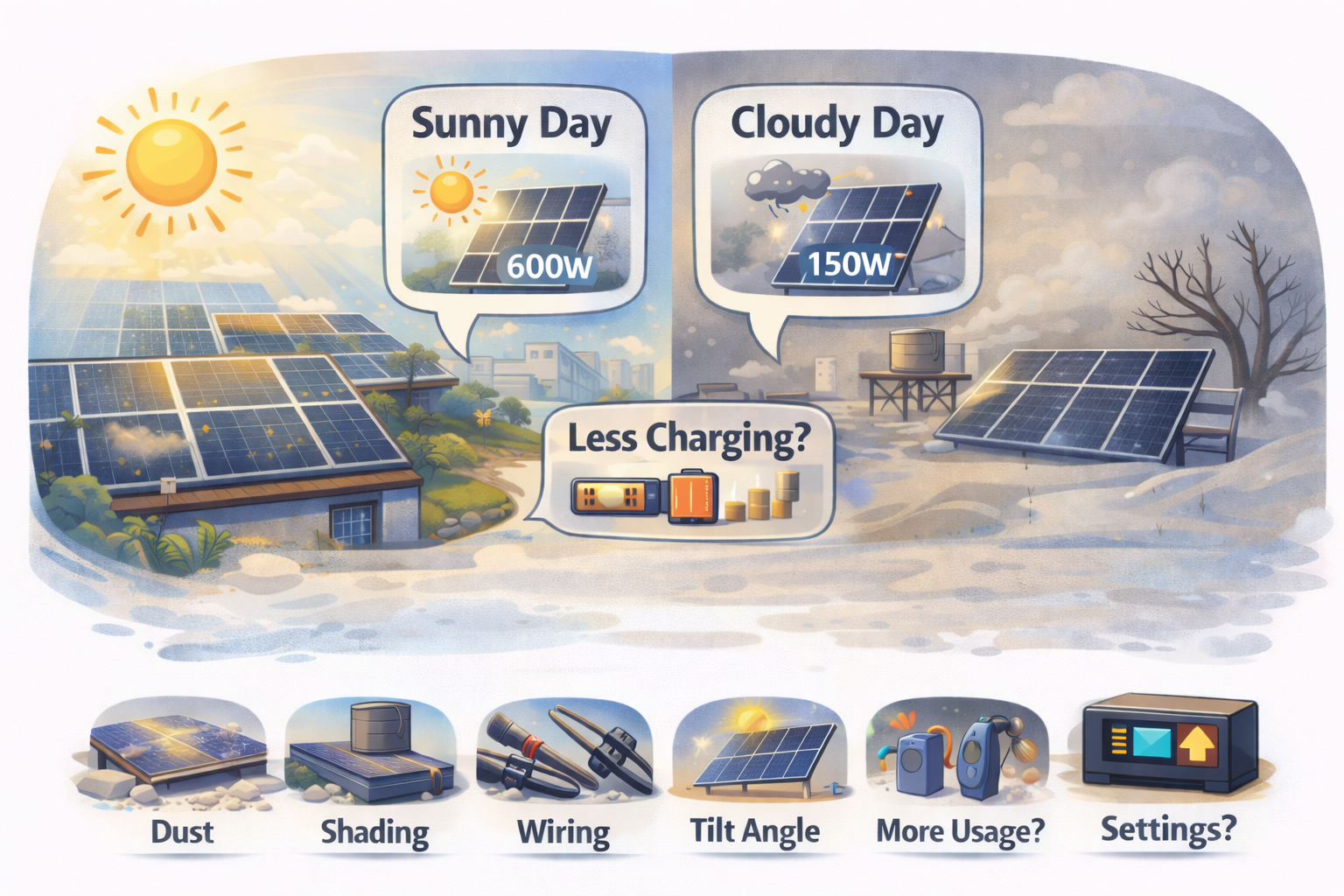
In Pakistan, many homes add solar because load shedding is unpredictable and electricity bills keep rising. In summer, solar feels amazing: fans run, the inverter charges fast, and the batteries stay healthy.
Then winter comes, and people start noticing something odd:
-
panels are installed, but power looks lower
-
the inverter shows fewer amps
-
batteries don’t charge as quickly
-
backup time feels shorter at night
This is very common. Yes, lower solar production in winter is normal, but sometimes the drop is bigger than it should be because of dust, shading, wiring, or settings.
Let’s break it down in simple terms and do some practical checks at home.
Why Solar Output Drops in Winter (Normal Reasons)
Shorter daylight hours
In winter, the days are shorter. Even if panels work fine, you simply get fewer “sun hours” compared to May/June.
So total daily production naturally drops.
Sun angle changes
In winter the sun sits lower in the sky. Panels that were perfect in summer may not receive sunlight at the best angle in winter, especially if the tilt is low or panels are flat.
Haze, fog, and smog
In many Pakistani cities (Lahore, Faisalabad, Gujranwala, Karachi, even Islamabad/Rawalpindi), winter haze and smog block sunlight. You still see daylight, but solar intensity is weaker.
More energy use in winter mornings and evenings
Winter usage patterns change:
-
more lights in evening
-
water motor runs at different times
-
people stay inside more
-
sometimes heaters (even small ones) sneak onto the system
So it can feel like “solar is weak” when actually your usage is higher at the wrong time.
Pakistan Home Setups That Affect Winter Performance
Most homes use one of these solar setups:
Hybrid inverter (solar + grid)
Most common now. It runs loads from solar first, then grid, then battery depending on settings.
Solar with batteries (backup-focused)
Common in areas with heavy load shedding. Batteries charge during day and support at night.
On-grid / net metering system
If you have net metering, winter production still drops, but you may not notice it as much unless you track units.
Mixed load wiring (essential + non-essential)
Some homes connect “too much” on solar/inverter line. In winter, that extra load becomes more obvious.
What Drop Is “Normal” in Winter?
There is no single fixed number because it depends on city, panel angle, smog level, and how sunny your area is.
But generally:
-
A noticeable drop is normal
-
A massive drop needs checking
If your system was giving strong charging and now it feels “half dead,” don’t assume it’s only winter. Do a few checks below.
Practical Checks You Can Do at Home
Check 1: Clean the panels (biggest winter fix)
In Pakistan, dust is constant. In winter, fog + dust can create a thin dirty layer that blocks sunlight.
What to do
-
Clean panels in the morning or late afternoon (not midday hot sun)
-
Use plain water and a soft cloth or soft brush
-
Don’t use harsh chemicals
-
Don’t stand on panels
Quick test
Clean one side or one panel first, then check inverter solar amps. If you see improvement, you found a major cause.
Check 2: Look for new shading (very common in winter)
Winter sun is low. Shading that didn’t matter in summer can reduce output a lot.
Common shading sources:
-
water tank shadow
-
nearby building
-
tree branches
-
dish antenna
-
railing shadow
-
clothesline shadow
Even partial shading on one panel can reduce output for the whole string, depending on wiring.
What to do
At 10am–3pm, look at the panels and check if any shadow falls on them. If yes, consider trimming branches or adjusting the shading object if possible.
Check 3: Check inverter settings (hybrid systems)
Hybrid inverters have modes like:
-
Solar first
-
Utility first
-
Battery first
-
Charge priority settings
In winter, wrong settings can make it feel like solar is weak when the inverter is simply using grid power or not charging the battery aggressively.
What to check
-
Is “solar priority” enabled?
-
Is battery charging from solar enabled?
-
Is charging current limited too low?
-
Is there a time schedule that reduces charging?
If you recently changed settings, revert or confirm with the installer.
Check 4: Compare “sunny day” vs “cloudy day” behavior
In winter, a cloudy day can cut production heavily.
Do this simple check:
-
Pick one clear sunny day
-
Note the inverter solar power at noon (12–2pm)
-
Compare it with a cloudy or smoggy day
If sunny-day noon output is still very low, something is wrong.
Check 5: Look at battery behavior (if you use batteries)
In winter, batteries can feel weaker because:
-
charging is slower (less sun hours)
-
you use more lights at night
-
batteries may already be aging
Quick battery check
At night, run a fixed load:
-
1 fan + Wi-Fi + 2 LED lights
If battery drops very fast, battery health may be a separate issue—not solar.
Check 6: Check cable and connection signs (basic but important)
Loose connections reduce charging efficiency.
Look for:
-
corrosion
-
loose MC4 connectors
-
damaged wire insulation
-
burnt smell near inverter terminals
Don’t open anything you’re not comfortable with. If you see melting or burning signs, call a technician.
Winter Myths People Believe (And What’s True)
“Panels don’t work in winter”
False. Panels do work in winter. They just produce less total energy because the sun hours and intensity are lower.
“Cold reduces panel output”
Cold doesn’t reduce solar panel efficiency the way heat does. Panels can actually be efficient in cooler temperatures, but winter problems in Pakistan are usually due to short days, smog, and shading.
“If solar is low, my panels are faulty”
Not always. Most winter issues are cleaning + shading + settings.
Tips to Get Better Winter Performance
Keep panels clean more often
In winter, even a thin layer of dirt plus haze reduces output. Cleaning every 2–4 weeks helps, depending on your area.
Shift heavy usage to daytime
If possible:
-
run washing machine/pump in afternoon
-
charge devices during daylight
-
avoid heavy load after sunset
Reduce backup load at night
Winter nights are longer. If you run multiple fans/heavy load at night, batteries will drain earlier.
Consider tilt (only if your installer can adjust)
If panels are too flat, winter performance drops more. A better tilt angle can help, but don’t change mounting without proper support and safety.
When You Should Call a Technician
Call someone if:
-
output is very low even on a clear sunny day at noon
-
inverter shows PV error or frequent disconnects
-
you suspect shading but can’t fix it
-
connectors look burnt or wires heat up
-
production dropped suddenly overnight without any obvious reason
Ask them to check:
-
panel string voltage/current
-
MPPT settings
-
connector quality (MC4)
-
shading impact on string design
Simple Takeaway
Yes, solar producing less power in winter is normal in Pakistan because of shorter days, lower sun angle, and smog/haze. But if the drop feels extreme, it’s often something fixable like dust, shading, or settings.